
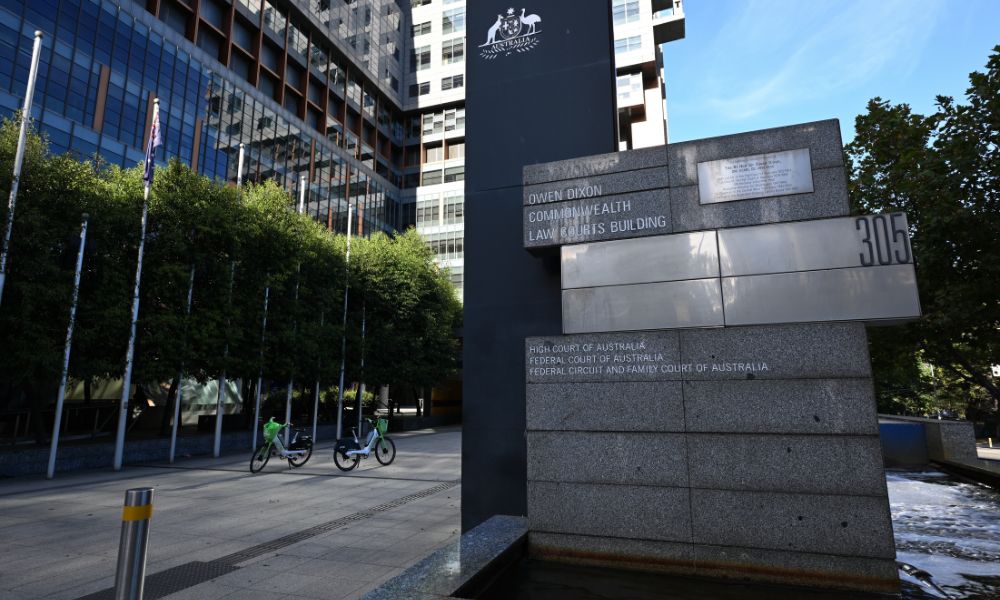
Federal Court: Medicheckr Wound Up for Unpaid Tax Debt
Summary
- The Federal Court ordered Medicheckr Pty Ltd to be wound up due to an unpaid tax debt of $70,462.20 owed to the Deputy Commissioner of Taxation.
- Medicheckr failed to comply with a statutory demand issued on October 1, 2025, and did not apply to set it aside.
- The court found Medicheckr failed to rebut the statutory presumption of insolvency and lacked a basis to decline the winding-up order.
- Permission for Medicheckr's director to represent the company was refused, as corporations typically require legal counsel under Federal Court Rules.
- The director's assertions of solvency and willingness to pay were rejected due to a complete lack of supporting evidence.
The Winding-Up Order
The Federal Court of Australia has issued an order for the winding up of Medicheckr Pty Ltd due to its insolvency, following the company's failure to satisfy a statutory demand from the Deputy Commissioner of Taxation. This significant decision, detailed in Deputy Commissioner of Taxation v Medicheckr Pty Ltd [2026] FCA 1524, arose from an unpaid tax debt amounting to $70,462.20.
The Deputy Commissioner initiated the process by issuing a statutory demand on October 1, 2025, which mandated Medicheckr to settle the outstanding sum within 21 days. However, the company did not comply with this requirement by the October 31 deadline. Crucially, Medicheckr also failed to take any action to apply to the court to set aside the demand, leaving it unchallenged.
Consequently, with the demand remaining unmet, the Deputy Commissioner of Taxation proceeded to commence winding-up proceedings against Medicheckr on December 3, 2025. These proceedings were brought under the provisions of the Corporations Act 2001 (Cth), ultimately leading to the court's determination that the company should be placed into insolvency.
Court's Rationale and Procedural Strictures
In its deliberations, the Federal Court determined that Medicheckr had not successfully rebutted the statutory presumption of insolvency, which arises from non-compliance with a valid statutory demand. The court found no compelling reason or evidentiary basis that would justify declining the winding-up order, despite submissions made on behalf of the company.
A key procedural aspect of the case involved the attempt by Medicheckr's director to represent the company in court. This situation arose after the company's legal representatives withdrew their services just two days prior to the final hearing. Under r 4.01(2) of the Federal Court Rules 2011 (Cth), corporations are generally expected to conduct their legal proceedings through a qualified lawyer, although the court retains discretion to waive this requirement under specific circumstances.
However, the court found insufficient grounds to grant the director permission to act on behalf of Medicheckr. Its decision was influenced by several factors, including a notable absence of financial evidence to support the company's position, the fact that the director had received prior notification of the hearing, and concerns regarding his capacity to conduct the proceedings with the necessary objectivity. Despite refusing direct representation, the court did consider the director's written submissions. In these submissions, the director asserted Medicheckr's ongoing solvency and its ability to meet its tax obligations. He attributed the company's tax arrears to health issues experienced by its accountant in 2022, which had resulted in several outstanding lodgements. The director also claimed that the company was actively working to reconcile its taxation affairs and stated that he personally possessed sufficient funds to settle the debt. He further indicated Medicheckr's readiness to pay the claimed amount immediately upon receiving payment details, requesting the dismissal or discontinuance of the proceedings post-payment.
Ultimately, the court concluded that these assertions, while presented, lacked any supporting evidence. There was no proof provided to substantiate the director's claims or to demonstrate that the company's financial standing was likely to improve. The court also briefly addressed a potential flaw in the service of the originating process, specifically regarding a failure to serve documents within the statutory 14-day timeframe. It concluded that any such defect had not caused substantial injustice, particularly given that subsequent service had occurred and adjournments had been granted, allowing ample opportunity for Medicheckr to respond. The Deputy Commissioner was therefore deemed to have established the necessary statutory grounds for winding up, and the director's unsupported arguments were insufficient to persuade the court to exercise its discretion otherwise.
Implications for Corporate Compliance
This Federal Court ruling serves as a stark reminder for corporate entities in Australia regarding the critical importance of stringent compliance with statutory demands and the necessity of robust legal representation. The case of Medicheckr Pty Ltd underscores that a company's failure to promptly and adequately respond to a statutory demand, including seeking to set it aside, creates a statutory presumption of insolvency that is difficult to overcome without concrete evidence.
The court's refusal to allow the director to represent the company, even after its solicitors withdrew, highlights the strict adherence to procedural rules, specifically r 4.01(2) of the Federal Court Rules 2011 (Cth). This decision reinforces that personal assurances or explanations from a director, no matter how well-intentioned, cannot substitute for formal legal representation and verifiable financial evidence when a company's solvency is under scrutiny. The absence of supporting documentation for claims of solvency or future financial improvement proved fatal to Medicheckr's position.
Practical Implications
Lawyers should advise corporate clients on the critical importance of promptly responding to statutory demands with proper legal representation and robust evidentiary support, as personal assurances or procedural missteps (like a director attempting to represent the company without grounds) will not suffice to rebut the presumption of insolvency or prevent a winding-up order.
Source
How does this affect you?
Get an AI analysis of this article grounded in your jurisdictions, practice areas, and any policy documents you've uploaded to Wansom.
Finish Reading the Full Story and the Expert Analysis.
Get the latest legal & regulatory intelligence in Australia
Wansom is AI and can make mistakes.