
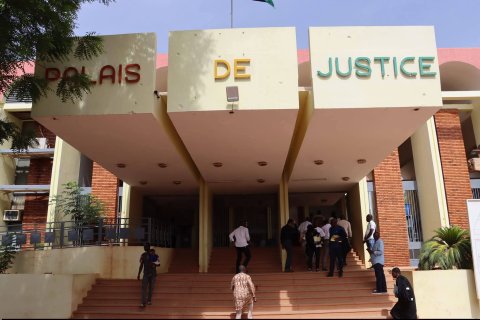
Me Ini Esther Doli: Defamation Charges in Burkina Faso, Granted Liberty
Summary
- Attorney Me Ini Esther Doli appeared before the Tribunal de grande instance de Ouaga I on September 30, 2026, facing charges of alleged defamation.
- The charges were brought by the municipal police of Ouagadougou, stemming from a publication made by Me Doli in September 2026.
- The court granted her provisional liberty and adjourned the case for judgment on October 14, 2026.
- This case, known as the "Affaire Allah Ti Kouma," highlights potential legal risks for lawyers making public statements critical of law enforcement in Burkina Faso.
Attorney Faces Defamation Charges in Ouagadougou
This case, however, underscores the fine line between legitimate commentary and actionable defamation, particularly when law enforcement agencies are the subject.
Me Ini Esther Doli, a prominent attorney, appeared before the criminal chamber of the Tribunal de grande instance de Ouaga I on Wednesday, September 30, 2026, to answer charges of alleged defamation. The proceedings stem from accusations brought by the municipal police of Ouagadougou, marking a significant legal development in the country's judicial landscape. This case, known as the "Affaire Allah Ti Kouma," places a spotlight on the boundaries of public commentary, particularly for legal professionals in Burkina Faso.
The allegations against Me Doli are rooted in a publication made on her personal page during September 2026. While the specific content of the publication was not detailed, it formed the basis for the defamation claim lodged by the Ouagadougou municipal police. The court's decision to grant her provisional liberty during the initial hearing underscores the procedural fairness afforded, even as the serious nature of the charges remains.
This incident highlights the potential legal risks faced by lawyers in Burkina Faso when making public statements, especially those that might be perceived as critical of law enforcement. The case could set a precedent for professional conduct and the exercise of freedom of speech within the legal community, prompting a closer examination of the responsibilities accompanying public commentary.
Legal Proceedings and Upcoming Judgment
During the initial hearing at the Tribunal de grande instance de Ouaga I, the court granted Me Ini Esther Doli provisional liberty, allowing her to remain free pending the full resolution of the case. This decision is a standard procedural step in the Burkinabé legal system, indicating that the court did not deem her a flight risk or a danger to the proceedings at this stage. The criminal chamber is meticulously reviewing the evidence and arguments presented by both sides.
Following the preliminary hearing, the court has adjourned the matter, scheduling the next session for October 14, 2026. On this date, the Tribunal de grande instance de Ouaga I is expected to deliver its judgment, which will determine the attorney's culpability regarding the alleged defamation against the municipal police of Ouagadougou. The outcome will be closely watched by legal observers and practitioners alike, as it will clarify the application of droit pénal Burkina Faso in cases involving public figures and institutions.
Implications for Legal Professionals and Free Speech
The "Affaire Allah Ti Kouma" involving Me Ini Esther Doli and the diffamation police municipale Ouagadougou carries substantial implications for the legal profession in Burkina Faso. Lawyers, by the nature of their work, often engage in public discourse, advocating for clients and commenting on legal and societal issues. This case, however, underscores the fine line between legitimate commentary and actionable defamation, particularly when law enforcement agencies are the subject.
Legal practitioners should closely monitor this judgment to understand the evolving boundaries of defamation law and its application to legal commentary. The ruling could significantly influence the scope of professional conduct and the extent of free speech protections for attorneys in the country. It raises questions about the responsibility an avocat diffamation holds when expressing opinions publicly, and how such expressions are weighed against the reputation of public institutions under Burkina Faso's legal framework.
Practical Implications
This case highlights the significant legal risks for lawyers in Burkina Faso when making public statements, particularly those critical of law enforcement, potentially setting a precedent for professional conduct and freedom of speech. Legal practitioners should watch this judgment closely to understand the evolving boundaries of defamation law and its application to legal commentary.
Source
How does this affect you?
Get an AI analysis of this article grounded in your jurisdictions, practice areas, and any policy documents you've uploaded to Wansom.
Finish Reading the Full Story and the Expert Analysis.
Get the latest legal & regulatory intelligence in Burkina Faso
Wansom is AI and can make mistakes.