
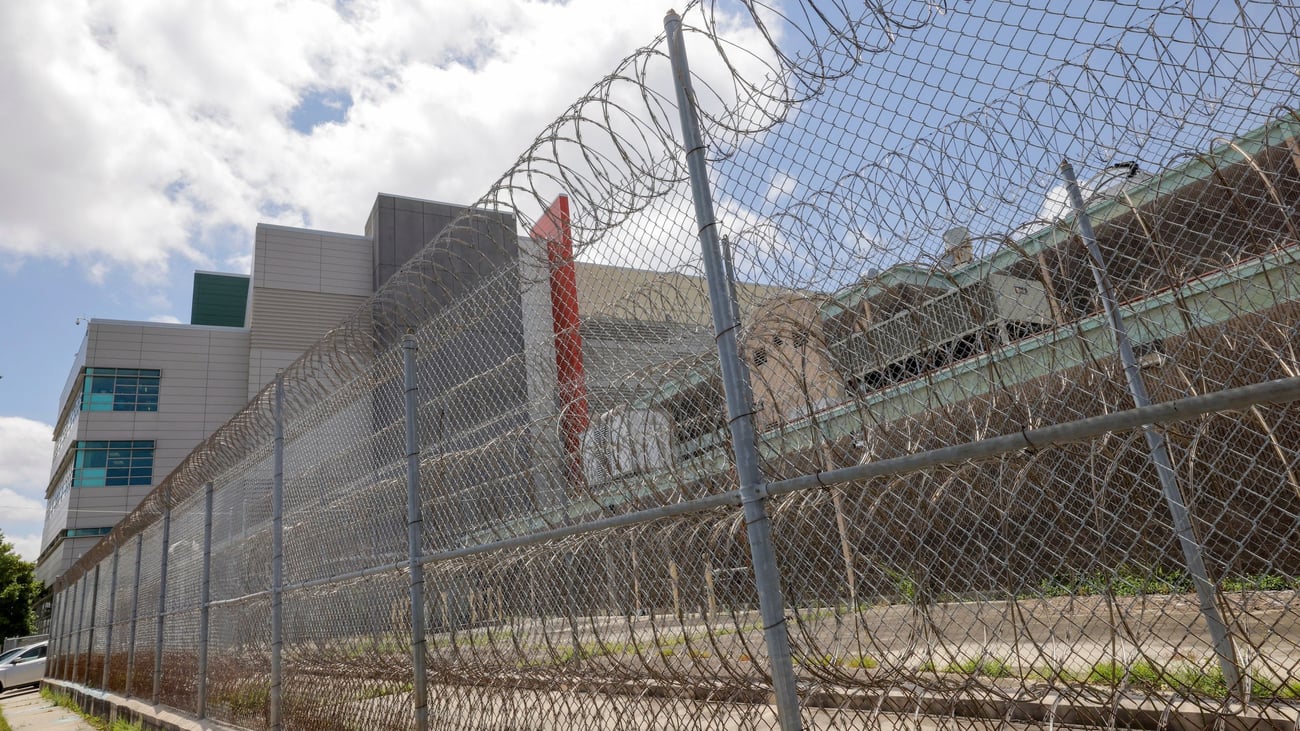
Fifth Circuit: McDonnel Group Archer Western Fee Dispute Appealed
Summary
- McDonnel Group is appealing a lower court's denial of its request for approximately $413,000 in legal fees.
- The dispute stems from a joint venture with Archer Western Contractors for the Orleans Parish jail construction.
- A jury previously found McDonnel Group did not breach the joint venture agreement by refusing capital calls initiated by Archer Western.
- The core of the appeal concerns a contract clause requiring a 'defaulting party' to pay legal expenses arising from their breach, not a general 'prevailing party' provision.
- McDonnel argues its defensive win implies Archer Western's breach, while Archer Western maintains no court has found them in default.
Fee Dispute Reaches Fifth Circuit
Crucially, the appellate judges questioned whether a defensive victory, without an explicit finding of breach against the other party, was sufficient to trigger the clause.
A long-standing legal battle between two construction partners, McDonnel Group and Archer Western Contractors, recently culminated in arguments before a three-judge panel of the Fifth Circuit over attorney fees. The dispute centers on a joint venture formed in 2011 to construct the Orleans Parish Sheriff’s Office Inmate Processing Center, commonly known as the Orleans Parish jail. Archer Western held a 70% stake in the venture, with the local contractor, McDonnel Group, owning the remaining 30%.
The partnership has been embroiled in two significant legal conflicts. The first involved a confidential $2.7 million settlement that McDonnel Group secured with the parish and retained without informing Archer Western. In this matter, Archer Western prevailed on summary judgment and subsequently recovered approximately $518,000 in legal fees, an award that the Fifth Circuit has already upheld. The second conflict arose from unpaid capital calls, which McDonnel Group refused to honor.
In a subsequent jury trial concerning the capital calls dispute, McDonnel Group was found not to have breached the joint venture agreement by declining to make the requested payments. Following this victory, McDonnel Group sought to recover its own legal expenses, totaling roughly $413,000, incurred while defending against these claims. However, U.S. Magistrate Judge Michael B. North and Chief U.S. District Judge Wendy Vitter denied this request, prompting McDonnel Group's appeal to the Fifth Circuit.
Interpreting the 'Defaulting Party' Clause
The core of the current appeal hinges on a specific clause within the joint venture agreement. This provision stipulates that a "defaulting party" must cover the other side's legal expenses incurred to "protect their interests or defend any action arising out of the defaulting party’s breach." McDonnel Group, represented by attorney Randall Smith, contends that its successful defense against the capital calls, coupled with earlier default notices, effectively demonstrates that Archer Western breached the agreement.
Smith argued before the appellate panel that Archer Western's demands for capital calls, made without a unanimous vote, constituted a breach of contract, a point McDonnel Group had raised in a September 2015 letter from Allan McDonnel. He asserted that McDonnel Group was compelled to "defend the lawsuit, win the summary judgment and win the trial," and that these defensive actions directly "arise out of the defaulting party’s breach." However, Archer Western, through its attorney Jeremy Grabill, countered that McDonnel Group is attempting to reinterpret a precise attorney’s fees provision into a general "prevailing party" clause, emphasizing that no court has ever formally found Archer Western to be in breach.
The appellate judges expressed skepticism regarding McDonnel Group's interpretation. U.S. Circuit Judge Jerry E. Smith questioned whether Archer Western's alleged breach had been "actually litigated" and definitively established. U.S. Circuit Judge Kurt D. Engelhardt further highlighted the distinction, noting that the clause is "not a prevailing parties clause" and explicitly "seems to require a breach." He added, "We don’t have anything that adjudicates a breach by your opponent," underscoring the challenge in applying the clause without a formal finding of default against Archer Western.
Unresolved Breach Allegations
The lower court's denial of McDonnel Group's fee request stemmed from the magistrate judge's refusal to delve into the substance of whether Archer Western was a defaulting party. The magistrate deemed a post-judgment fee motion an inappropriate vehicle for such a determination, a recommendation subsequently adopted by Chief U.S. District Judge Wendy Vitter. This procedural stance left the question of Archer Western's alleged breach unresolved at the trial level.
Randall Smith, arguing for McDonnel Group, voiced frustration over this lack of adjudication, stating, "The problem for us is we haven’t had our day in court." He urged the Fifth Circuit to remand the case, allowing a judge to definitively rule on whether Archer Western had, in fact, breached the joint venture agreement. Smith contrasted the outcomes, noting that Archer Western received over half a million dollars in fees for winning a single summary judgment claim, while McDonnel Group, despite winning a summary judgment claim and an entire trial, was denied its legal expenses. The case highlights the critical distinction between 'prevailing party' and 'defaulting party' fee-shifting clauses in joint venture agreements, where a defensive win does not automatically establish the opponent's breach.
Practical Implications
This case highlights the critical distinction between 'prevailing party' and 'defaulting party' fee-shifting clauses in joint venture agreements. Lawyers drafting or litigating such contracts must ensure clarity on what constitutes a 'breach' or 'default' to trigger fee recovery, as a defensive win may not be sufficient to prove the opponent's breach.
Source
How does this affect you?
Get an AI analysis of this article grounded in your jurisdictions, practice areas, and any policy documents you've uploaded to Wansom.
Finish Reading the Full Story and the Expert Analysis.
Wansom is AI and can make mistakes.