
MINPMEESA: Mbalmayo ZLECAf Manioc Femmes Projet Advances Local Processing
Summary
- A mission evaluated the "Manioc et les femmes dans la ZLECAf" project in Mbalmayo on September 14-15, 2026, focusing on local processing and continental market readiness.
- The project aims to empower women producers by enhancing their capacity for manioc transformation and value addition.
- Approximately fifty women received training on optimizing production and creating high value-added manioc derivatives, including flour, pastry products, starch, and ecological charcoal from peels.
- The initiative, praised by the Prefect of Nyong-et-So'o and supported by MINPMEESA, strengthens women's economic participation and redefines manioc as a raw material for innovation.
Advancing Local Value Chains in Mbalmayo
No longer merely a subsistence crop, manioc is emerging as a critical raw material for innovation and wealth creation, transforming into what local stakeholders are calling "green gold."
A recent follow-up and evaluation mission visited Mbalmayo on September 14 and 15, 2026, to assess the progress of the "Manioc et les femmes dans la Zone de libre-échange continentale africaine (ZLECAf)" project. This initiative, often referred to as the Mbalmayo ZLECAf manioc femmes projet, aims to bolster local processing capabilities and prepare women producers for the expanded opportunities presented by the African continental market. The mission's primary objective was to ensure that local transformation efforts are maximized and that women involved in manioc production are well-equipped to leverage the broader economic landscape, fostering greater economic integration within the AfCFTA framework.
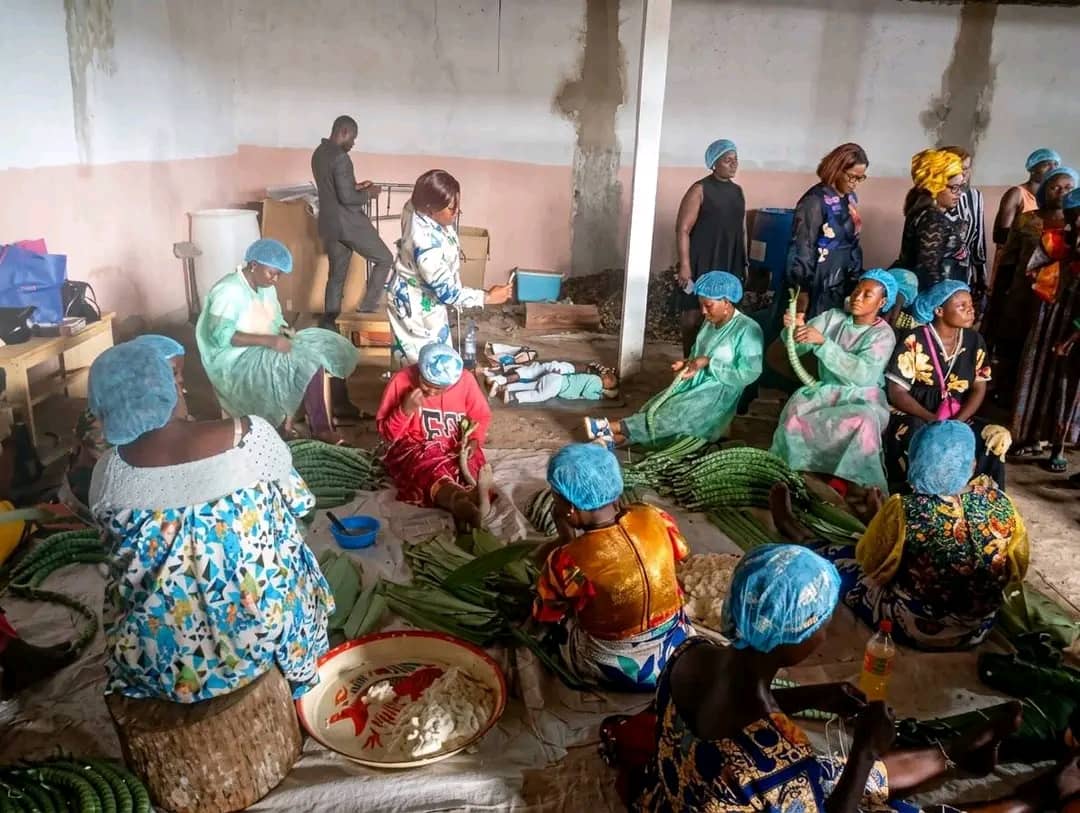
The team, welcomed by the Departmental Delegate of Nyong-et-So'o from the Ministry of Small and Medium-sized Enterprises (MINPMEESA), conducted a thorough review of ongoing activities. This included an immersive visit to a local manioc processing unit, where the dynamism and commitment of the women within the cooperative were particularly evident. This focus on local value addition is a key component of Cameroun AfCFTA manioc transformation strategies, seeking to integrate local producers into regional trade networks and enhance the competitiveness of Cameroonian agricultural products.
Empowering Women Through Manioc Transformation
A central highlight of the mission was a specialized training session designed to enhance the skills of local women producers. Approximately fifty women participated in this program, which focused on optimizing production techniques and transforming raw manioc into a range of high value-added derivative products. This training is crucial for the success of the Projet Manioc et les femmes dans la ZLECAf, as it directly contributes to the economic empowerment of women in Mbalmayo.
The innovations introduced through this training are diverse and impactful, extending the utility of manioc far beyond its traditional role. New product streams include manioc flour, various pastry products, industrial starch, and glue. Furthermore, the project is pioneering the creation of livestock feed and ecological charcoal derived from manioc peels, demonstrating a comprehensive approach to waste utilization and product diversification. These initiatives collectively transform the humble tuber into what is being hailed as "green gold," significantly enhancing its economic potential within the broader chaîne de valeur manioc Afrique.
Official Recognition and Economic Impact
The significance of the Mbalmayo ZLECAf manioc femmes projet was further underscored during a courtesy visit to the Prefect of Nyong-et-So'o, which evolved into a productive working session. The administrative authority expressed strong commendation for the MINPMEESA initiative, recognizing its pivotal role in fostering women's participation in the local economy. This official endorsement highlights the government's commitment to initiatives that promote autonomisation femmes Mbalmayo, viewing them as essential drivers of sustainable development and inclusive growth.
The project signifies a fundamental shift in how manioc is perceived and utilized in the region. No longer merely a subsistence crop, manioc is emerging as a critical raw material for innovation and wealth creation, transforming into what local stakeholders are calling "green gold." This strategic reorientation, supported by MINPMEESA Cameroun initiatives, positions local women at the forefront of economic development, creating new avenues for prosperity and contributing to the broader goals of the AfCFTA by promoting local content and regional trade across the continent.
Practical Implications
This article highlights a practical application of AfCFTA's goals for local value addition and women's economic empowerment in Cameroon. Lawyers advising clients on trade, investment, or agricultural ventures within the AfCFTA framework should monitor such initiatives for potential market access opportunities, regulatory developments concerning local content, and the legal structuring of partnerships with local producers and cooperatives.
Source
How does this affect you?
Get an AI analysis of this article grounded in your jurisdictions, practice areas, and any policy documents you've uploaded to Wansom.
Finish Reading the Full Story and the Expert Analysis.
Get the latest legal & regulatory intelligence in Cameroon
Wansom is AI and can make mistakes.