
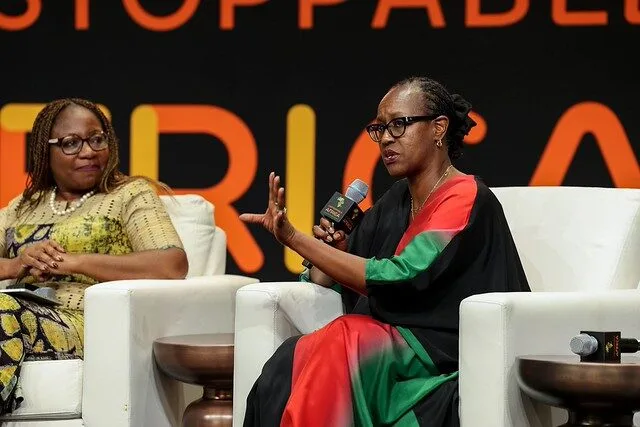
Mary-Ann Musangi: AfCFTA Private Sector Role Key for Implementation
Summary
- Mary-Ann Musangi, Vice Chairperson of the Kenya Association of Manufacturers, urged Africa's private sector to lead the implementation of the African Continental Free Trade Area.
- Speaking at the Unstoppable Africa 2026 forum, Musangi emphasized shifting focus from AfCFTA negotiations to delivering tangible economic benefits for businesses.
- She highlighted the need for practical tools like regulatory convergence, robust infrastructure, and a stronger trade finance ecosystem to overcome current market fragmentation.
- Musangi stressed that the success of AfCFTA should be measured by its real-world economic impact, not merely by signed protocols or established institutions.
- The initiative requires "architects" from various stakeholders, including governments and financial institutions, to fully realize its potential.
Private Sector Imperative for AfCFTA Success
The pertinent question, she argued, is no longer about the existence of a continental free trade agreement, but rather its capacity to empower African businesses to produce, invest, trade, expand, and compete across national borders.
Mary-Ann Musangi, the Board Vice Chairperson for the Kenya Association of Manufacturers (KAM), recently highlighted the crucial **Mary-Ann Musangi AfCFTA private sector role** in transforming the African Continental Free Trade Area (AfCFTA) from a conceptual framework into a fully operational continental market. Addressing attendees at the Unstoppable Africa 2026 forum in New York, which coincided with the 81st United Nations General Assembly, Musangi unequivocally stated that businesses must be at the forefront of efforts to implement the agreement. Her remarks were delivered during a session aptly titled “Tools and Architects: Putting Africa’s Private Sector in the AfCFTA Driver’s Seat,” signaling a significant shift in the continent's strategic priorities.
Musangi underscored that the period for negotiating the AfCFTA framework has concluded, and the continent's focus must now pivot towards generating tangible economic benefits for its enterprises and citizens. The central inquiry, she posited, is no longer whether Africa possesses a continental free trade agreement, but rather its effectiveness in enabling African businesses to produce, invest, trade, scale, and compete across national boundaries. This perspective emphasizes a transition from theoretical discussions to practical, real-world economic integration and impact.
From Ambition to Implementation: Overcoming Fragmentation
The AfCFTA represents the culmination of a decades-long aspiration for economic integration across Africa, dating back to the founding of the Organisation of African Unity in 1963. Its primary objectives encompass establishing a unified market for goods and services, deepening economic integration, fostering industrialization, and empowering African economies to more effectively utilize their resources and markets. With the foundational institutional architecture now largely in place, the paramount challenge has shifted from ongoing negotiations to effective implementation. Musangi stressed that the true measure of AfCFTA's success will be its observable impact on the real economy, rather than simply the number of protocols signed, meetings held, or institutions established.
Historically, Africa boasts a rich tradition of cross-border commerce, evidenced by ancient trans-Saharan trade routes and Indian Ocean trading networks. However, the contemporary economic landscape is characterized by fragmentation, stemming from diverse regulatory systems, varying standards, multiple currencies, and insufficient infrastructure. These factors collectively create significant barriers to the seamless movement of goods and services. The AfCFTA offers a pivotal opportunity to dismantle these structural impediments and reconfigure the continent's economic geography, thereby fostering greater cohesion and efficiency. Achieving this necessitates a concerted drive towards **AfCFTA regulatory convergence** to streamline trade processes and reduce friction.
Essential Enablers for a Unified Market
To fully capitalize on the opportunities presented by the AfCFTA, businesses require a comprehensive set of **African Continental Free Trade Area practical tools**. While tariff preferences are undoubtedly important for market access, they alone are insufficient to guarantee commercially viable trade. Persistent challenges such as delays, multiple inspections, inconsistent documentation, and costly certification requirements continue to complicate cross-border transactions. Consequently, achieving greater convergence in standards, customs procedures, regulatory requirements, and conformity-assessment systems is absolutely critical for unlocking the agreement's full potential.
Infrastructure development is another indispensable component. Robust networks encompassing roads, railways, ports, border posts, airports, energy grids, warehouses, cold chains, and digital connectivity are all vital for facilitating efficient continental trade. Furthermore, access to finance remains a significant obstacle, particularly for small and medium-sized enterprises (SMEs) which frequently struggle to secure affordable working capital, trade finance, and investment. Musangi specifically called for the development of a more robust **AfCFTA trade finance ecosystem** capable of supporting manufacturers, exporters, and SMEs in expanding beyond their domestic markets. Digital infrastructure also holds transformative potential, envisioning a future where an African SME can seamlessly identify markets, verify requirements, obtain certification, secure financing, arrange logistics, complete customs procedures, and receive payments through increasingly integrated digital platforms. However, Musangi cautioned that these tools alone are not enough; the successful implementation of AfCFTA also demands dedicated “architects” across the continent's economic landscape, including governments, the African Union, the AfCFTA Secretariat, regional economic communities, and financial institutions.
Practical Implications
Lawyers and compliance officers should advise clients on proactively engaging with the AfCFTA implementation process, particularly concerning evolving standards, customs procedures, and trade finance mechanisms, to mitigate cross-border trade barriers and capitalize on emerging continental market opportunities.
Source
How does this affect you?
Get an AI analysis of this article grounded in your jurisdictions, practice areas, and any policy documents you've uploaded to Wansom.
Finish Reading the Full Story and the Expert Analysis.
Get the latest legal & regulatory intelligence in Kenya
Wansom is AI and can make mistakes.