
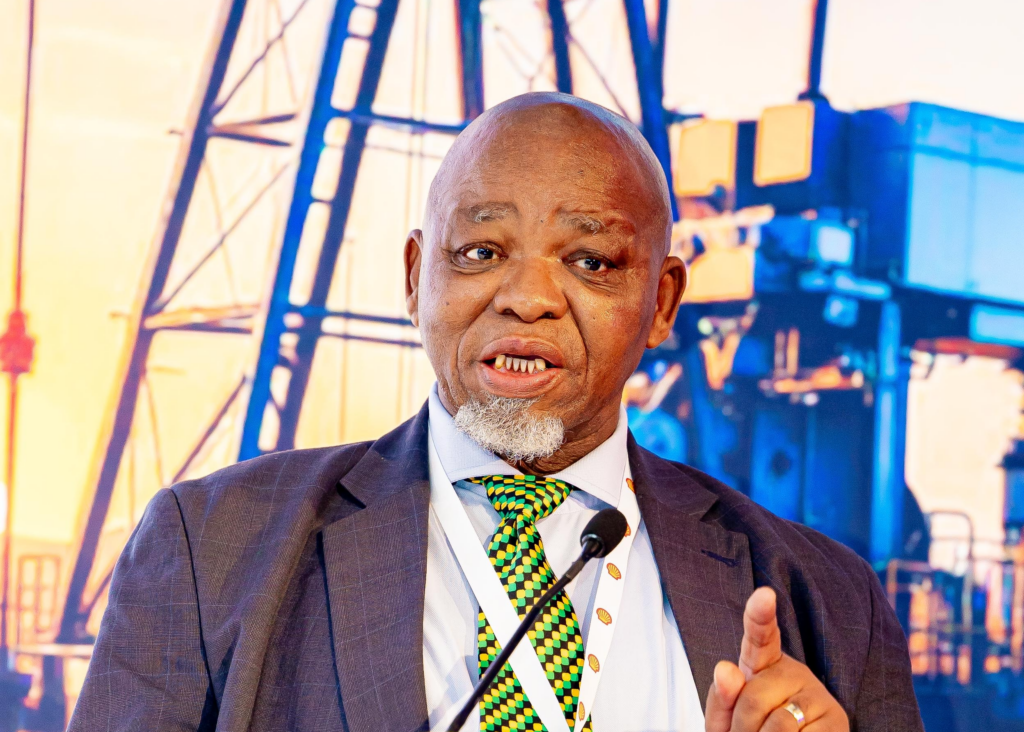
Mantashe Tells Parliament No Fuel Price Relief Is Planned as October Prices Head Toward R29.54
What Mantashe Actually Told Parliament
Responding to a parliamentary question from MP Adil Nchabeleng — who had asked what urgent measures the department had implemented to cushion South Africans from rising fuel costs, specifically referencing August 2026's diesel price increases — Minister Gwede Mantashe said plainly: "There are currently no interventions planned due in part to the ongoing volatility in petroleum product prices." He added that "the department continues to administer fuel prices in a transparent manner as prescribed in legislation."
Mantashe pointed to two things already underway rather than any new relief measure: the department has "already reviewed" the Basic Fuel Price (BFP) component of the pricing structure, and it is separately reviewing the Regulatory Accounting System (RAS) — the mechanism that determines margins at different points in the fuel supply chain — which he said would "bring about equitable, fair and transparent margins across the fuel value chain." This review is targeted for completion by 31 March 2027, per the department's own Annual Performance Plan, meaning — as multiple outlets have noted — it offers no prospect of relief for the immediate October 2026 price increase motorists are facing.
This Review Has a More Ambitious History Than the Parliamentary Answer Suggests
Worth adding context the parliamentary exchange itself doesn't include: this RAS review traces back to a specific, bolder claim Mantashe made in 2024 — that fuel should ultimately cost South Africans around R14 per litre, arguing that levies such as the Road Accident Fund charge and the General Fuel Levy have "distorted" the underlying price of fuel to above R20 per litre. The current review, formalised in the department's 2026/27 Annual Performance Plan as a "critical strategic intervention," specifically examines four cost layers in the fuel supply chain — wholesale, retail, storage, and distribution — through industry submissions, price-index data, exchange rate analysis, and international benchmarking. We note that public updates on the R14 target itself have slowed considerably since 2024, and at least one outlet reported the department did not respond to a direct request for an update on whether that specific figure remains realistic given 2026 oil market conditions. The review now underway should be understood as the technical process behind that earlier political ambition, not a new, separate initiative — and its eventual scope may fall well short of the R14 figure regardless of its March 2027 conclusion.
Treasury's Position: The Same Message, From a Different Ministry
Mantashe's statement echoes comments from Finance Minister Enoch Godongwana the week prior, who said Treasury's ability to offer relief is similarly constrained. Treasury could reduce fuel prices by cutting the tax component — specifically the General Fuel Levy — as it did temporarily in April 2026. Here we found a significant discrepancy worth flagging clearly rather than resolving by picking one figure: the source material for this article states the April 2026 relief cost the budget "over R17 billion," while a separate, independently reviewed account of the same measure cites an official joint government statement at the time describing the initial one-month reduction as expected to cost approximately R6 billion in foregone tax revenue. These figures differ by a factor of nearly three. It's possible the R17 billion figure reflects a later, revised, or cumulative estimate if the relief measure's effects were assessed over a longer period than the "initial one-month" figure describes — but we could not confirm this reconciliation from available sourcing, and recommend Briefly verify the exact figure directly against a National Treasury statement before publishing either number as definitive.
Godongwana has not explicitly ruled out further temporary relief, but economists cited in coverage of his remarks consider it unlikely. He was explicit that shielding consumers fully from fuel price shocks is not the budget's purpose: "Responding to cost-of-living pressures arising from external shocks is therefore part of a broader whole-of-government programme and depends on the effective implementation of these measures." Godongwana framed fiscal policy's core purpose as sustainable public finances, debt stabilisation, and economic growth — with consumer relief from external shocks positioned as a secondary, conditional consideration rather than a primary budget function.
The Price Picture Driving the Political Pressure
South Africa's fuel prices are adjusted monthly by the DMPR, based on daily under-recovery data tracked by the Central Energy Fund (CEF). At current recovery levels, petrol could rise between R2.47 and R2.62 a litre in October, potentially reaching R29.54 a litre — which would be a new record, surpassing June 2026's previous record of R28.06, which itself broke the prior all-time high of R26.74 set in July 2022 during the market shock following Russia's invasion of Ukraine. June 2026's record was driven by market shocks tied to the Iran conflict. Both conflicts remain ongoing, which is the geopolitical volatility Mantashe cited as the primary driver of the current price structure, specifically the Basic Fuel Price component — the portion of the price South Africa imports directly from international markets and has no domestic policy lever to control.
Diesel faces a comparable trajectory: with the wholesale price of 0.005% diesel at R30.05 in September, October could set a new record of R32.86 a litre, well above the pre-2026 record of R25.53 set in July 2022.
These October figures remain projections based on daily under-recovery data, not the final, officially gazetted price — the DMPR's official announcement, typically issued in the first days of the new month, is the only figure that carries legal effect.
Compliance Implications / What This Means for Transport and Logistics Businesses
Who must act, and what specifically changes: Nothing changes in the regulatory framework itself. Mantashe's statement confirms the status quo — existing legislation continues to govern fuel pricing, with no new discretionary mechanism introduced or planned.
Financial and operational exposure: Freight, logistics, and any fuel-intensive business should treat the October increase as highly likely given the consistency of current under-recovery data across multiple independent trackers, and should not expect any near-term policy relief — neither from the DMPR's RAS review (not due until March 2027) nor from Treasury (which has signaled reluctance to repeat the April 2026 levy cut). Budget planning through at least Q1 2027 should assume no fuel-tax relief mechanism will materially offset rising pump prices.
Realistic timeline: The RAS review's 31 March 2027 target is the only concrete regulatory date in this story, and even that review's outcome is uncertain in scope and impact — it is a margin-transparency exercise, not a guaranteed price-reduction mechanism, notwithstanding Mantashe's earlier, more ambitious R14-per-litre framing.
What remains uncertain or pending: The exact fiscal cost of the April 2026 fuel levy relief is unresolved in available sourcing (R6 billion versus R17 billion) and should be confirmed directly before further reporting relies on either figure. Whether Treasury will offer any further temporary relief ahead of or during a record-price October remains unconfirmed, with Godongwana's own language leaving the door only narrowly open. The RAS review's eventual findings, and whether they will produce any actual price reduction rather than simply "equitable and transparent" margin allocation, are undetermined.
Frequently Asked Questions
Is any government relief coming for October's fuel price increase? No, based on both ministers' own statements. Mantashe told Parliament no new interventions are planned. Godongwana has said Treasury's hands are similarly constrained, given the fiscal cost of the April 2026 levy cut, though he has not explicitly ruled out future action.
When will the department's fuel pricing review actually help lower prices? Not before 31 March 2027 at the earliest — the Regulatory Accounting System review's target completion date. Even then, the review is aimed at making margins "equitable, fair and transparent" rather than guaranteed to reduce prices outright.
Did the April 2026 fuel tax cut cost R6 billion or R17 billion? We found both figures in different sourcing and could not reconcile them. An official joint government statement at the time reportedly cited approximately R6 billion for the initial one-month reduction; other reporting cites over R17 billion. This should be verified directly against a National Treasury statement before being reported as a settled figure.
What is Mantashe's R14-per-litre plan, and is it still active? Mantashe first floated a R14-per-litre benchmark in 2024, arguing that levies like the Road Accident Fund charge distort the true cost of fuel. The current Regulatory Accounting System review is the formal process examining this, but public updates on the specific R14 target have slowed significantly, and it's unclear whether the review will produce anything close to that figure.
Why can't South Africa control the fuel price increases directly? Mantashe specifically attributed the current increases to the Basic Fuel Price component, which reflects international crude oil and product prices affected by ongoing geopolitical conflicts (the Iran conflict and Russia-Ukraine war) — a portion of the price structure South Africa imports directly and has no domestic lever to adjust, as distinct from the tax and margin components that are domestically set.
Are the October price figures ($29.54 for petrol) final? No. These are projections based on daily Central Energy Fund under-recovery data as of mid-September. The official, legally effective price is only set by the DMPR's formal announcement, typically issued in the first days of the new month.
Citations
- 1.Mantashe's exact parliamentary quotes and the originating question from MP Adil Nchabeleng: The Citizen, "Mantashe says there is no plan to help with increasing fuel prices: Here's how much you could pay in October".
- 2.The April 2026 relief cost figure of approximately R6 billion, and confirmation the October figures remain projections, not final prices: Today Africa, "South Africa petrol prices could approach R30 a litre in October".
- 3.The Regulatory Accounting System review's scope (four cost layers), its 31 March 2027 target date, and its designation as a "critical strategic intervention" in the department's Annual Performance Plan: MyBroadband, "R14-per-litre petrol and diesel dream in South Africa"; African Insider, "R14-per-litre petrol and diesel plan: What South Africans need to know".
- 4.Background on Mantashe's original 2024 R14-per-litre claim: SA People, "Cheaper fuel dream: Can Mantashe's R14-plan work in SA?".
- 5.Confirmation of the Regulatory Accounting System as an existing, recurring mechanism (not a new system) via a prior official price adjustment: South African Government, "Minister Gwede Mantashe announces adjustment of fuel prices effective from 3 December 2025".
- 6.Mantashe's confirmed title (Minister of Mineral and Petroleum Resources, in office since July 2024) verified independently.
Finish Reading the Full Story and the Expert Analysis.
Get the latest legal & regulatory intelligence in South Africa
Wansom is AI and can make mistakes.