
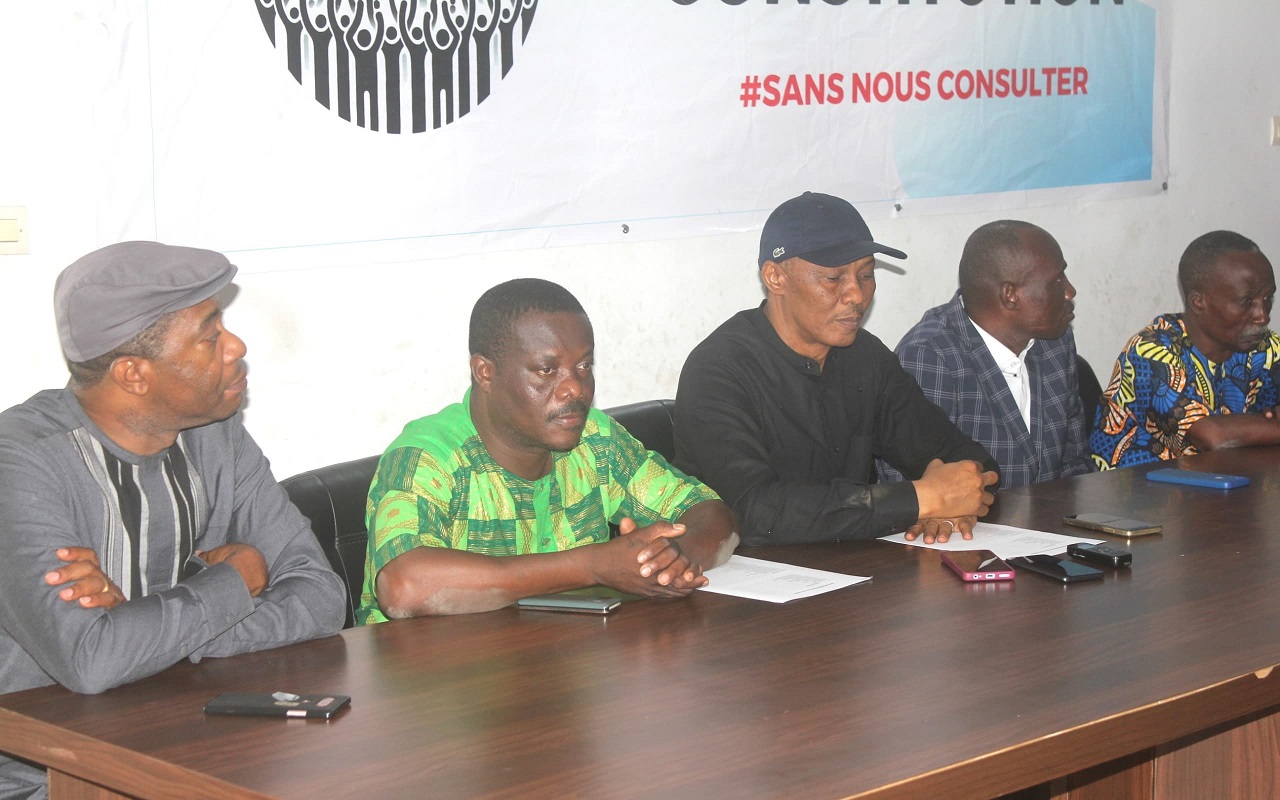
Manifeste Génération Togo: Dénonce Arrestations Arbitraires Après Blocage CNCC Meeting
Summary
- On November 8, 2026, a CNCC meeting in Tsévié was disrupted by security forces, leading to citizen blockages and several arbitrary arrests.
- The Manifeste Génération Togo condemned these actions as "barbaric" and warned of socio-political instability.
- These incidents occurred while the UN CEDEF expressed concern over Togo's shrinking civic space and arbitrary detentions.
- Manifeste Génération Togo cited Article 150 of the Constitution, asserting citizens' rights to public demonstrations.
- The group has called for a nationwide mobilization and a "Journée Patriotique d’Avertissement" on November 20, 2026.
Events Unfold at Tsévié Meeting
The Manifeste Génération Togo dénonce arrestations arbitraires and other repressive tactics, highlighting that these incidents transpired at a time when the Togolese regime was under international scrutiny.
On Sunday, November 8, 2026, a planned gathering of the Cadre National de Concertation pour le Changement (CNCC) in Tsévié was significantly disrupted by security forces, leading to the blocking of numerous citizens and several arrests. This incident occurred despite the CNCC having already faced two prior postponements of their meeting due to what they described as police and administrative harassment. Upon finally securing permission to proceed, attendees and even CNCC leaders encountered barriers erected by security personnel, preventing access to the event.
Eyewitness accounts indicate that hundreds of individuals attempting to reach the CNCC Tsévié meeting were impeded by law enforcement. While the vigilance of CNCC leadership reportedly prevented the situation from escalating into widespread disorder, the actions of the security forces created considerable tension. Multiple arbitrary arrests were made during these blockages, though most of those detained were subsequently released after a short period.
Manifeste Génération Togo Denounces Arbitrary Arrests
In response to these events, the collective known as "Manifeste Génération Togo" issued a strong communiqué, expressing solidarity with the CNCC and vehemently condemning the actions of the security forces. The group characterized these incidents, which included the blocking of citizens and the arbitrary arrests, as "barbaric acts." They specifically warned against what they termed the "dérive des forces de l'ordre," cautioning that such "dangerous maneuvers" by security personnel, whom they linked to the current government, could destabilize an already fragile socio-political climate in Togo.
The Manifeste Génération Togo dénonce arrestations arbitraires and other repressive tactics, highlighting that these incidents transpired at a time when the Togolese regime was under international scrutiny. They pointed out that the United Nations Committee on the Elimination of Discrimination against Women (CEDEF) had recently voiced "deep concern over the shrinking civic space in Togo, the repression of peaceful demonstrations, and arbitrary detentions." The CEDEF had explicitly called for an end to arbitrary arrests and for citizens to be allowed to fully exercise their fundamental freedoms of expression, assembly, and association.
Constitutional Rights and Calls for Mobilization
Against this backdrop of heightened state repression and the CEDEF's concerns regarding the rétrécissement espace civique, Manifeste Génération Togo invoked Article 150 of the Constitution of Togo. They asserted that, under this constitutional provision, no segment of the population, no trade union, civil society organization, or political party should be compelled to submit to the dictates of an "illegal and illegitimate power" concerning public manifestations. This direct reference to Article 150 Constitution Togo manifestations underscores the legal challenge posed by the government's actions.
Looking ahead, the Manifeste Génération Togo has called for widespread mobilization across the country. They urged all Togolese citizens to unite in an effort to end what they describe as a dictatorship, which by January 2027 will have been in power for sixty years. As part of this broader movement, the collective has called for a "Journée Patriotique d’Avertissement" on November 20, 2026, instructing all citizens to cease their activities on that day as a form of protest.
Practical Implications
Lawyers and compliance officers in Togo should be aware of the heightened risks surrounding public assembly and freedom of expression, as evidenced by the arbitrary arrests and police actions at the CNCC meeting. This situation underscores potential human rights violations and constitutional challenges under Article 150, requiring careful legal advice for clients involved in public activities or facing state repression.
Source
How does this affect you?
Get an AI analysis of this article grounded in your jurisdictions, practice areas, and any policy documents you've uploaded to Wansom.
Finish Reading the Full Story and the Expert Analysis.
Get the latest legal & regulatory intelligence in Togo
Wansom is AI and can make mistakes.