
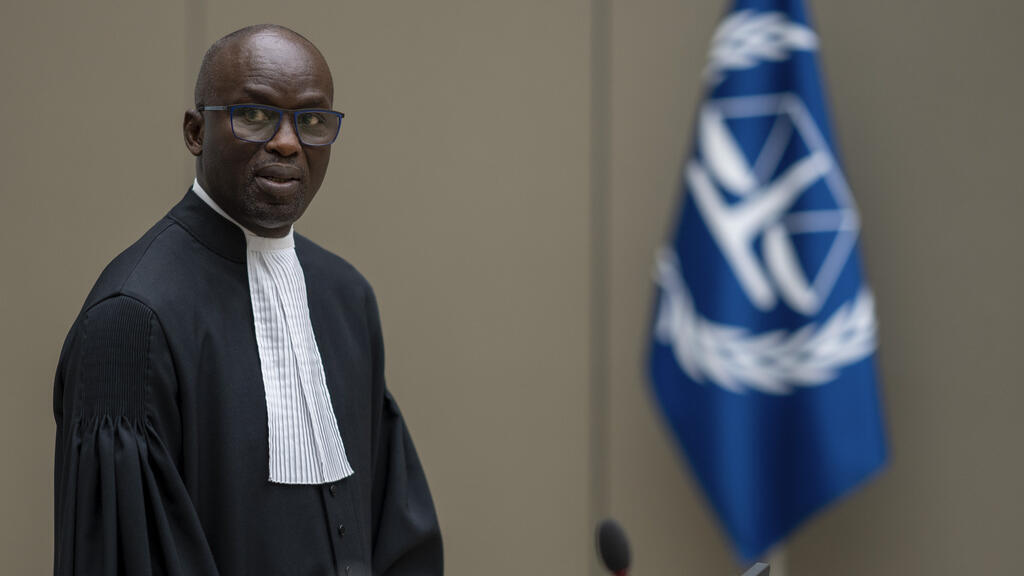
Mame Mandiaye Niang: Addresses ICC US Sanctions, Defends Court
Summary
- Mame Mandiaye Niang, interim head of the ICC prosecutor's office, is navigating US sanctions against tribunal officials.
- The US sanctioned Senegalese official Abdoulaye Sèye on August 18, 2026, freezing assets and banning entry, prompting solidarity from Dakar.
- Niang defends the ICC's decisions as legitimate investigations, rejecting accusations of politicization and corruption.
- Niger notified the UN of its withdrawal from the ICC on June 18, 2026, effective June 18, 2027, amid growing African criticism of selective justice.
- Sanctions have practical impacts on magistrates, including difficulties with financial transactions and travel, requiring ICC assistance.
Recent Challenges for the International Criminal Court
We are in the storm and it is a test of resilience.
Mame Mandiaye Niang, a Senegalese magistrate, has been serving as the interim head of the International Criminal Court (ICC) prosecutor's office for the past three months, following the forced departure of Karim Khan. In this capacity, Niang is currently navigating significant pressure stemming from US measures targeting officials within the tribunal. The legitimacy and independence of the ICC are increasingly under scrutiny, particularly as Washington has voiced strong objections to the Court's decision to pursue cases against Israel's Prime Minister and its former Minister of Defense. Concurrently, the ICC had also issued arrest warrants for three leaders of Hamas, but these warrants have since been withdrawn or cancelled following the deaths of the individuals.
The United States escalated its stance on August 18, 2026, by announcing sanctions against several ICC officials. Among those directly affected was Abdoulaye Sèye, a Senegalese senior trial lawyer at the Prosecutor's Office, who faced an asset freeze and a prohibition from entering US territory. In response, Dakar promptly expressed its full solidarity with Sèye, reaffirming Senegal's steadfast commitment to multilateralism and the principles underpinning the ICC. These actions highlight the complex geopolitical landscape in which the Mame Mandiaye Niang ICC US sanctions controversy unfolds.
Upholding Judicial Independence
Despite these external pressures, Mame Mandiaye Niang firmly asserts that the decisions made by the ICC are the legitimate outcome of thorough investigations. He unequivocally states that the International Criminal Court is not a corrupt institution. Niang characterizes the ICC as a judicial body established by numerous states, designed to intervene in situations where national justice systems prove inadequate. Its core function involves meticulously verifying whether war crimes, crimes against humanity, or genocide have occurred, and subsequently determining the Court's jurisdiction over such matters.
The interim prosecutor rejects the accusation of politicization leveled by the United States. While acknowledging that political, religious, or ideological motivations might underpin certain crimes, Niang emphasizes that the examination conducted by the magistrates remains a fundamentally legal process. He concedes that the Court's actions inevitably displease some actors and that the US reactions were, to a degree, foreseeable. Nevertheless, he maintains that the decisions taken were both legal and legitimate, describing the current period as "a storm" and "a test of resilience" for the institution.
Global Scrutiny and Operational Hurdles
The challenges confronting the ICC extend beyond Washington's actions. On June 18, 2026, Niger formally communicated its intention to withdraw from the International Criminal Court to the United Nations, a decision slated to become effective precisely one year later, on June 18, 2027. The ICC confirmed its receipt of this notification on June 23, expressing regret over the development. This impending departure coincides with escalating criticism across the African continent, where concerns about selective justice and susceptibility to external pressures are increasingly voiced.
These criticisms were prominently featured during the screening of a documentary titled "The International Criminal Court: Universal Justice Without Universality" on February 13, 2026, in Addis Ababa. This event, held on the sidelines of the 39th African Union summit, underscored the profound crisis of legitimacy currently facing the tribunal, even as its leadership strives to defend its role against accusations of partiality. The practical implications of the US sanctions are also significant, impacting the daily lives of affected magistrates. They can no longer use bank cards for purchases, and booking accommodations or travel becomes difficult when credit card payments are required, necessitating reliance on third parties. The Court itself provides assistance for operations that individuals can longer manage independently. This situation echoes past events, as Gambian Fatou Bensouda, a former ICC prosecutor, also faced sanctions during the initial term of Donald Trump's presidency.
Navigating a Crisis of Legitimacy
For the Prosecutor's Office, the cumulative effect of these punitive measures and Niger's announced withdrawal presents a more expansive and critical challenge. The central issue now is how to safeguard the capacity of an international judicial body to effectively carry out its mandate, all while simultaneously addressing persistent accusations of selectivity that threaten to undermine its authority and credibility on the global stage. The ongoing scrutiny tests the very foundation of the ICC's universal jurisdiction.
Source
How does this affect you?
Get an AI analysis of this article grounded in your jurisdictions, practice areas, and any policy documents you've uploaded to Wansom.
Finish Reading the Full Story and the Expert Analysis.
Get the latest legal & regulatory intelligence in Senegal
Wansom is AI and can make mistakes.