
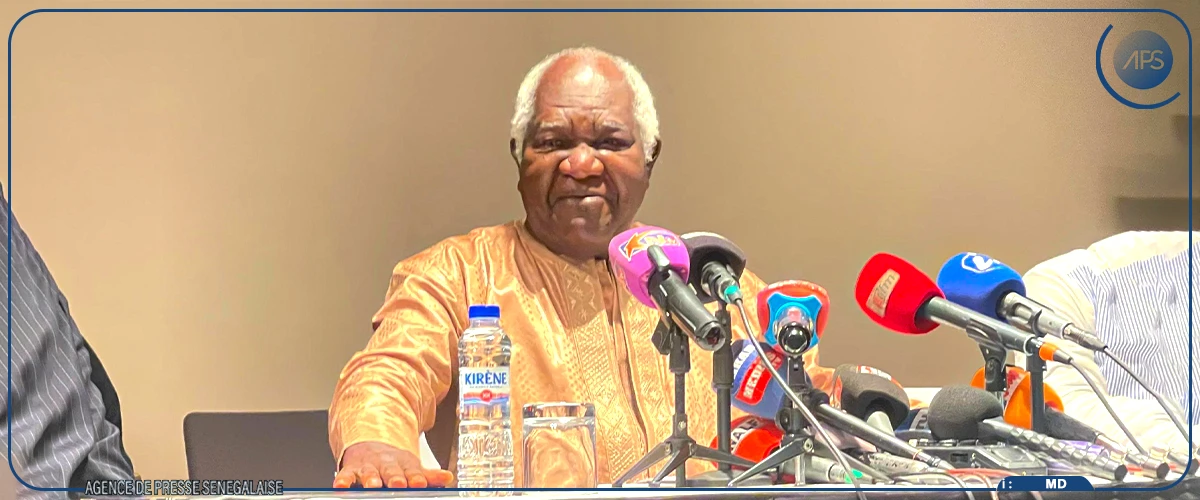
Mamadou Ndoye Calls for National Consensus on Senegal Constitutional Revision
Summary
- Mamadou Ndoye calls for national consensus on constitutional revision in Senegal.
- Civil society organizations continue to work towards a national consensus to ensure any future revised constitution reflects balance and non-partisanship.
- The revised constitution will define fundamental principles of institutional functioning and social coexistence in Senegal, making it a critical issue for both domestic and international stakeholders.
What Happened
He emphasized the need to build on existing commitments from political actors, including the Pacte de bonne gouvernance and conclusions from the Assises nationales.
Mamadou Ndoye, a former minister and representative of the Sursaut citoyen civil society movement, called for a national consensus on constitutional revision during a press conference in Dakar on August 12. He emphasized the need to build on existing commitments from political actors, including the Pacte de bonne gouvernance and conclusions from the Assises nationales. Ndoye warned that failing to achieve a consensus could lead to two undesirable scenarios: either no constitutional revision at all or a partisan text that reflects the interests of one particular camp. He highlighted the importance of a national approach to the issue, as the revised constitution will define the fundamental principles of institutional functioning and social coexistence in Senegal.
Legal Context
While a constitutional revision process had been ongoing for several years, a specific set of reforms passed by the National Assembly on June 29, 2026, were subsequently declared unconstitutional by Senegal's Constitutional Council on July 9 and 10, 2026, effectively halting that particular revision. Earlier, in April, the Presidency had finalized several draft laws, including a revised constitution, which were made public on a digital platform. The collectif Noo Lank had previously called for a national consensus before any modifications to the fundamental text, criticizing a logic of force-based relations between institutions. Ndoye's appeal is part of a broader effort by civil society organizations to contribute to the search for consensus and ensure that any future revised constitution reflects the principles of balance and non-partisanship.
Why It Matters
The constitutional revision process, despite recent setbacks, continues to have significant implications for Senegalese politics and business operations. Lawyers and compliance officers should be aware of the evolving nature of this process, which could impact investment decisions and business operations in Senegal. Any future revised constitution will define the fundamental principles of institutional functioning and social coexistence in Senegal, making it a critical issue for both domestic and international stakeholders.
Practical Implications
Lawyers and compliance officers should watch for potential delays or changes to the constitutional revision process, which could impact business operations and investment decisions in Senegal.
Source
Source: Original reporting via APS
How does this affect you?
Get an AI analysis of this article grounded in your jurisdictions, practice areas, and any policy documents you've uploaded to Wansom.
Wansom is AI and can make mistakes.