
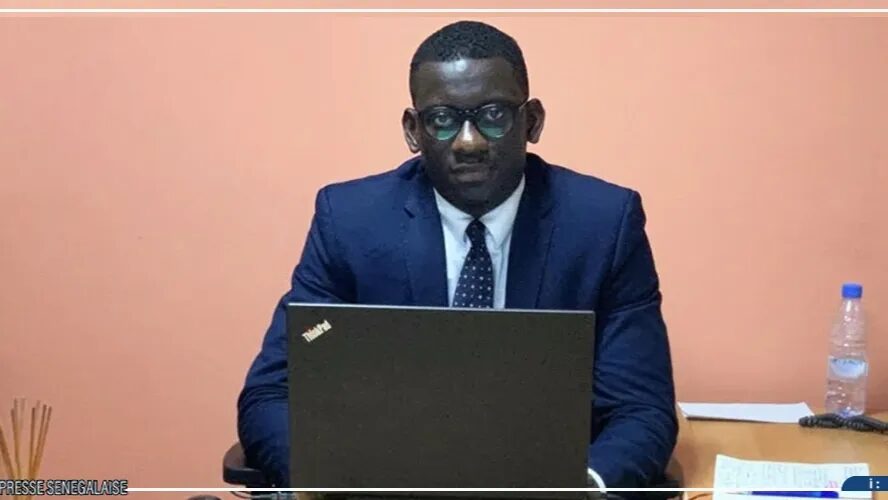
Mamadou Manizor Thiam: Sénégal Faces Budgetary Chaos Amid Institutional Crisis
Summary
- Financial expert Mamadou Manizor Thiam predicts budgetary chaos in Senegal by early 2027 due to government-Parliament disagreement.
- The rejection of the loi de finances rectificative 2026 and blockages on the 2027 budget fuel concerns over an institutional crisis.
- Senegal faces a projected budget deficit of 7.6% of GDP and a national debt of 128% of GDP, far exceeding standard thresholds.
- The state reportedly owes businesses nearly 1.9 trillion CFA francs in payment arrears, threatening a "domino effect" on SMEs.
- Commitments to a $2.2 billion IMF program are at risk if not approved by the National Assembly, following a previous $1.8 billion program frozen due to $11 billion in hidden debts. The current program has a staff-level agreement but awaits full approval.
Escalating Budgetary Tensions in Senegal
Financial expert Mamadou Manizor Thiam has issued a stark warning regarding potential budgetary chaos in Senegal, anticipating its onset as early as the beginning of 2027.
Financial expert Mamadou Manizor Thiam has issued a stark warning regarding potential budgetary chaos in Senegal, anticipating its onset as early as the beginning of 2027. This apprehension arises from a persistent deadlock between the Senegalese government and its Parliament concerning public financial management. Thiam characterized the ongoing dispute over the rectifying finance law as a "spiral" that could lead to an intractable stalemate. He views this budgetary disagreement not merely as a financial issue but as an institutional crisis, suggesting it might also conceal a deeper political one.
The expert's concerns are primarily driven by two key events: the rejection of the loi de finances rectificative 2026 Sénégal on November 3, and the subsequent impasses encountered in parliamentary committees during discussions on the initial budget for 2027. These legislative hurdles underscore the profound divisions that threaten the nation's fiscal stability. The inability to reconcile these financial discrepancies between the executive and legislative branches forms the core of Thiam's prediction of impending fiscal disorder.
Dire Economic Indicators and State Arrears
Thiam's analysis points to several alarming economic indicators that highlight the severity of the country's fiscal challenges. He projects a budget deficit reaching 7.6% of the Gross Domestic Product (GDP), significantly exceeding the standard benchmark of 3%. Furthermore, the national debt is estimated to be 128% of GDP, far surpassing the prudent threshold of 70%. These figures paint a concerning picture of the nation's financial health and contribute to the overall risk of chaos budgétaire.
Beyond these macroeconomic concerns, Thiam also drew attention to the detrimental effects of the state's delayed payments to private enterprises, particularly small and medium-sized businesses (SMEs). He emphasized that businesses constitute the primary budgetary foundation for the state, warning of a potential "domino effect" on SMEs if these arrears persist. The expert estimates that the government currently owes these businesses nearly 1.9 trillion CFA francs in outstanding payments, a substantial sum that impacts their operational viability and the broader economy. This issue directly relates to the arriérés paiement État entreprises Sénégal.
International Financial Commitments at Risk
A critical component of the current budgetary impasse involves Senegal's commitments to the International Monetary Fund (IMF). Thiam explicitly cautioned that these vital international obligations could be jeopardized if they are not formally codified or approved by the National Assembly. This warning is particularly pertinent given the country's history with the IMF; a previous program, valued at $1.8 billion, was frozen after the revelation of undisclosed debts exceeding $11 billion. This historical burden of hidden liabilities continues to influence ongoing budget negotiations.
The financial expert highlighted that the current disagreement between the executive and legislative branches centers significantly on these engagements FMI Sénégal. The National Assembly's decisions are therefore paramount, as a continued budgetary deadlock could compromise the successful conclusion of the current $2.2 billion financial program, which has reached a staff-level agreement but is still subject to IMF Executive Board approval and other conditions. The potential failure to secure or maintain these international financial lifelines adds another layer of complexity to the unfolding crise budgétaire institutionnelle Sénégal.
Broader Economic and Political Ramifications
The financial expert also considered potential political and economic responses to the deepening crisis, ultimately dismissing several options due to their prohibitive economic costs. He ruled out the renewal of the initial budget, the invocation of governmental responsibility, or the dissolution of Parliament, citing the significant financial repercussions each would entail. This highlights the limited viable pathways for resolution without incurring further economic strain.
Thiam further warned that a prolonged budgetary impasse could deter foreign direct investment in Senegal. Investors, he suggested, might become increasingly reluctant to commit capital if the country's fiscal stability remains uncertain. This potential chilling effect on investment underscores the far-reaching consequences of the current legislative and budgetary gridlock, extending beyond immediate financial concerns to impact long-term economic growth and stability.
Practical Implications
Lawyers advising businesses in Senegal, particularly those with government contracts or state-dependent operations, should assess the increased risk of payment delays and potential contract breaches due to the projected budget chaos and significant state arrears. This situation may also impact foreign investment and overall economic stability, requiring close monitoring for compliance and risk management.
Source
How does this affect you?
Get an AI analysis of this article grounded in your jurisdictions, practice areas, and any policy documents you've uploaded to Wansom.
Finish Reading the Full Story and the Expert Analysis.
Get the latest legal & regulatory intelligence in Senegal
Wansom is AI and can make mistakes.