
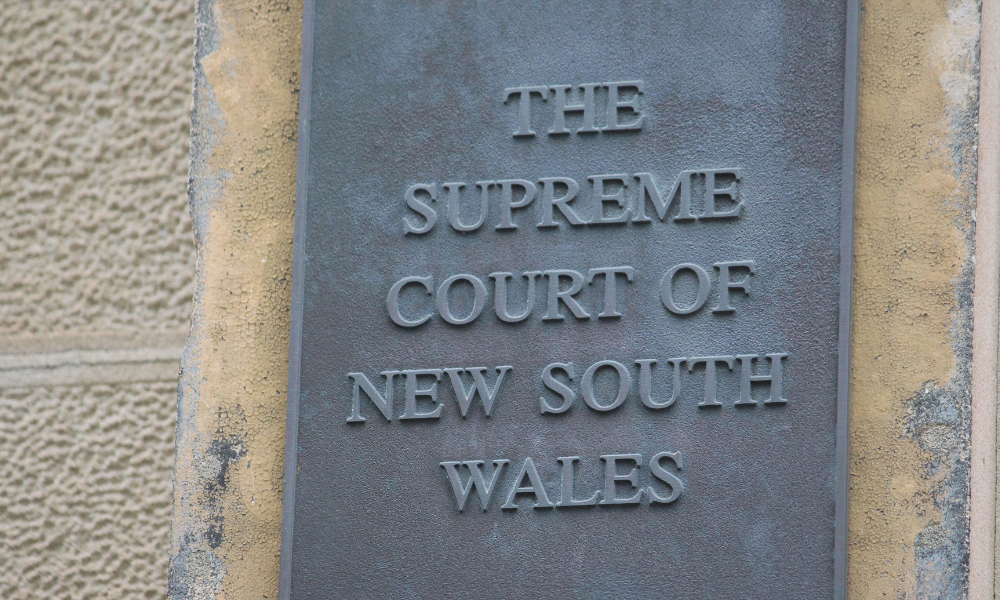
NSWCA: Malouf v Mavrakis NSW Solicitor Costs Remittal to District Court
Summary
- The NSW Court of Appeal remitted a solicitor costs dispute back to the District Court after finding a jurisdictional error in the primary judge's handling of the appeal.
- The dispute involved a solicitor's claim for $111,274.54, which a review panel reduced to $31,158.63 for disbursements, noting professional fees would have been $55,000 if assessed.
- The District Court primary judge reinstated the initial assessor's determination without assessing the costs' fairness or reasonableness, leading to the client's judicial review application.
- The NSWCA ruled that District Courts, when hearing appeals under s 89 of the LPULAA, must rehear the review application and independently assess costs for fairness and reasonableness under s 200 of the LPUL.
- This decision in Malouf v Mavrakis [2026] NSWCA 176 clarifies the procedural requirements for `NSWCA 176 solicitor costs assessment` and the standard for `Legal Profession Uniform Law Application Act 2014 costs` appeals.
Background to the Costs Dispute
The appellate court determined that the District Court must conduct a full rehearing of the review application and independently assess whether the solicitor fees were fair and reasonable, in accordance with the criteria outlined in section 200 of the Legal Profession Uniform Law (LPUL).
The New South Wales Supreme Court's Court of Appeal recently addressed a significant dispute concerning solicitor fees, remitting the matter to the District Court for a proper assessment of whether the costs were fair and reasonable. This case, Malouf v Mavrakis t'as Mavrakis & Associates Lawyers (No 2) [2026] NSWCA 176, originated from a personal injury claim where the applicant, Mr. Malouf, sought damages for an incident in April 2017. The first respondent, a solicitor trading as Mavrakis & Associates Lawyers, represented Mr. Malouf in this personal injury claim until approximately May 2021.
The solicitor terminated his retainer before the conclusion of the personal injury proceedings, citing non-payment of disbursements. Following this, on March 29, 2022, the solicitor applied for an assessment of his costs under section 68 of the Legal Profession Uniform Law Application Act 2014 (NSW) (LPULAA). An initial costs assessor issued a certificate of determination on October 21, 2022, finding that costs amounting to $111,274.54 were payable upon the retainer's termination. Mr. Malouf subsequently sought a review of this determination.
On May 1, 2023, a review panel issued a substituted determination, significantly reducing the payable amount to $31,158.63, which primarily reflected the solicitor's disbursements. The review panel explicitly stated it did not need to assess the solicitor's professional fees, but noted that if such an assessment had been required, they would have fixed these fees at $55,000, inclusive of Goods and Services Tax (GST). The solicitor then appealed this review panel decision to the NSW District Court on August 28, 2023, under section 89 of the LPULAA.
District Court's Jurisdictional Error and Appeal Outcome
In December 2025, the primary judge of the District Court, hearing the solicitor's appeal, decided to stay the proceedings until Mr. Malouf's personal injury claim was resolved. Crucially, the judge declined to undertake an assessment of the costs claim himself, instead opting to reinstate the initial determination made by the costs assessor. The personal injury claim was later resolved through a consent judgment on July 15, 2024, which awarded Mr. Malouf $500,000 in damages and an additional $200,000 for costs.
Dissatisfied with the District Court's handling of the costs appeal, Mr. Malouf filed an amended summons on June 24, 2026, seeking a judicial review of the primary judge's decisions and orders. The NSW Supreme Court's Court of Appeal subsequently intervened, setting aside the District Court's orders dated December 12, 2025, February 13, 2026, and March 5, 2026. The appellate court remitted the entire matter back to the primary judge for proper consideration, with no order as to costs for the appeal.
Clarifying the Standard for Solicitor Costs Assessment
The NSW Court of Appeal's decision in Malouf v Mavrakis provides critical clarification regarding the responsibilities of the District Court when hearing appeals under section 89 of the LPULAA. The appellate court determined that the District Court must conduct a full rehearing of the review application and independently assess whether the solicitor fees were fair and reasonable, in accordance with the criteria outlined in section 200 of the Legal Profession Uniform Law (LPUL). The Court of Appeal identified a clear jurisdictional error in the primary judge's failure to fulfill the requirements mandated by section 89 of the LPULAA.
The appellate court underscored that the primary judge's role was not merely to accept a prior costs assessment but to actively engage in the `solicitor costs assessment` process. It suggested that had the primary judge properly assessed the reasonableness of the costs, there was a strong possibility he would have aligned with the review panel's rationale for substituting a significantly lower determination of the solicitor's costs than that initially fixed by the assessor. This ruling clarifies the procedural obligations for `jurisdictional error District Court costs` appeals and sets a precedent for how `solicitor fees reasonableness dispute` cases must be handled.
Practical Implications
Lawyers and compliance officers in NSW should note this ruling clarifies that District Courts, when hearing appeals under s 89 of the LPULAA, must actively rehear and assess the fairness and reasonableness of solicitor costs under s 200 of the LPUL, rather than simply reinstating prior determinations. This sets a precedent for challenging or defending costs assessments and highlights a critical procedural requirement for judges in such matters.
Source
How does this affect you?
Get an AI analysis of this article grounded in your jurisdictions, practice areas, and any policy documents you've uploaded to Wansom.
Finish Reading the Full Story and the Expert Analysis.
Wansom is AI and can make mistakes.