
Malindi Court Lamu Refinery Status Quo Order: Land Dispute Halts Project
Summary
- The Malindi Environment and Land Court has ordered a status quo on land disputed for the approximately Sh2 trillion ($16 billion) Lamu refinery until October 14.
- Over 130 residents have sued, citing concerns over land, compensation, public participation, and jobs, following protests shortly before the groundbreaking ceremony scheduled for today, September 30, 2026.
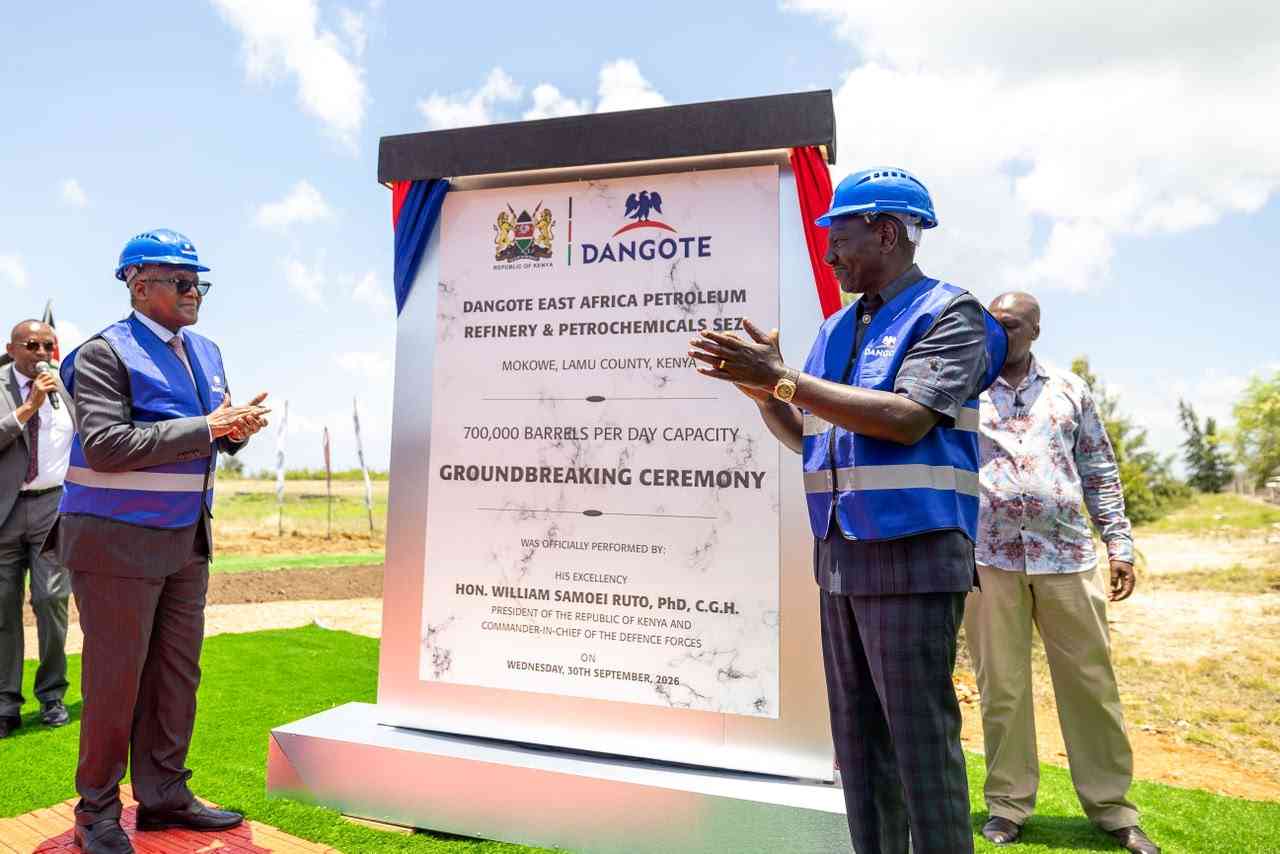
- President William Ruto and Aliko Dangote affirmed their commitment to the project, despite the legal challenge, with Ruto warning against attempts to frustrate investors.
- The refinery aims to process 700,000 barrels of crude oil daily, generate 1,000 MW of electricity, and reduce Kenya's reliance on imported petroleum.
- The government plans to take a stake in the project using public assets and the National Infrastructure Fund, offering Kenyans opportunities to buy shares.
Legal Challenge Halts Lamu Refinery Land Activity
The Malindi Court Lamu refinery status quo order effectively freezes any further development or alteration on the contested parcels, pending further legal proceedings.
The Malindi Environment and Land Court has issued a significant directive, ordering all parties involved in a dispute over land earmarked for the proposed approximately Sh2 trillion ($16 billion) Lamu refinery to maintain the existing status quo. This judicial intervention, which remains in effect until October 14, comes as a direct response to a lawsuit filed by more than 130 local residents, introducing a notable legal hurdle for the ambitious infrastructure project.
The residents' legal challenge and prior street protests in Lamu, which occurred shortly before the project's groundbreaking ceremony scheduled for today, September 30, 2026, highlight deep-seated concerns. Their grievances center on critical issues including land ownership, adequate compensation for acquired properties, the extent of public participation in the project's planning, and the provision of jobs for the local community. These issues underscore the complex social and legal landscape surrounding large-scale development initiatives in Kenya, particularly those involving extensive land acquisition.
The Malindi Court Lamu refinery status quo order effectively freezes any further development or alteration on the contested parcels, pending further legal proceedings. This ruling underscores the importance of addressing community concerns and adhering to due process in land acquisition for major developments, even those with strong government backing and significant investment.
Government and Investor Vow Continued Commitment
Despite the ongoing legal challenge and community opposition, both President William Ruto and businessman Aliko Dangote have publicly reaffirmed their unwavering commitment to the construction of the Lamu refinery. Speaking at the project's groundbreaking ceremony, President Ruto issued a stern warning against any attempts to obstruct investors through court cases, intermediaries, or demands for financial compensation, emphasizing the government's full support for the initiative.
President Ruto characterized investors as essential partners and friends, asserting that Dangote's involvement transcends mere financial investment, representing a crucial step towards regional development. He assured stakeholders that no one would be permitted to extort funds or receive unearned benefits from the project. Similarly, Dangote, whose group is a key investor, acknowledged that while the land dispute might impact certain on-site activities, it would not ultimately halt the refinery's progress. The President also criticized individuals he accused of sponsoring court cases against the project, warning that brokers and opportunists would not be tolerated in interfering with investors.
This firm stance from both the highest political office and the primary private investor signals a determination to push forward with the project, despite the Kenya infrastructure project legal challenge. It frames the Lamu oil refinery land acquisition lawsuit as a challenge to be navigated rather than an insurmountable obstacle, reinforcing the government's message that Kenya remains a welcoming partner for significant investments.
Strategic Vision for Regional Energy and Industrial Growth
The Lamu refinery is envisioned as a cornerstone for East African energy security and industrialization, designed with an impressive capacity to process up to 700,000 barrels of crude oil daily. Its primary objective is to supply refined petroleum products not only to Kenya but also to other markets across the East African region, significantly bolstering the area's energy independence. Beyond fuel production, the project is also slated to generate up to 1,000 megawatts of electricity, with a portion intended to serve the broader regional grid.
President Ruto articulated the project's broader strategic importance, describing it as an investment transcending the scope of a mere refinery, encompassing energy security, industrialization, and regional integration. He highlighted Kenya's substantial reliance on imported petroleum products, which amounted to Sh530 billion last year, as a key driver for the refinery. While acknowledging that the refinery would not eliminate the import bill instantaneously—as crude supplies would still be necessary and fuel production would need to remain competitively priced—he stressed its long-term benefits.
The refinery is projected to stimulate significant economic activity, creating demand for a wide array of services and professionals, including transporters, engineers, contractors, and other service providers. Furthermore, it is expected to serve as an anchor, fostering the growth of petrochemical and manufacturing industries in the vicinity of Lamu, thereby creating a robust industrial ecosystem around this pivotal infrastructure development.
Government's Partnership and Investment Model
The Kenyan government is actively positioning the Lamu refinery as a collaborative venture between the public and private sectors. In this partnership model, the state commits to providing essential policy frameworks, infrastructure support, and regulatory oversight, while private investors are tasked with mobilizing the necessary capital and technical expertise required for such a large-scale undertaking.
President Ruto confirmed the government's intention to acquire a stake in the refinery, leveraging public assets, including land, and utilizing the National Infrastructure Fund for investment. This approach underscores a proactive role for the government beyond mere facilitation, ensuring direct participation in the project's ownership and future benefits. The President also announced plans to offer Kenyans an opportunity to invest directly in the refinery by purchasing shares through the Nairobi Securities Exchange, once the detailed investment structure is finalized.
This comprehensive strategy aims to distribute the benefits of the Dangote Lamu refinery investment across various stakeholders, from the government and private sector to individual Kenyan citizens. It reflects a commitment to fostering broad-based economic participation and ensuring that the project's success contributes to national wealth and development.
Practical Implications
Lawyers advising on large infrastructure projects in Kenya should note the Malindi Environment and Land Court's status quo order regarding the Lamu refinery land dispute. This highlights the ongoing legal risks and community opposition that can impact project timelines and investor confidence, even with strong government and private sector backing.
Source
How does this affect you?
Get an AI analysis of this article grounded in your jurisdictions, practice areas, and any policy documents you've uploaded to Wansom.
Finish Reading the Full Story and the Expert Analysis.
Get the latest legal & regulatory intelligence in Kenya
Wansom is AI and can make mistakes.