
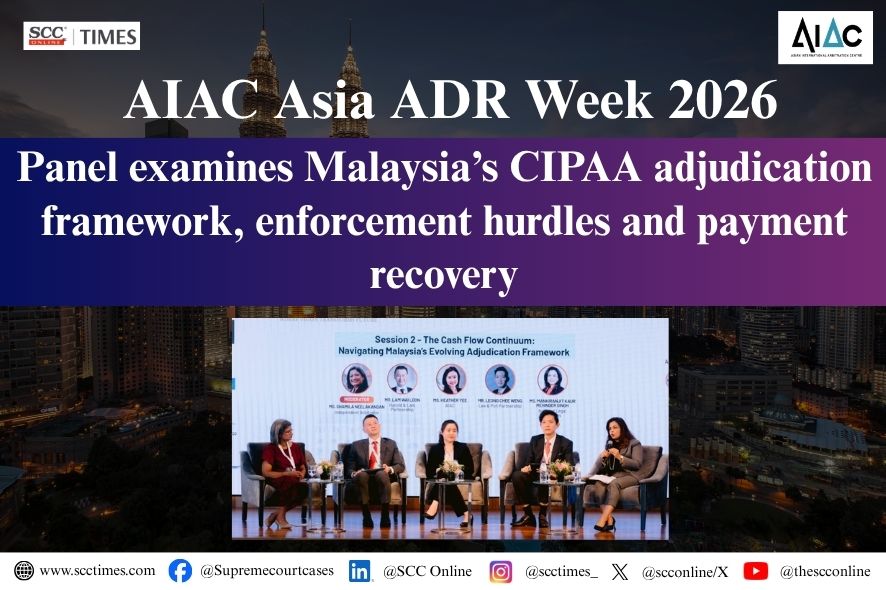
Malaysia CIPAA: Experts Discuss Adjudication Framework Enforcement Challenges
Summary
- A panel at AIAC ADR Week 2026 discussed Malaysia's Construction Industry Payment and Adjudication Act (CIPAA).
- The discussion covered CIPAA's operation, adjudicator roles, procedural efficiency, and the use of AI.
- Key challenges addressed included enforcement hurdles and payment recovery under the CIPAA framework.
- The panel also examined legal mechanisms such as applications for stay and setting aside of adjudication awards.
- The session provided critical insights into the evolving landscape of Malaysia CIPAA adjudication framework enforcement.
Overview of Key Discussions
Understanding these procedures is vital for legal practitioners advising clients on strategic approaches to payment disputes and risk mitigation in the construction industry.
The AIAC ADR Week 2026 featured a significant panel discussion titled "The Cash Flow Continuum: Navigating Malaysia’s Evolving Adjudication Framework." This event brought together experts to thoroughly examine the operational aspects of the Construction Industry Payment and Adjudication Act (CIPAA) in Malaysia. The comprehensive session covered various critical elements, including the process for appointing adjudicators, their specific roles within the framework, and the overall efficiency of the procedural mechanisms.
Beyond the foundational aspects, the panel also delved into more contemporary considerations impacting the Malaysia CIPAA adjudication framework enforcement. Discussions extended to the potential integration of Artificial Intelligence (AI) within the adjudication process, alongside a detailed analysis of the challenges associated with enforcing CIPAA decisions. A particular focus was placed on the hurdles encountered in payment recovery and the legal avenues available, such as applications for stay and setting aside of adjudication awards.
Understanding Malaysia's CIPAA Framework
Malaysia's Construction Industry Payment and Adjudication Act is a pivotal piece of legislation designed to facilitate prompt payment in the construction sector. The panel at AIAC ADR Week 2026 provided an in-depth look at how this framework operates, emphasizing its role in ensuring a healthy cash flow continuum for industry participants. A key component of this framework is the adjudicator, whose appointment process and defined responsibilities were thoroughly explored, highlighting their central role in resolving payment disputes efficiently.
Procedural efficiency under CIPAA was another significant area of focus. Experts discussed how the framework is structured to offer a swift and effective mechanism for dispute resolution, contrasting it with more traditional, often lengthier, legal processes. This efficiency is crucial for maintaining project momentum and financial stability within construction projects, underscoring the importance of a well-understood and effectively implemented adjudication system for Malaysia construction dispute resolution.
Enforcement Challenges and Legal Recourse
A central theme of the panel's discussion revolved around the practical difficulties and CIPAA payment recovery hurdles faced by parties seeking to enforce adjudication awards. Despite the framework's design for expedited resolution, the journey from an award to actual payment can present significant obstacles. These enforcement challenges necessitate a clear understanding of the legal mechanisms available to parties.
The session specifically addressed applications for stay and setting aside of CIPAA awards, which represent critical junctures in the enforcement process. These legal avenues allow parties to challenge or temporarily halt the enforcement of an award, adding layers of complexity to the overall Malaysia CIPAA adjudication framework enforcement. Understanding these procedures is vital for legal practitioners advising clients on strategic approaches to payment disputes and risk mitigation in the construction industry.
Why This Matters for the Industry
The insights shared by the AIAC Asia ADR Week 2026 CIPAA panel are particularly pertinent for legal professionals and stakeholders involved in construction projects across Malaysia. The evolving landscape of construction dispute resolution, coupled with the increasing complexity of payment recovery, demands a nuanced understanding of CIPAA's strengths and limitations. The discussion underscored that while CIPAA aims to streamline payments, the practicalities of enforcement and the potential for legal challenges remain critical considerations.
For lawyers advising on construction projects, a deep awareness of these dynamics is essential for providing strategic counsel. Navigating the intricacies of the Construction Industry Payment and Adjudication Act Malaysia, including the nuances of enforcement and the implications of stay and setting aside applications, directly impacts a client's ability to recover payments and manage financial risks effectively. The panel's exploration of these topics provides valuable insights into best practices and potential areas for strategic legal advice in an ever-changing regulatory environment.
Practical Implications
Lawyers advising on construction projects in Malaysia should be aware of the evolving challenges and best practices in CIPAA adjudication, particularly regarding enforcement hurdles and payment recovery, as highlighted by industry experts. This discussion provides insights into potential areas for strategic legal advice and risk mitigation for clients involved in construction payment disputes.
Source
Source: Original reporting via SCC Times
How does this affect you?
Get an AI analysis of this article grounded in your jurisdictions, practice areas, and any policy documents you've uploaded to Wansom.
Finish Reading the Full Story and the Expert Analysis.
Get the latest legal & regulatory intelligence in India
Wansom is AI and can make mistakes.