
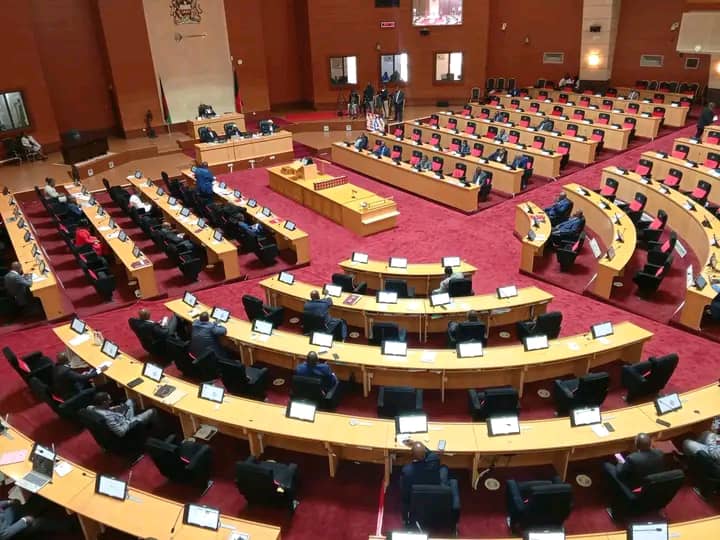
Malawi Legal Affairs Committee: Backs Chichewa Language Proposal
Summary
- Malawi's Parliamentary Legal Affairs Committee has proposed making Chichewa the dominant communication language in the National Assembly.
- The proposal has drawn criticism, being labeled a "profound failure of logic and statecraft."
- Malawi is a linguistically diverse nation, boasting at least 16 distinct local languages.
- Critics argue that elevating Chichewa to the primary parliamentary language could marginalize other linguistic communities.
Malawi's Proposed Legislative Language Shift
Critics have voiced strong objections to the Malawi Parliament Chichewa language proposal, asserting that the decision by the Malawi Parliamentary Legal Affairs Committee to elevate a single language, Chichewa, to the apex of parliamentary discourse in such a linguistically varied nation constitutes a profound failure of both logical reasoning and effective statecraft.
A significant legislative development is unfolding within Malawi's political landscape, as the Parliamentary Legal Affairs Committee has put forth a proposal concerning the official language used in the Malawi National Assembly. This initiative seeks to establish Chichewa as the dominant communication language for parliamentary proceedings, a move that could fundamentally reshape legislative discourse and accessibility. The Malawi Parliament Chichewa language proposal represents a pivotal moment in the ongoing discussion surrounding national identity and governmental communication.
This proposed shift, if adopted, would alter the established linguistic framework within the nation's primary legislative body. The concept of a 'dominant communication language' implies that while other languages might still be permissible, Chichewa would hold precedence and be the primary medium for official debates, documentation, and interactions. Such a change in the Malawi National Assembly language policy carries substantial implications for how laws are debated, understood, and ultimately enacted, affecting both lawmakers and the citizens they represent.
A Nation of Diverse Tongues
The backdrop against which this proposal is being considered is Malawi's rich and complex linguistic tapestry. The nation is recognized as a profoundly pluralistic society, home to no fewer than sixteen distinct local languages, each representing a unique cultural heritage and community. This inherent diversity forms a crucial context for any vernacular language reform Malawi might undertake, as it directly impacts how various segments of the population engage with their elected representatives and the legislative processes that govern their lives.
The existence of such a wide array of languages means that a substantial portion of the Malawian populace communicates primarily in tongues other than Chichewa. While Chichewa is widely spoken, its elevation to the status of the Chichewa dominant language Malawi in parliament raises questions about equitable access and representation for speakers of the country's many other indigenous languages. This linguistic landscape underscores the sensitivity required when debating national language policies within a democratic framework.
Concerns Over Inclusivity and Statecraft
Critics have voiced strong objections to the Malawi Parliament Chichewa language proposal, asserting that the decision by the Malawi Parliamentary Legal Affairs Committee to elevate a single language, Chichewa, to the apex of parliamentary discourse in such a linguistically varied nation constitutes a profound failure of both logical reasoning and effective statecraft. The argument posits that in a country where multiple languages thrive, prioritizing one over the others for official legislative communication could inadvertently marginalize significant portions of the population, potentially hindering their ability to fully participate in or comprehend parliamentary proceedings.
This perspective highlights how such a Malawi National Assembly language policy could impact the inclusivity of the legislative process itself. The ongoing Malawi legislative language debate therefore extends beyond mere linguistic preference, touching upon fundamental principles of democratic representation and the government's responsibility to serve all its citizens equitably. Ensuring that all communities feel represented and understood in their legislative body is a cornerstone of sound governance, and any policy perceived as undermining this principle warrants careful scrutiny regarding its long-term societal and political ramifications.
Practical Implications
Lawyers and compliance officers in Malawi should monitor the progress of this legislative proposal, as a shift to Chichewa as the dominant parliamentary language could impact the interpretation and accessibility of future legislation, potentially affecting legal drafting, compliance, and access to justice for non-Chichewa speaking clients.
Source
Source: Original reporting via Malawi24
How does this affect you?
Get an AI analysis of this article grounded in your jurisdictions, practice areas, and any policy documents you've uploaded to Wansom.
Finish Reading the Full Story and the Expert Analysis.
Get the latest legal & regulatory intelligence in Malawi
Wansom is AI and can make mistakes.