
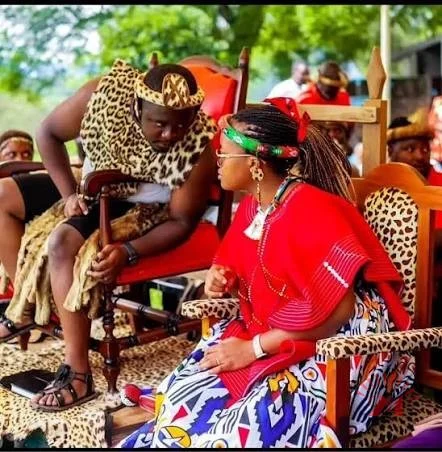
Malawi Government: Challenges M'mbelwa Gomani Monarchies Legal Status
Summary
- The Mzimba Heritage Association and Maseko Ngoni Heritage are defending the M'mbelwa and Gomani monarchies in Malawi.
- They argue these institutions existed long before Malawi became a republic, challenging a government warning.
- The Principal Secretary for Local Government and Rural Development, Moses Chimphepo, issued a warning against kingdoms and kingships.
- The government official stated that Malawian law does not provide for the creation or recognition of such entities.
The Core Dispute
The core of the disagreement revolves around the Malawi M'mbelwa Gomani monarchies legal status.
A significant legal and historical debate has emerged in Malawi concerning the status of traditional monarchies, specifically those associated with the M'mbelwa and Gomani institutions. This contention follows a direct warning issued by a senior government official regarding the recognition of such leadership structures. The Mzimba Heritage Association and the Maseko Ngoni Heritage have vocally challenged this governmental stance, asserting the long-standing legitimacy of these traditional entities.
The core of the disagreement revolves around the Malawi M'mbelwa Gomani monarchies legal status. These heritage groups contend that the M'mbelwa and Gomani institutions predated the establishment of the Malawian republic, implying an inherent right to existence and recognition that transcends modern legal frameworks. Their challenge directly confronts a recent Malawi traditional authorities government warning, which has cast doubt on the official standing of these historical leadership roles.
The government's position was articulated by the Principal Secretary for Local Government and Rural Development, Moses Chimphepo, who issued a clear statement against the proliferation or formal acknowledgment of kingdoms and kingships within the nation. This official communication underscored the government's interpretation of existing law, which, according to the Principal Secretary, does not provide for the creation or recognition of such monarchical systems. This declaration has set the stage for a direct confrontation between historical claims and contemporary legal interpretations.
Historical Claims Versus Legal Frameworks
The defense mounted by the Mzimba Heritage Association regarding M'mbelwa kingships and the Maseko Ngoni Heritage concerning Gomani's legal recognition rests heavily on historical precedent. They argue that the M'mbelwa and Gomani institutions were well-established entities long before Malawi gained its republican status. This historical continuity is presented as a fundamental aspect of their identity and authority, suggesting that their legitimacy is rooted in customary practice and ancestral lineage rather than statutory law.
However, the Principal Secretary for Local Government and Rural Development's warning highlights a critical distinction within the nation's legal architecture. The government's stance implies that while traditional authorities are recognized and integrated into local governance structures, the concept of independent 'kingdoms' or 'kingships' as distinct, legally recognized monarchies falls outside the current legislative provisions. This creates a direct Malawi customary law monarchies challenge, forcing a re-evaluation of how historical traditional leadership aligns with the modern state's legal framework.
The government's assertion that Malawian law lacks provisions for the creation or recognition of kingdoms and kingships suggests a deliberate policy choice to define the scope of traditional leadership. This interpretation could mean that while chiefs and headmen operate within a recognized hierarchy, any claim to a broader monarchical status, with its implied sovereignty or distinct legal standing, is not supported by the current legal order. The heritage associations' counter-argument, therefore, seeks to establish that the historical existence of these institutions should, in itself, constitute a form of de facto recognition, challenging the government's narrow legal interpretation.
Implications for National Governance
The ongoing dispute over the Malawi M'mbelwa Gomani monarchies legal status carries significant implications for the broader landscape of traditional governance across the nation. Should the heritage associations succeed in their challenge, it could set a precedent for other historical traditional authorities to seek similar recognition, potentially altering the established hierarchy and roles of traditional leaders within Malawi's administrative structure. Conversely, a firm government stance could solidify the current legal interpretation, reinforcing the state's ultimate authority over all forms of leadership.
This debate underscores the complex relationship between customary law, historical identity, and modern constitutional frameworks in many African nations. The government's Malawi traditional authorities government warning is not merely an administrative directive but a statement on the nature of sovereignty and the limits of traditional power within a republican system. The outcome of this challenge could influence how traditional leaders are integrated into national development plans, land management, and local dispute resolution mechanisms.
Ultimately, the confrontation between the Mzimba Heritage Association and Maseko Ngoni Heritage and the government's Principal Secretary for Local Government and Rural Development, Moses Chimphepo, highlights a fundamental question about the balance of power and recognition. It forces a national conversation on whether historical monarchical claims can coexist with or be formally absorbed into a modern, republican legal system that, as currently interpreted, does not explicitly provide for their creation or recognition.
Practical Implications
Lawyers advising on local governance, land rights, or community engagement in Malawi should monitor the evolving legal interpretation and potential disputes regarding the recognition and powers of traditional authorities like M'mbelwa and Gomani. This ongoing debate could impact legal certainty for projects or operations within areas under traditional leadership.
Source
Source: Original reporting via Malawi24
How does this affect you?
Get an AI analysis of this article grounded in your jurisdictions, practice areas, and any policy documents you've uploaded to Wansom.
Finish Reading the Full Story and the Expert Analysis.
Wansom is AI and can make mistakes.