
Malawi Government: Fiscal Deficit Reduced by K194.5 Billion in 2026/27
Summary
- The Malawi Government reported a K106.5 billion fiscal deficit at the start of the 2026/27 financial year, down from K300.0 billion during the same period last year.
- Economists attribute the reduced deficit to spending restraint rather than a genuine strengthening of public finances.
- Analysts warn that the improvement may mask underlying fiscal woes and have implications for public-private partnerships and infrastructure development projects.
What Happened
The improved fiscal situation may be attributed more to spending restraint rather than a lasting strengthening of public finances.
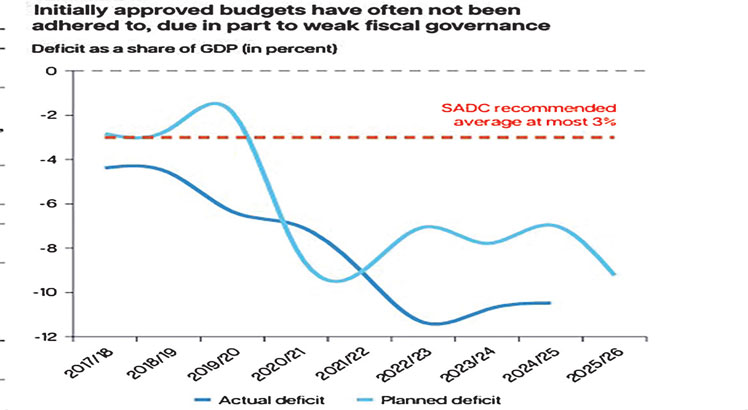
The Malawi Government began the 2026/27 financial year with a significant reduction in its fiscal deficit, reporting K106.5 billion, down from K300.0 billion during the same period last year. This substantial decrease has raised questions among economists about the underlying causes of the improvement. According to analysts, the reduced deficit may be attributed more to spending restraint rather than a genuine strengthening of public finances.
The latest figures suggest that the government's efforts to curb expenditure have been successful in the short term, but experts warn that this might not necessarily translate to long-term fiscal stability.
Legal Context
Lawyers advising clients on investments in Malawi should be aware of the potential compliance exposures arising from the government's fiscal policies. The reduced deficit may mask underlying fiscal woes, which could have implications for public-private partnerships and infrastructure development projects. As investors navigate these complex issues, they must carefully consider the regulatory environment and ensure that their investments align with the government's policies.
The Malawi Government's fiscal policies have significant implications for businesses operating in the country. Companies involved in public-private partnerships or infrastructure development should closely monitor the government's spending habits and adjust their strategies accordingly.
Why It Matters
The reduced deficit may seem like a positive development, but it also raises concerns about the sustainability of public finances. Analysts have cautioned that the improvement is likely due to spending restraint rather than a lasting strengthening of fiscal policies. This has significant implications for investors and businesses operating in Malawi.
As the government continues to implement its fiscal policies, it is essential to consider the long-term consequences of these decisions. The reduced deficit may mask underlying fiscal woes, which could have far-reaching implications for the country's economic stability.
Practical Implications
Lawyers advising clients on investments in Malawi should watch for potential compliance exposures arising from the government's fiscal policies, particularly if they relate to public-private partnerships or infrastructure development.
Source
How does this affect your business?
Get an AI analysis of this article grounded in your jurisdictions, practice areas, and any policy documents you've uploaded to Wansom.
Wansom is AI and can make mistakes.