
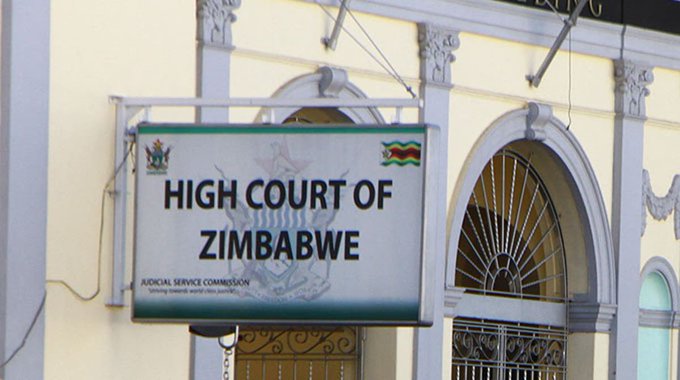
High Court: Majoni Zimbabwe Police Compensation Order Issued
Summary
- The High Court in Zimbabwe has ordered the police to compensate an assault victim named Majoni.
- This order stems from Majoni's arrest alongside 73 other Harare residents.
- All 74 individuals were subsequently charged with public violence.
- Details of the case were revealed through official court papers.
- The ruling establishes a precedent for police accountability and state liability for misconduct.
High Court Mandates Police Compensation
This High Court ruling establishes a precedent for holding the Zimbabwe Republic Police accountable for assault, providing a legal basis for lawyers to pursue compensation claims for clients who are victims of police misconduct during arrests or detention.
A recent ruling by the High Court in Zimbabwe has directed the national police force to compensate an assault victim, identified as Majoni. This pivotal Majoni Zimbabwe police compensation order emerged from details presented in court papers, which shed light on the circumstances leading to the judicial directive. According to these official documents, Majoni was among a substantial group of seventy-four residents from Harare who were apprehended by authorities. All individuals within this group subsequently faced charges of public violence following their arrests.
The High Court's decision underscores a legal imperative for accountability within the Zimbabwe Republic Police regarding incidents of misconduct. The order specifically addresses the need for the police to provide damages to Majoni, who was confirmed as an assault victim in the proceedings. The broader context of Majoni's arrest, alongside dozens of other Harare residents under public violence charges, highlights the environment in which such incidents requiring judicial intervention can arise. This particular Majoni court case Zimbabwe serves as a notable instance where the judiciary has intervened to ensure redress for individuals affected by police actions.
Legal Context and Accountability
This High Court order represents a significant development in establishing accountability for the Zimbabwe Republic Police, particularly concerning incidents of assault. The ruling sets a clear precedent regarding state liability for police misconduct in Zimbabwe, affirming that law enforcement agencies can be held financially responsible for damages inflicted during arrests or detention. The details, as revealed in court papers, provide a legal basis for individuals to pursue compensation claims for harm suffered at the hands of police officers. Such a directive reinforces the principle that no institution, including the police, is above the law and must adhere to constitutional standards of conduct.
The decision to award Zimbabwe police assault damages to Majoni signals a strengthening of legal protections for citizens. It provides a tangible example of how the High Court can intervene to ensure justice for victims of police brutality. This High Court order police liability ZW is particularly relevant in cases involving public violence arrests, where the potential for excessive force or unlawful treatment can be high. By mandating compensation, the court not only addresses the specific harm to Majoni but also sends a broader message about the consequences of police misconduct, encouraging adherence to proper procedures and respect for human rights during law enforcement operations.
Why This Ruling Matters
The implications of the Majoni Zimbabwe police compensation order extend beyond the immediate parties involved, establishing a crucial legal benchmark for future cases of police misconduct. This High Court ruling establishes a precedent for holding the Zimbabwe Republic Police accountable for assault, providing a legal basis for lawyers to pursue compensation claims for clients who are victims of police misconduct during arrests or detention. It empowers legal practitioners to leverage similar court papers to demonstrate state liability police misconduct Zimbabwe, thereby offering a clearer path to justice for those who have suffered harm. The ruling serves as a vital affirmation that victims of police assault can seek and obtain redress through the judicial system.
Furthermore, this judgment contributes to a growing body of jurisprudence that seeks to curb abuses of power by state agents. The fact that the order specifically addresses compensation for an individual arrested and charged with public violence underscores the judiciary's commitment to scrutinizing the actions of law enforcement, even in politically sensitive contexts. The Majoni court case Zimbabwe will likely be cited in subsequent legal challenges, providing a powerful reference point for victims seeking public violence arrest compensation Zimbabwe. It reinforces the message that the state bears responsibility for the actions of its officers, and that such actions, when unlawful, will incur financial and legal consequences.
Practical Implications
This High Court ruling establishes a precedent for holding the Zimbabwe Republic Police accountable for assault, providing a legal basis for lawyers to pursue compensation claims for clients who are victims of police misconduct during arrests or detention.
Source
Source: Original reporting via Newsday
How does this affect you?
Get an AI analysis of this article grounded in your jurisdictions, practice areas, and any policy documents you've uploaded to Wansom.
Finish Reading the Full Story and the Expert Analysis.
Get the latest legal & regulatory intelligence in Zimbabwe
Wansom is AI and can make mistakes.