
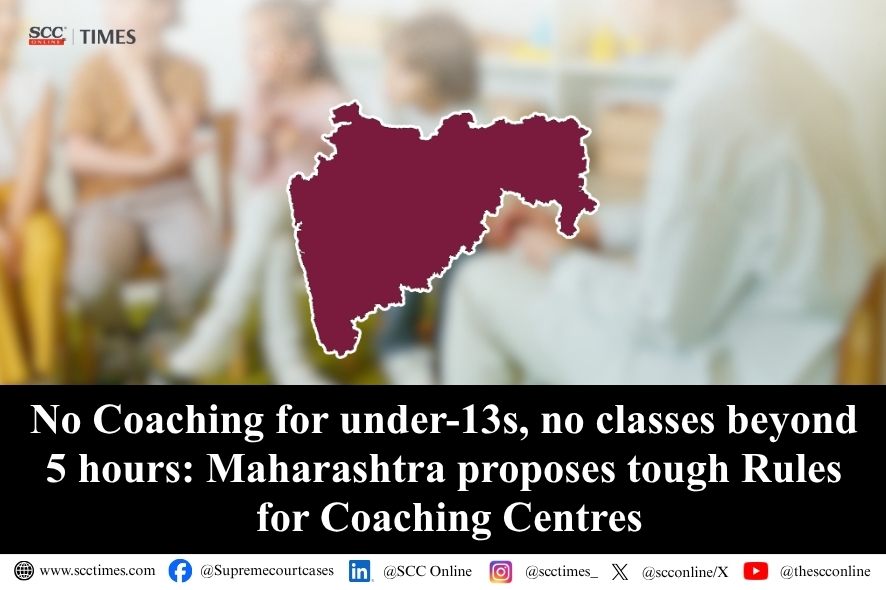
Maharashtra: Draft Coaching Centres Act Bans Under-13 Students
Summary
- The Maharashtra government has released a draft law to regulate private coaching centres, proposing mandatory registration and various operational norms.
- Key provisions include a ban on coaching for students under 13 years old and a maximum class duration of five hours.
- The draft legislation also addresses fee structures, infrastructure standards, student welfare measures, and outlines penalties for non-compliance.
- Public suggestions and comments on the proposed Maharashtra draft coaching centres Act are invited until September 4, 2026.
- This initiative aims to bring greater oversight and standardization to the private coaching sector in Maharashtra.
Maharashtra Proposes Sweeping Coaching Centre Reforms
The proposed regulations explicitly prohibit private coaching centres from enrolling students under the age of 13, a measure intended to safeguard young learners from academic pressure.
The Maharashtra government has unveiled a comprehensive draft law aimed at significantly regulating the state's private coaching sector. This proposed legislation seeks to introduce stringent oversight across various aspects of coaching centre operations, from mandatory registration and fee structures to infrastructure standards and student welfare provisions. The initiative reflects a broader effort to formalize and standardize an industry that has largely operated with minimal governmental intervention.
The draft law, which is currently open for public feedback, outlines a series of new requirements and restrictions designed to enhance accountability and protect students. It represents a proactive step by the state to address concerns related to the quality of education, student well-being, and commercial practices within the burgeoning private coaching industry. Stakeholders, including coaching centre operators, parents, and legal professionals, have until September 4, 2026, to submit their suggestions and influence the final shape of this important legislation.
This move by the Maharashtra government is poised to reshape the landscape for educational institutions offering supplementary instruction. The proposed Maharashtra draft coaching centres Act could set a precedent for how other states approach the regulation of private coaching centers, emphasizing a shift towards greater transparency and student-centric policies.
Key Regulatory Provisions and Restrictions
Among the most notable provisions in the draft law are strict limitations on student age and class duration. The proposed regulations explicitly prohibit private coaching centres from enrolling students under the age of 13, a measure intended to safeguard young learners from academic pressure. Furthermore, the legislation mandates that no class session at these centres can extend beyond a five-hour duration, aiming to prevent student burnout and ensure adequate rest periods.
Beyond these specific restrictions, the draft law introduces a framework for mandatory registration for all private coaching centres operating within Maharashtra. It also seeks to establish clear norms regarding the fees that can be charged, ensuring fairness and preventing exploitation. Infrastructure standards will be defined, requiring centres to provide safe and conducive learning environments. Crucially, the legislation includes provisions for student welfare measures, though specific details are yet to be finalized, and outlines a system of penalties for non-compliance, underscoring the government's commitment to enforcing these new rules. This comprehensive approach to Maharashtra coaching centre regulation aims to elevate the overall quality and ethical conduct of the sector.
Implications for the Education Sector
The introduction of the Maharashtra draft coaching centres Act carries significant implications for the state's education sector, particularly for the numerous private coaching centres that cater to a wide range of academic needs. The proposed ban on coaching for under-13s and the cap on class hours will necessitate substantial operational adjustments for many existing establishments. Compliance with mandatory registration, fee norms, and infrastructure standards will require a thorough review of current business practices and potentially significant investment.
This legislative initiative underscores the Maharashtra government's focus on Maharashtra education sector compliance and student protection. The deadline of September 4, 2026, for public comments on the Maharashtra Private Coaching Centers Act 2026 is a critical window for all affected parties to voice their perspectives. Legal professionals advising private coaching centres or educational institutions in Maharashtra should meticulously review these draft rules to assess future compliance obligations and consider submitting feedback to influence the final legislation. Engaging with the Maharashtra draft law public comments process is essential for shaping a regulatory environment that balances oversight with the practical realities of the coaching industry.
Practical Implications
Lawyers advising private coaching centres or educational institutions in Maharashtra should review these draft rules to assess future compliance obligations and consider submitting feedback by September 4, 2026, to influence the final legislation.
Source
Source: Original reporting via SCC Times
How does this affect you?
Get an AI analysis of this article grounded in your jurisdictions, practice areas, and any policy documents you've uploaded to Wansom.
Wansom is AI and can make mistakes.