
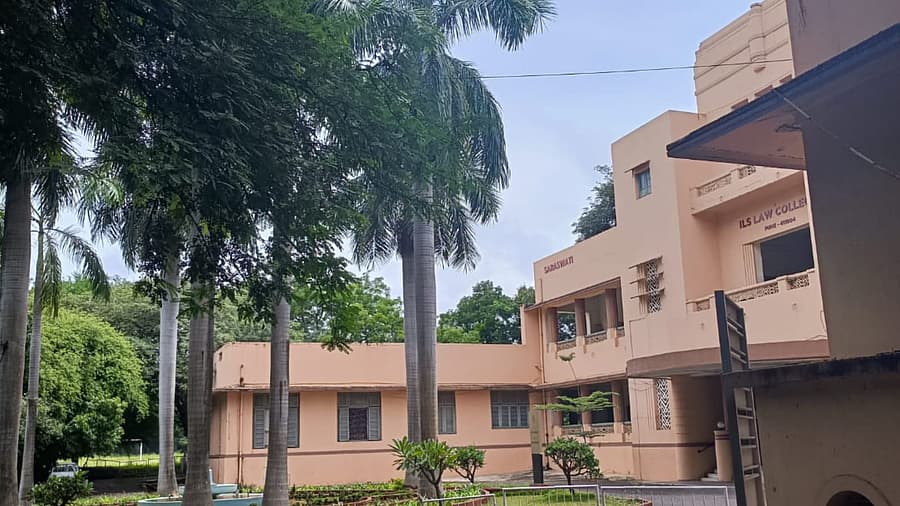
Maharashtra Government: ILS Fee Refund Ordered for Excess Charges
Summary
- The Maharashtra government has ordered ILS Law College, Pune, to refund ₹1,04,863 to former student Mayur Suhas Garud.
- The refund includes 6% annual interest, as the fees were collected without university approval and deemed excessive.
- This is the third official finding against the college concerning its fee collection practices.
- Previous inquiries by Savitribai Phule Pune University and a Directorate of Higher Education committee also identified unlawfully charged fees.
- The current order follows a reconsideration directed by the Bombay High Court after the college challenged an earlier refund directive.
What Happened
This ruling underscores the Maharashtra government's commitment to regulating fees charged by higher education institutions and ensuring transparency in their financial practices.
The Maharashtra government has mandated a significant fee refund from ILS Law College, Pune, to a former student. Chandrakant Patil, the state's Minister for Higher and Technical Education, issued the directive, ordering the college to return ₹1,04,863 to Mayur Suhas Garud. This amount, deemed to have been collected as excess fees without proper university authorization, must also be accompanied by 6% annual interest.
This recent ruling represents the third instance where official bodies have found against ILS Law College regarding its fee collection practices, specifically concerning the Maharashtra government ILS fee refund issue. The decision underscores a persistent pattern of unauthorized charges that have been subject to regulatory scrutiny.
Regulatory Scrutiny and Prior Findings
The issue of unauthorized fee collection at ILS Law College first came to light following a complaint regarding excessive and non-transparent charges. This prompted Savitribai Phule Pune University (SPPU) to establish a four-member inquiry committee in August 2025. The committee's report, submitted on August 9, 2025, concluded that action against the college was warranted due to these irregularities, marking the initial official finding against the institution.
This initial finding was reinforced by a subsequent government order in April 2026. This second official determination arose after Mr. Garud filed a writ petition with the Bombay High Court. In response, the Directorate of Higher Education (DHE) formed its own three-member committee, led by the Joint Director of Higher Education. Their report, dated March 30, 2026, formed the basis for the April 13, 2026, government order. That order explicitly stated that the ₹1,04,863 collected from Mr. Garud, designated as "Other Fees" for the academic years 2020-21, 2021-22, and 2024-25, was unlawfully and non-transparently charged, again directing a refund with 6% interest, addressing the ILS Law College excess fees.
Legal Challenge and Reconsideration
The Indian Law Society, the entity responsible for operating ILS Law College, did not accept the April 2026 government order. They subsequently challenged this directive before the Bombay High Court, initiating the Bombay High Court ILS fee challenge. Following the High Court's intervention, the matter was referred back for a fresh reconsideration.
This process included providing the college with an opportunity to present its case during a hearing. The recent order by Minister Chandrakant Patil is the outcome of this renewed review, reaffirming the earlier findings regarding the unauthorized fees and solidifying the Mayur Suhas Garud fee refund.
Why It Matters
This ruling underscores the Maharashtra government's commitment to regulating fees charged by higher education institutions and ensuring transparency in their financial practices. It sends a clear message that colleges must adhere strictly to approved fee structures and obtain necessary university authorizations for any additional charges. The repeated findings against ILS Law College, culminating in this ministerial directive, highlight the robust oversight mechanisms in place under Maharashtra higher education fee regulation to protect students from arbitrary or excessive fee demands.
For students, this decision reinforces their right to challenge unauthorized fees and provides a strong precedent for seeking refunds with interest. For educational bodies, it serves as a critical reminder of the legal and regulatory consequences of non-compliance with fee regulations, emphasizing the need for meticulous adherence to established guidelines and transparent communication regarding all financial obligations, particularly in light of the Savitribai Phule Pune University fee inquiry.
Practical Implications
This order reinforces regulatory scrutiny on educational institutions regarding fee collection, signaling that unauthorized or non-transparent fees are liable for refund with interest. Lawyers advising educational bodies should review their clients' fee structures for compliance, while those representing students can cite this precedent in challenging excess charges.
Source
How does this affect you?
Get an AI analysis of this article grounded in your jurisdictions, practice areas, and any policy documents you've uploaded to Wansom.
Finish Reading the Full Story and the Expert Analysis.
Wansom is AI and can make mistakes.