
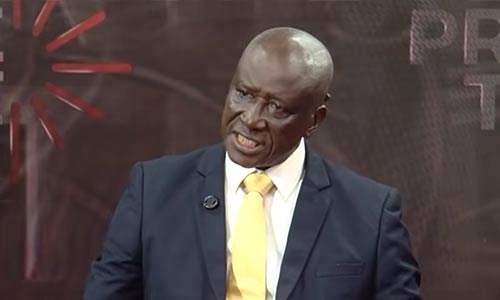
Maduabuchi SAN: INEC Lacks Candidate Disqualification Power
Summary
- Senior Advocate of Nigeria, Mr. Oba Maduabuchi, asserts that INEC lacks constitutional or statutory power to disqualify candidates.
- Maduabuchi argues that candidate disqualification is exclusively a judicial decision.
- He contends that INEC "overshot its limits" by omitting names from the final list of governorship candidates for the 2027 general elections.
- This legal interpretation highlights a distinction between INEC's administrative functions and the judiciary's adjudicatory role.
- The Pantami Movement's campaign organization is affected by INEC's recent actions regarding candidate lists.
Legal Expert Challenges INEC's Authority
This legal opinion provides a strong basis for challenging any future attempts by INEC to unilaterally disqualify candidates or omit names from electoral lists, offering a clear pathway for legal redress.
Senior Advocate of Nigeria, Mr. Oba Maduabuchi, has issued a significant challenge to the Independent National Electoral Commission's (INEC) perceived authority, asserting that the electoral body lacks the constitutional and statutory mandate to disqualify candidates. This pronouncement comes in the wake of INEC's recent actions concerning the final list of governorship candidates for the upcoming 2027 general elections, where certain names were notably omitted. Maduabuchi's stance directly questions the extent of INEC's powers, particularly regarding candidate eligibility, focusing on the Maduabuchi SAN INEC disqualification power.
According to the prominent legal figure, the act of disqualifying an individual from contesting an election is fundamentally a judicial decision, a prerogative that resides exclusively with the courts. He contends that by taking such actions, specifically by omitting names from its official candidate lists, INEC has demonstrably "overshot its limits." This interpretation by Maduabuchi SAN underscores a critical distinction between the administrative functions of an electoral commission and the adjudicatory role of the judiciary in Nigeria's legal framework. The Pantami Movement, a campaign organization, is among those affected by these developments, highlighting the real-world impact of INEC's decisions.
The Judicial Prerogative in Electoral Matters
The core of Mr. Maduabuchi's argument rests on the principle that the power to disqualify a candidate is not an administrative one to be exercised by an electoral commission. Instead, it is a judicial function, requiring due process and a determination by a competent court of law. This perspective suggests that any attempt by INEC to unilaterally remove a candidate's name from an electoral list, regardless of the perceived grounds, constitutes an usurpation of judicial authority. The legal framework governing elections in Nigeria, according to Maduabuchi, does not grant INEC such expansive powers, emphasizing that an electoral commission judicial decision Nigeria should not extend to disqualification.
This legal interpretation has profound implications for the operational scope of INEC, particularly concerning its INEC power to disqualify candidates Nigeria. If the commission indeed lacks this power, then its past and future actions regarding candidate eligibility, including for the 2027 elections, could be subject to intense scrutiny and legal challenges. The Senior Advocate's position reinforces the idea that an electoral commission's role is primarily to organize and conduct elections, not to sit as a court of first instance on matters of candidate qualification or disqualification.
Implications for Future Elections and Candidate Rights
The assertion by Oba Maduabuchi SAN regarding the limits of INEC's authority carries significant weight for the integrity of Nigeria's electoral process and the rights of aspiring political office holders. His pronouncement serves as a crucial reminder that the final arbiter of candidate eligibility disputes should be the judiciary, not the electoral body itself. This legal opinion provides a strong basis for challenging any future attempts by INEC to unilaterally disqualify candidates or omit names from electoral lists, offering a clear pathway for legal redress.
For lawyers advising clients on potential litigation strategies concerning candidate disqualification 2027 elections, Maduabuchi's interpretation of Oba Maduabuchi SAN electoral law offers a compelling legal foundation. It suggests that candidates who find their names excluded from final lists without a judicial pronouncement have a robust argument for challenging such decisions in court. This perspective is vital for upholding democratic principles, ensuring fair play, and preventing an electoral commission from overreaching its constitutional and statutory boundaries in the lead-up to critical elections.
Practical Implications
Lawyers should note this Senior Advocate's interpretation of INEC's powers, which asserts that candidate disqualification is a judicial decision. This provides a strong legal basis for challenging any future attempts by INEC to unilaterally disqualify candidates or omit names from electoral lists, advising clients on potential litigation strategies.
Source
How does this affect you?
Get an AI analysis of this article grounded in your jurisdictions, practice areas, and any policy documents you've uploaded to Wansom.
Finish Reading the Full Story and the Expert Analysis.
Get the latest legal & regulatory intelligence in Nigeria
Wansom is AI and can make mistakes.