
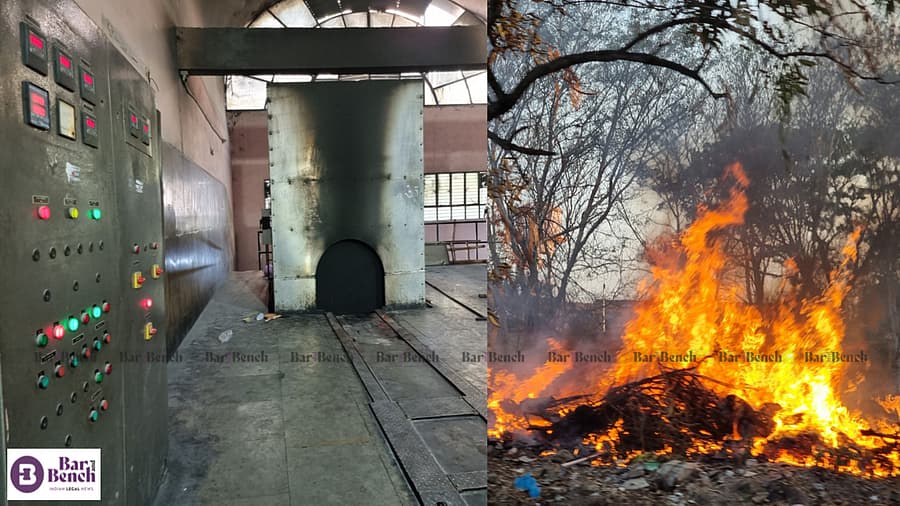
Madras High Court: Allows Crematorium Protest Against Air Pollution
Summary
- The Madras High Court permitted villagers in Tamil Nadu to hold a sit-in protest inside a crematorium.
- The protest was against alleged air pollution caused by a government-run rice mill.
- Justice V Lakshminarayanan affirmed that the constitutional right to protest cannot be denied due to law and order concerns.
- The villagers assured the court they would not disturb funeral rituals during their demonstration.
- The judge made humorous and pointed remarks about the state-owned mill's responsibility for pollution.
What Happened
By allowing a protest in such a sensitive and unconventional location, the court has signaled a robust defense of the constitutional right to protest, even in circumstances where authorities might typically seek to restrict it.
The Madras High Court recently issued a significant ruling, granting permission for residents of a Tamil Nadu village to conduct a sit-in demonstration within a crematorium. This unusual choice of protest venue was selected by the villagers to highlight their grievances against alleged air pollution emanating from a government-operated rice mill in their locality. The case, identified as Anburaj Vs State, saw the court's decision underscore the constitutional protections afforded to citizens engaging in protest.
The villagers' intention was to draw attention to the environmental impact of the Tamil Nadu Civil Supplies Corporation's rice mill, which they claim is causing considerable air pollution. Despite the unconventional location for a protest, the court's directive ensures that their right to express dissent is upheld. This decision by the Madras High Court regarding the crematorium protest against air pollution sets a notable precedent for future environmental activism in the region.
Legal Context
Justice V Lakshminarayanan, presiding over the matter, articulated a clear stance on the fundamental right to protest, emphasizing its constitutional safeguarding. The judge firmly stated that this inherent right cannot be curtailed simply due to police concerns about potential law and order disturbances. This assertion reinforces the judiciary's role in protecting civil liberties, even when faced with administrative apprehensions.
During the proceedings, Additional Public Prosecutor Arun Anbumani voiced reservations about allowing a demonstration within a crematorium. However, Justice Lakshminarayanan noted that the protesting villagers had provided an undertaking, assuring the court that they would not disrupt any funeral rituals taking place at the site. This commitment from the villagers played a crucial role in the court's decision to permit the protest, highlighting a balance between public order and the right to protest in India.
Judicial Scrutiny and Humor
The court hearing was marked by several striking exchanges between Justice Lakshminarayanan and the State's counsel, revealing both the judge's sharp scrutiny of state-run entities and a touch of humor. When the prosecutor raised the issue of the protest location, the judge humorously remarked on the villagers' promise not to disturb the deceased, quipping, "He will not trouble the dead, what else?" This lighthearted comment underscored the villagers' specific intent and the perceived harmlessness of their chosen method.
The judge then directly addressed the core issue of the Tamil Nadu rice mill pollution protest, questioning the prosecutor about the mill's ownership and its environmental impact. Justice Lakshminarayanan pointedly remarked, "Because of your industry, people are dying," directly linking the alleged pollution to severe consequences. Upon learning that the mill was operated by the Tamil Nadu Civil Supplies Corporation, the judge humorously retorted, "Owned by Government of Pakistan?", a comment that elicited laughter in the courtroom and highlighted the state's responsibility. The judge also found the villagers' choice of a burial ground for protest to be an "excellent idea," noting the grim irony that "Either way, he's dying because of pollution."
Why It Matters
This ruling by the Madras High Court carries significant implications for both environmental advocacy and the scope of protest rights in India. By allowing a protest in such a sensitive and unconventional location, the court has signaled a robust defense of the constitutional right to protest, even in circumstances where authorities might typically seek to restrict it. The decision reaffirms that the right to protest, as interpreted by Justice V Lakshminarayanan, is a fundamental pillar of democratic expression, not easily overridden by mere apprehension of public disturbance.
Furthermore, the case spotlights judicial readiness to hold state-owned enterprises accountable for environmental degradation. The judge's direct questioning and pointed remarks about the government-run rice mill's alleged pollution underscore a growing judicial concern for public health and environmental protection. This precedent could empower communities facing similar issues with state-controlled industries, providing a legal basis for their right to protest and demand environmental justice. It reinforces the idea that even state entities are not immune from scrutiny when their operations impact the well-being of citizens.
Practical Implications
This ruling reinforces the constitutional right to protest, even in unconventional locations, and signals judicial readiness to scrutinize environmental pollution caused by state-run entities. Lawyers advising clients on environmental compliance, particularly state-owned enterprises, should note the potential for public protest and judicial intervention, while those representing activists can cite this precedent for broader interpretation of protest rights.
Source
How does this affect you?
Get an AI analysis of this article grounded in your jurisdictions, practice areas, and any policy documents you've uploaded to Wansom.
Finish Reading the Full Story and the Expert Analysis.
Get the latest legal & regulatory intelligence in India
Wansom is AI and can make mistakes.