
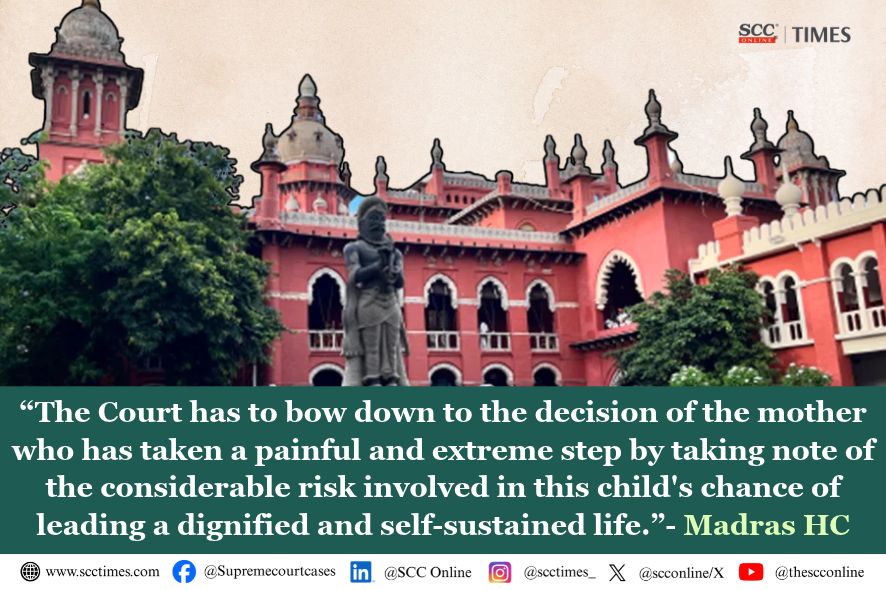
Madras HC: Permits 31-Week Pregnancy Termination for Foetal Abnormality
Summary
- The Madras High Court permitted the termination of a 31-week pregnancy.
- This decision overturned a Medical Board's prior refusal for the procedure.
- The termination was sought due to detected severe foetal brain abnormalities.
- The abnormalities included agenesis of the corpus callosum and bilateral ventriculomegaly.
- The ruling sets a significant precedent for challenging late-term abortion refusals in India.
Court Overturns Medical Board Refusal
By quashing the Medical Board's refusal, the court has provided a robust legal basis for challenging similar denials, particularly when the medical evidence points to profound and irreversible foetal conditions.
The Madras High Court recently delivered a pivotal judgment, directly challenging a Medical Board's initial refusal to permit the termination of a 31-week pregnancy. This significant Madras HC 31-week pregnancy termination case arose after medical examinations revealed severe brain abnormalities in the foetus, specifically agenesis of the corpus callosum and bilateral ventriculomegaly. These conditions represent profound developmental issues that can lead to severe neurological impairments.
The court's decision effectively overturned the board's earlier stance, granting the necessary permission for the procedure to proceed. This intervention underscores the judiciary's critical role in navigating complex medical and ethical dilemmas, particularly when individuals seek to terminate pregnancies at advanced gestational stages due to grave foetal conditions. The mother's plea, described as a "painful decision" in the original context, highlighted the immense personal anguish and difficult choices confronting families in such dire medical circumstances. The court's ruling acknowledged the gravity of the detected abnormalities and the profound impact on the pregnant individual.
Legal Framework for Late-Term Abortions in India
India's legal landscape for pregnancy termination is primarily governed by the Medical Termination of Pregnancy Act, 1971, as amended by the Medical Termination of Pregnancy (Amendment) Act, 2021, which together set out the conditions and gestational limits under which abortions can be performed. While the Act permits termination for various reasons, including the detection of foetal abnormalities, requests for India late-term abortion, especially those extending beyond the typical 20 or 24-week thresholds, often require a mandatory review by a specialized Medical Board. These boards are constituted to meticulously assess the severity of the foetal condition, evaluate the potential risks to the pregnant individual's physical and mental health, and ensure compliance with legal provisions.
The Medical Board's initial denial in this particular case reflects the stringent criteria and cautious approach typically applied to late-stage terminations, where foetal viability and the extent of the abnormality are closely scrutinized. Such refusals frequently lead to judicial challenges, as individuals seek recourse when a board's medical assessment or interpretation of the law diverges from their personal circumstances or the advice of their treating physicians. In these instances, the judiciary plays a crucial role in interpreting the nuances of the law, striving to balance expert medical opinions with the fundamental rights and well-being of the pregnant person, particularly in sensitive cases involving foetal abnormality termination India.
Implications for Reproductive Autonomy and Precedent
This Madras High Court abortion ruling holds substantial significance, establishing a crucial precedent for future cases involving severe foetal abnormalities detected in advanced stages of pregnancy. By quashing the Medical Board's refusal, the court has provided a robust legal basis for challenging similar denials, particularly when the medical evidence points to profound and irreversible foetal conditions. This decision reinforces the principle that judicial oversight can be invoked to ensure that medical board decisions, despite their expert nature, are aligned with the broader principles of justice and individual rights.
The ruling strongly supports the concept of reproductive autonomy India, recognizing the deeply personal and often agonizing decisions individuals must make concerning their bodies and pregnancies, especially when confronted with the diagnosis of severe foetal abnormalities. It signals a judicial willingness to consider the comprehensive human context, moving beyond rigid gestational limits when compelling medical and personal circumstances are presented. This outcome could significantly empower other individuals seeking foetal abnormality termination India, offering a powerful legal argument rooted in personal choice, medical ethics, and the right to make informed decisions about one's reproductive health in challenging and sensitive situations.
Practical Implications
This ruling provides a significant precedent for challenging Medical Board refusals for late-term pregnancy terminations in India, particularly in cases of severe foetal abnormalities, offering a basis for legal arguments concerning reproductive autonomy and medical ethics.
Source
How does this affect you?
Get an AI analysis of this article grounded in your jurisdictions, practice areas, and any policy documents you've uploaded to Wansom.
Finish Reading the Full Story and the Expert Analysis.
Wansom is AI and can make mistakes.