
Madras High Court: Overturns Temple Elephant Acquisition Ban
Summary
- The Madras High Court overturned a single-judge's blanket ban prohibiting all Tamil Nadu temples from acquiring elephants.
- The Division Bench ruled the blanket ban exceeded the scope of the original case and affected temples not heard in court.
- The court affirmed specific directives for the elephant Lalitha, including her transfer to forest authorities and a welfare committee for treatment and retirement.
- The ruling emphasizes that writ jurisdiction should generally confine relief to the parties and pleadings before the court, upholding fair hearing principles.
- This decision clarifies the scope of judicial orders, reinforcing that directives cannot bind parties who were not given an opportunity to present their case.
Court Overturns Blanket Ban
The court articulated that even well-intentioned directives cannot be sustained if they are issued against individuals or entities who were strangers to the original proceeding and were consequently denied the chance to articulate their position.
The Madras High Court has recently overturned a sweeping directive that had prohibited all temples across Tamil Nadu from acquiring elephants. This significant ruling, delivered by a Division Bench comprising Chief Justice Sushrut Arvind Dharmadhikari and Justice G Arul Murugan, found that the earlier single-judge order had overstepped its bounds. The decision effectively lifts the `Madras High Court temple elephant acquisition ban`, allowing religious institutions to once again consider the procurement of these animals, subject to other applicable regulations.
The Division Bench determined that the original prohibition, issued in the context of the case `Arulmigu Sri Subramania Swami Thirukoil vs Sheik Mohammed`, extended far beyond the specific facts and parties involved in that particular litigation. Crucially, the blanket ban impacted numerous temples that were neither named as parties in the proceedings nor afforded any opportunity to present their case before the court. This procedural oversight formed the cornerstone of the Division Bench's decision to set aside the broader prohibition.
Upholding Due Process and Writ Jurisdiction
In its detailed judgment, the Madras High Court underscored a fundamental principle governing the exercise of writ jurisdiction in India: courts must generally restrict the relief granted to the specific pleadings and the parties directly before them. The Division Bench emphasized that this is not a mere technicality but rather the very bedrock of a fair hearing, a cornerstone of `natural justice writ proceedings India`.
The court articulated that even well-intentioned directives cannot be sustained if they are issued against individuals or entities who were strangers to the original proceeding and were consequently denied the chance to articulate their position. This clarification of the `Madras High Court writ jurisdiction scope` reinforces the importance of due process, ensuring that judicial orders do not inadvertently prejudice those who have not had their day in court. While the blanket prohibition was set aside, the Division Bench explicitly affirmed all specific directions related to the individual elephant at the heart of the original case, Lalitha, ensuring her continued welfare.
The Elephant at the Center of the Dispute
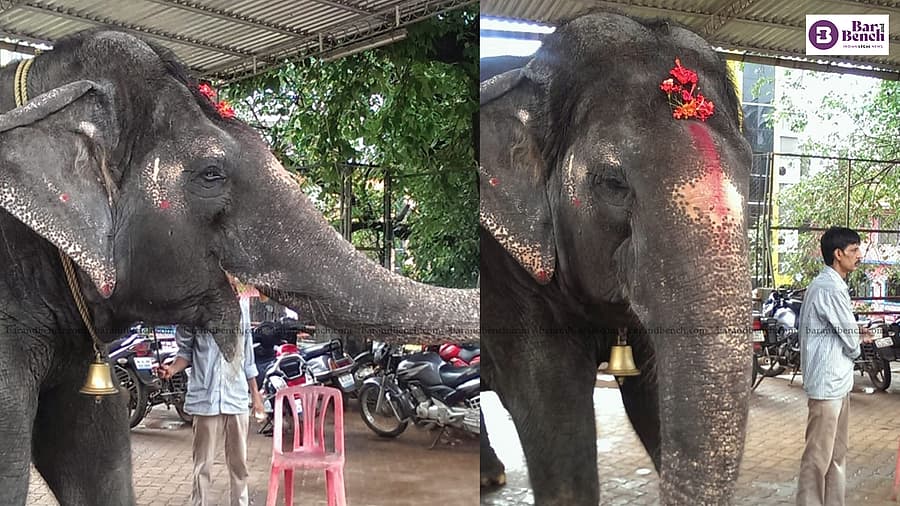
The appeals leading to this Division Bench ruling originated from an order issued by a single-judge in February 2023. This earlier directive was prompted by serious concerns regarding the health of a female elephant named Lalitha, whose condition had significantly deteriorated. Reports indicated that Lalitha had suffered multiple falls between December 2022 and February 2023, raising alarms about her well-being.
Following a personal inspection of Lalitha, the single-judge had issued specific instructions for her care. These included directing that the elephant be transferred into the custody of forest authorities and the District Level `Captive Elephant Welfare Committee` for essential medical treatment. Furthermore, the single-judge had declared that Lalitha had reached an age where retirement was appropriate. The Division Bench's recent decision, while overturning the broader `Tamil Nadu temple elephant acquisition` ban, explicitly upheld these particular directives concerning Lalitha's custody, medical care, and retirement, ensuring her individual welfare remains paramount.
Implications for Religious Institutions and Animal Welfare
The lifting of the `Madras High Court temple elephant acquisition ban` carries significant implications for religious institutions across Tamil Nadu. Temples that previously faced an absolute prohibition on acquiring elephants now have the legal avenue reopened, though any such acquisitions would still be subject to existing wildlife and animal welfare regulations. This ruling provides clarity for institutions considering `Tamil Nadu temple elephant acquisition` in the future.
For legal professionals, particularly those advising religious bodies or animal welfare organizations in the region, this judgment serves as an important precedent. It not only clarifies the permissible `Madras High Court writ jurisdiction scope` but also underscores that broad, sweeping directives cannot bind parties who were not given an opportunity to be heard. This principle is vital for challenging overly expansive judicial orders and reinforces the procedural safeguards inherent in the Indian legal system.
Practical Implications
Lawyers advising religious institutions or animal welfare bodies in Tamil Nadu should note that the blanket prohibition on temples acquiring elephants has been lifted. This ruling clarifies the scope of writ jurisdiction, reinforcing that orders cannot bind parties not heard, which is crucial for challenging broad directives.
Source
How does this affect you?
Get an AI analysis of this article grounded in your jurisdictions, practice areas, and any policy documents you've uploaded to Wansom.
Finish Reading the Full Story and the Expert Analysis.
Wansom is AI and can make mistakes.