
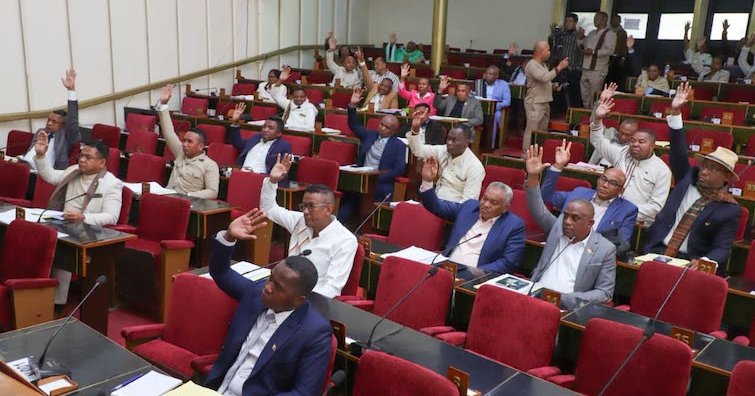
Madagascar Assemblée Nationale 2026: 2 Lois Adoptées, 5 Projets Renvoyés
Summary
- Madagascar's National Assembly concluded its second extraordinary session of 2026 with limited legislative success.
- Out of seven draft laws on the agenda, only two received parliamentary approval.
- Five proposed bills were postponed for consideration in a future parliamentary session.
- The session's outcome has raised questions about the efficiency of extraordinary sittings and the associated public expenditure.
- The delay in these legislative changes creates uncertainty for future regulatory requirements in Madagascar.
Legislative Session Concludes with Limited Progress
For legal and compliance professionals, the deferral of five legislative initiatives introduces a period of uncertainty, as anticipated regulatory changes are now delayed.
The second extraordinary session of Madagascar's National Assembly for the year 2026 has concluded with a notably constrained legislative output. Despite a comprehensive agenda, the parliamentary proceedings resulted in the adoption of only two out of seven proposed bills. This outcome means that the majority of legislative initiatives brought before the deputies during this special sitting were not enacted, signaling a period of reduced legislative momentum. The session's conclusion leaves a significant portion of the proposed legal framework in abeyance, awaiting further consideration.
Unadopted Bills and Future Legislative Agenda
During this specific parliamentary convocation, a total of seven distinct legislative proposals were formally presented for deliberation and potential approval by the Assemblée nationale. However, following extensive review, only two of these draft laws successfully navigated the parliamentary process to achieve official adoption. Consequently, a substantial number of legislative projects—specifically, five out of the original seven—did not secure the necessary consensus or time for passage. These unadopted bills have now been formally deferred, meaning their consideration and potential enactment are postponed until a subsequent parliamentary session, thereby extending the timeline for any associated legal reforms in Madagascar.
Scrutiny Over Efficiency and Public Spending
The limited legislative achievements of this extraordinary session have inevitably prompted critical questions regarding its overall effectiveness and the judicious use of public resources. Convening the Assemblée nationale for a special sitting, such as this second extraordinary session of 2026, incurs considerable public expenditure, covering the logistics and allowances for reconvening deputies. The adoption of only two out of seven proposed laws, therefore, raises significant concerns about the return on this investment and the efficiency of the parliamentary mechanism in addressing its agenda. This outcome particularly highlights the challenges associated with the legislative process in Madagascar, especially during extraordinary sessions designed to address urgent matters.
For legal and compliance professionals, the deferral of five legislative initiatives introduces a period of uncertainty, as anticipated regulatory changes are now delayed. This means that current legal frameworks remain in effect, but practitioners must closely monitor subsequent parliamentary sessions for the potential reintroduction or modification of these proposals, impacting future Madagascar législation 2026 and beyond. The "bilan législatif Madagascar 2026" for this session thus points to a significant backlog of unaddressed legislative matters, underscoring the need for continued vigilance regarding the "Projets de loi Madagascar renvoyés" and their eventual fate.
Practical Implications
Lawyers and compliance officers should note that anticipated legislative changes in Madagascar, particularly those covered by the five unadopted bills, are now delayed. This creates uncertainty regarding future regulatory requirements and means current legal frameworks remain in effect, but practitioners must monitor subsequent parliamentary sessions for potential reintroduction or modification of these proposals.
Source
How does this affect you?
Get an AI analysis of this article grounded in your jurisdictions, practice areas, and any policy documents you've uploaded to Wansom.
Finish Reading the Full Story and the Expert Analysis.
Wansom is AI and can make mistakes.