
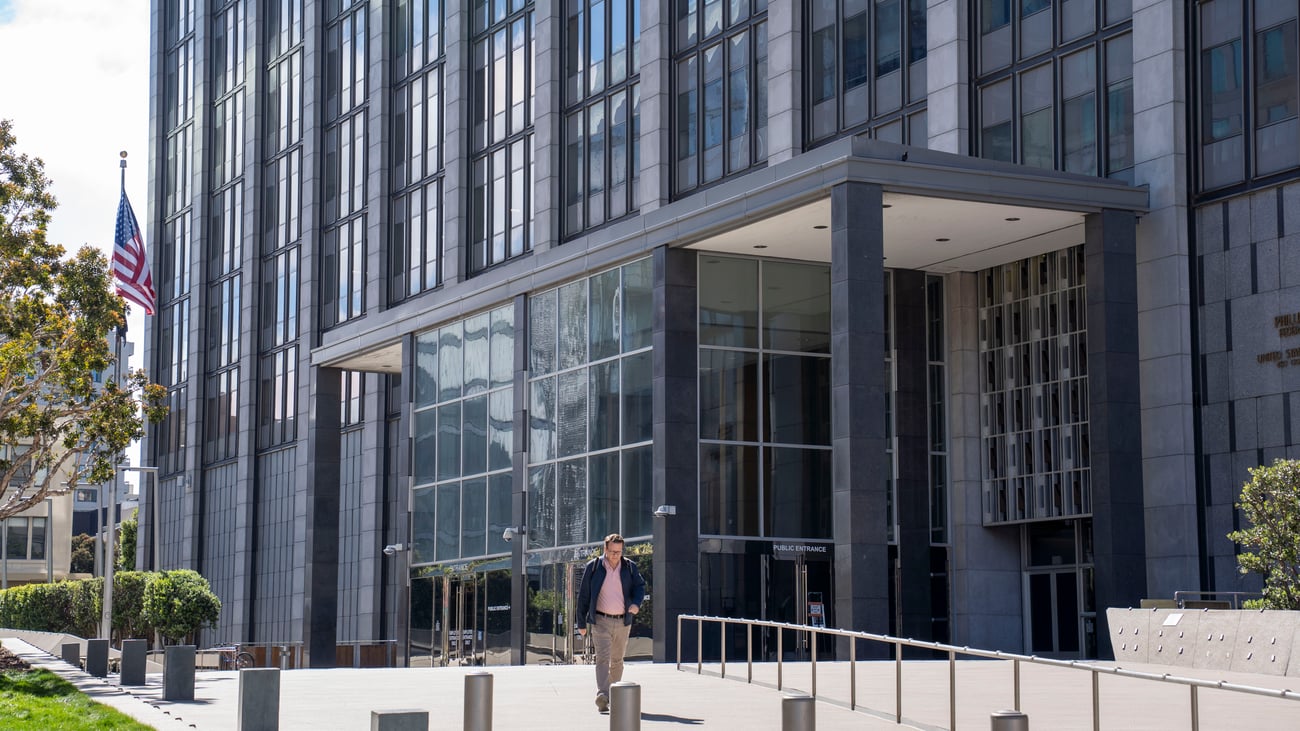
Federal Judge: Luke Brugnara Pandemic Relief Fraud Bail Granted
Summary
- A federal judge granted bail to former San Francisco real estate investor Luke Brugnara, who faces charges including wire fraud and money laundering.
- Brugnara's federal release conditions include a $50,000 cashier's check, a $100,000 bail bond, electronic monitoring, and home confinement.
- Despite federal bail, Brugnara is expected to be immediately arrested by San Mateo County authorities due to an active warrant.
- The court scrutinized the $50,000 bail fund, which Brugnara initially claimed was his own cash but later stated came from his landlord, Margarita Prikhodko.
- Brugnara had previously failed to appear for a federal bail revocation hearing in February, leading to his apprehension by U.S. Marshals in July.
Federal Bail Granted Amidst State Warrant
This case vividly illustrates the complex interplay between federal bail conditions and outstanding state warrants, a common challenge in high-profile San Francisco real estate investor fraud cases.
A federal judge has granted bail to Luke Brugnara, a former San Francisco real estate investor facing charges that include wire fraud and money laundering, in a case that has been broadly characterized as involving pandemic relief fraud. U.S. Magistrate Judge Lisa J. Cisneros issued the ruling, determining that Mr. Brugnara had satisfied the prerequisites previously established by Senior U.S. District Judge Maxine M. Chesney to ensure his future court appearances. These conditions included the provision of a $50,000 cashier's check and a $100,000 bail bond.
However, despite the federal court's decision regarding Luke Brugnara's federal release conditions, his freedom is expected to be short-lived. Upon his release from federal custody, Mr. Brugnara is likely to be apprehended by authorities from San Mateo County. An active arrest warrant currently exists for him in that jurisdiction, and San Mateo County District Attorney Stephen Wagstaffe has indicated his office's intention to take Mr. Brugnara into custody immediately. Wagstaffe explicitly stated that they hope to arrest him before he can leave federal premises.
The federal bail conditions impose strict limitations on Mr. Brugnara. He is required to wear an ankle bracelet for electronic monitoring and must remain at his residence in the Outer Sunset area under home confinement. Departures from his property are permitted only for essential legal, medical, or court appointments. Furthermore, he is prohibited from possessing firearms and must avoid any weapons owned by others. These stringent measures aim to mitigate flight risk and ensure public safety following the granting of Judge Lisa Cisneros's Brugnara bail order.
A History of Non-Compliance and Revoked Bail
Mr. Brugnara, 62, was initially indicted in May 2024 on nine counts of wire fraud and three counts of money laundering. Senior U.S. District Judge Maxine M. Chesney had previously ordered his release from custody in August 2024, contingent on his commitment to refrain from committing any new crimes or possessing a firearm. This initial period of freedom was cut short when prosecutors moved to revoke his bail in February, following an incident on January 21.
The revocation motion stemmed from an altercation at Thornton State Beach in Daly City, California, where Mr. Brugnara was arrested for possessing a firearm and allegedly threatening to shoot two individuals for trespassing. Although he was released a day later after posting a $100,000 bail, according to San Mateo County court records, he subsequently failed to appear for his federal bond revocation hearing in February. Prosecutors noted that this non-appearance occurred despite Mr. Brugnara having filed court documents requesting the reinstatement of his bond conditions. He was ultimately apprehended by U.S. Marshals on July 30.
Returning to federal court on August 3 before Judge Cisneros, Mr. Brugnara denied any knowledge of the February court date. However, the judge was unconvinced, expressing a lack of confidence that he would adhere to release conditions or appear for future court proceedings. Consequently, she ordered him to be detained, setting the stage for the recent hearings that ultimately led to the new bail decision.
Judicial Scrutiny Over Bail Fund Origins
A significant point of contention during the recent bail proceedings revolved around the source of the $50,000 cash component of Mr. Brugnara's bail. Initially, he offered the sum, claiming it was his own cash kept "in a shoebox." This offer was met with strong objections from the government, which highlighted that Mr. Brugnara currently owes over $700,000 in restitution from a prior case, of which he has only paid $600. The government expressed concerns about the origin of the funds and its ability to seize them for restitution purposes.
Over the course of three additional court hearings last Thursday, the narrative surrounding the funds' origin shifted. Mr. Brugnara's legal counsel informed the court that the $50,000 check would be provided by Margarita Prikhodko, who had been Mr. Brugnara's landlord for six months prior to his apprehension. Ms. Prikhodko reportedly stated that she provided the funds in exchange for Mr. Brugnara's assistance with her severely autistic son.
Assistant U.S. Attorney Maya Karwande underscored the government's skepticism, noting that Mr. Brugnara's account of the funds' source seemed to change at every hearing. Karwande also referenced Judge Cisneros's earlier order, which cited Mr. Brugnara's history of abusive behavior, raising concerns that Ms. Prikhodko might be either complicit or coerced into supporting him. Despite these concerns, Judge Cisneros characterized the government's extensive inquiry into the $50,000 as "a bit of a fishing expedition," adding that the government possessed other avenues to seize money for restitution if necessary, ultimately leading to the decision to grant the Luke Brugnara pandemic relief fraud bail.
Interplay of Federal and State Jurisdictions
This case vividly illustrates the complex interplay between federal bail conditions and outstanding state warrants, a common challenge in high-profile San Francisco real estate investor fraud cases. The federal court's decision to grant bail, complete with stringent monitoring and home confinement, reflects a judicial effort to balance a defendant's right to release with the need to ensure court appearance and public safety. However, the immediate threat of a San Mateo County warrant highlights how a defendant's legal status can be fragmented across different jurisdictional authorities, creating a precarious path to freedom.
The judicial discretion exercised by Judge Cisneros in scrutinizing the source of bail funds also underscores a critical aspect of white-collar crime proceedings. Courts are increasingly vigilant about the transparency and legitimacy of financial contributions, especially when defendants have a history of financial obligations or evasive behavior. The government's persistent questioning of the $50,000's origin, even if deemed a "fishing expedition" by the judge, reflects a broader concern about potential money laundering or attempts to obscure assets, which are often central to charges like Luke Brugnara's wire fraud and money laundering.
Ultimately, while the federal court has set forth specific Luke Brugnara federal release conditions, the immediate future for the former San Francisco real estate investor remains uncertain due to the active Luke Brugnara San Mateo County warrant. This scenario emphasizes the multi-layered legal challenges faced by individuals accused of complex financial crimes and the intricate coordination, or lack thereof, between different levels of the justice system.
Practical Implications
This case highlights the complex interplay between federal bail conditions and outstanding state warrants, demonstrating how judicial discretion and scrutiny over the source of bail funds can impact a defendant's release. Lawyers advising clients on white-collar crime or complex bail matters should be aware of these multi-jurisdictional and financial transparency challenges.
Source
How does this affect you?
Get an AI analysis of this article grounded in your jurisdictions, practice areas, and any policy documents you've uploaded to Wansom.
Finish Reading the Full Story and the Expert Analysis.
Get the latest legal & regulatory intelligence in United States
Wansom is AI and can make mistakes.