
LSO: Inaction On TMU Antisemitism Accreditation Draws Criticism
Summary
- The Canadian Jewish Law Association criticized the Law Society of Ontario for its handling of antisemitism concerns at Toronto Metropolitan University.
- The LSO previously rejected a motion to withdraw the Lincoln Alexander School of Law's accreditation due to a missed filing deadline.
- A report by Benotto found TMU failed to consistently apply its policies, leading to escalating tensions and a perception of few consequences for disruptive behavior.
- The Benotto report recommended TMU adopt the International Holocaust Remembrance Alliance working definition of antisemitism as an educational and policy framework.
- LSO Treasurer Shalini Konanur stated the LSO would await TMU's internal review before acting, a stance supported by one lawyer as 'measured' but criticized for its specific naming of antisemitism over other forms of racism.
Incidents Prompting Review at Toronto Metropolitan University
The report concluded that while Toronto Metropolitan University possessed policies capable of addressing much of the conduct examined, it frequently failed to apply them consistently and decisively.
A series of disruptive events at Toronto Metropolitan University (TMU) led to an external review, culminating in the Benotto report. The initial focus of this review, commissioned in November 2025, was a September 19, 2025, disruption of a Democracy Forum event hosted by The Dais, TMU's public policy think tank, which featured federal artificial intelligence minister Evan Solomon and resulted in a student's arrest.
The scope of the review was subsequently expanded to include a second significant incident: the November 5, 2025, disruption of an off-campus event organized by Students Supporting Israel at TMU. This event concluded with multiple individuals requiring hospitalization, including the keynote speaker and eight protesters. Protesters affiliated with Students for Justice in Palestine at TMU were identified as participants in both of these incidents. Benotto's final mandate directed an investigation into the complaint arising from the November 5 event, a fair account of the September 19 incident and subsequent arrest, and an assessment of TMU's policies, procedures, and practices concerning expression, campus safety, and event management.
Regulatory Scrutiny and Calls for Action
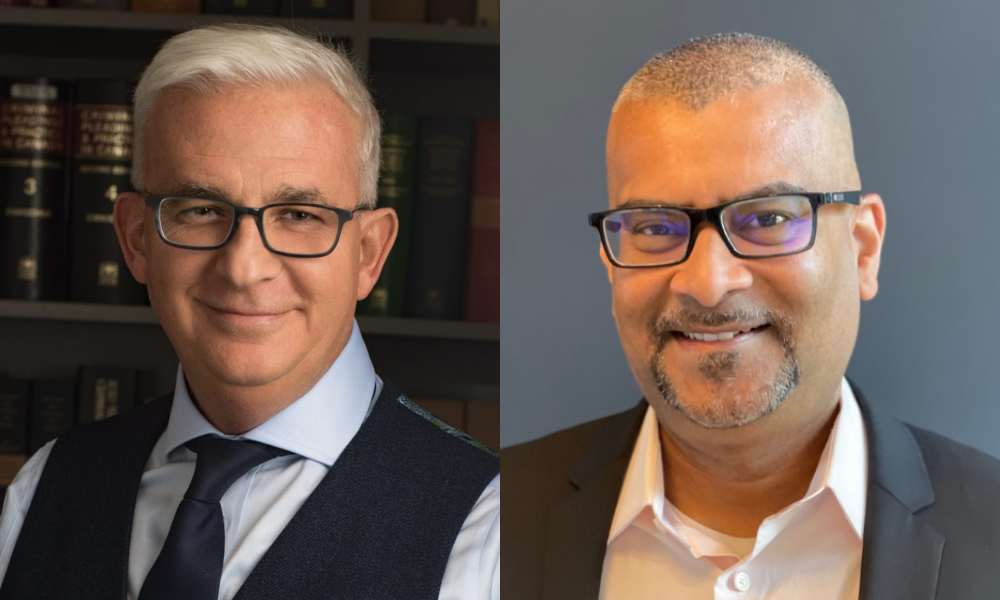
The Canadian Jewish Law Association (CJLA) has voiced strong criticism regarding the Law Society of Ontario's (LSO) handling of the Benotto report's findings on antisemitism at Toronto Metropolitan University. The CJLA has specifically called for both regulatory and governmental oversight of TMU's Lincoln Alexander School of Law. Joseph Neuberger, chair of the CJLA, asserted that the LSO is not adequately addressing the issue, emphasizing the need for immediate, decisive steps to implement changes at the law school and the university, rather than further studies or reports.
In response to these concerns, LSO Treasurer Shalini Konanur issued a statement on September 10, acknowledging the deeply concerning nature of the antisemitism experiences detailed in the report. However, Konanur indicated that the LSO would defer considering its responsibilities concerning the law school until TMU had completed its own review of the report and acted upon its recommendations. This position follows a previous instance where the LSO ruled a motion seeking the withdrawal of the law school's accreditation out of order, citing a missed filing deadline for the law society's annual general meeting.
Divergent Perspectives on the LSO's Approach
While the Canadian Jewish Law Association advocates for more decisive action, the LSO's approach has found some support within the legal community. Faisal Kutty, a lawyer and law professor at Southwestern Law School, who is also involved with York University's Islamophobia Research Hub and co-founded several civil liberties organizations, expressed support for the LSO Treasurer's "measured response" to the accreditation motion.
However, Kutty also raised a specific concern regarding the LSO's statement. He noted that it explicitly named antisemitism while only indirectly referring to anti-Palestinian racism and Islamophobia as concerns of "other groups." This highlights a nuanced debate within the legal community about how regulatory bodies should address various forms of discrimination.
Benotto Report Findings and Recommendations
The report, officially titled "Toronto Metropolitan University External Review 2025-2026" and released on August 14, presented critical findings regarding the university's operational effectiveness. The report concluded that while Toronto Metropolitan University possessed policies capable of addressing much of the conduct examined, it frequently failed to apply them consistently and decisively.
This absence of clear enforcement, coupled with ambiguity surrounding free expression and protest guidelines, contributed significantly to escalating tensions on campus and fostered a perception that disruptive actions carried minimal consequences. A key recommendation from the Benotto report was for TMU to recognize that discrimination against Jews can manifest through opposition to Zionism. Based on this understanding, the report advised TMU to adopt the International Holocaust Remembrance Alliance (IHRA) working definition of antisemitism as a foundational framework for both educational initiatives and policy development.
Practical Implications
Lawyers and compliance officers should monitor the LSO's ongoing response to the Benotto report and its engagement with Toronto Metropolitan University regarding antisemitism. This situation could establish precedents for regulatory oversight of legal education institutions and influence professional conduct expectations related to discrimination within the legal community.
Source
Source: Original reporting via Law Times
How does this affect you?
Get an AI analysis of this article grounded in your jurisdictions, practice areas, and any policy documents you've uploaded to Wansom.
Finish Reading the Full Story and the Expert Analysis.
Get the latest legal & regulatory intelligence in Canada
Wansom is AI and can make mistakes.