
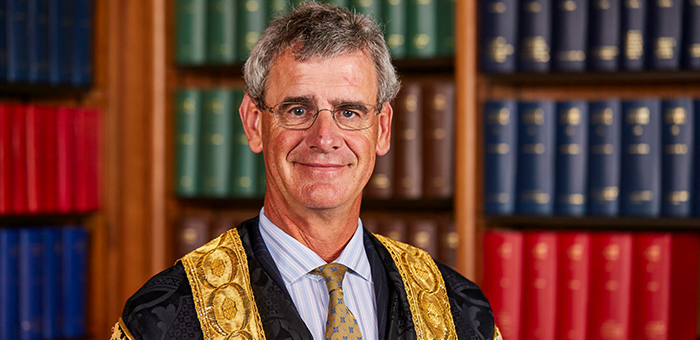
Lord Briggs: UK Supreme Court President Appointed for January 2027
Summary
- Lord Briggs has been appointed as the next President of the UK Supreme Court, effective January 2027.
- He will succeed Lord Reed upon his retirement and become the fifth President since the court's establishment in 2009.
- The King approved the appointment on the advice of the Prime Minister and Lord Chancellor, following an independent selection commission's recommendation.
- Lord Briggs, who joined the Supreme Court in 2017, previously oversaw the extensive Lehman Brothers insolvency litigation.
- He has pledged to uphold justice of the highest quality, transparency, and accessibility in his new role.
What Happened
His stated goal is to ensure the delivery of justice characterized by the highest standards of quality, transparency, and accessibility.
The UK Supreme Court is set to welcome a new leader, with the announcement on September 9, 2026, that Lord Briggs has been appointed as its next President. This significant judicial appointment will see Lord Briggs assume the top role in January 2027, succeeding the retiring Lord Reed. His elevation marks him as the fifth individual to hold the presidency since the Supreme Court's establishment in 2009, underscoring a pivotal moment in the court's relatively short history.
The formal process for this high-profile judicial transition involved the King's approval, which was granted on the advice of both the Prime Minister and the Lord Chancellor. This advice followed a comprehensive recommendation put forth by an independent selection commission, ensuring a rigorous and impartial selection procedure for the new UK Supreme Court President.
A Distinguished Judicial Career
Lord Briggs' path to this top judicial role began with a history degree from Magdalen College, Oxford, rather than a law degree. Notably, he was the first lawyer in his family, forging his own way into the legal profession.
His early legal career involved practicing business and property litigation from Charles Sparrow QC's chambers, which later became Serle Court. He distinguished himself sufficiently to become a King's Counsel, taking silk in 1994, a significant milestone for any barrister.
His judicial career commenced with an appointment to the High Court in 2006. He notably oversaw the extensive Lehman Brothers insolvency litigation from 2009 to 2013, a complex and high-profile case. He was subsequently elevated to the Court of Appeal in 2013, and then made the jump to the Supreme Court four years later in 2017, where he has served prior to this presidential appointment.
Vision for Justice and Accessibility
Following the announcement, Lord Briggs expressed profound gratitude, calling it a “great privilege” to assume the highest judicial office. He articulated his commitment to collaborating with colleagues across both the Supreme Court and the Judicial Committee of the Privy Council (JCPC).
His stated goal is to ensure the delivery of justice characterized by the highest standards of quality, transparency, and accessibility. This forward-looking vision aligns with contemporary demands for a more open and efficient legal system.
Outgoing President Lord Reed lauded his successor as “a judge of the highest distinction,” specifically commending Lord Briggs' dedicated efforts to enhance the justice system's accessibility and efficiency. This endorsement highlights a shared commitment to these crucial aspects of judicial administration.
Broader Judicial Landscape
The impending leadership of Lord Briggs as the January 2027 Supreme Court President carries substantial implications for the UK's highest judicial authority. His tenure is widely anticipated to influence the court's strategic direction, potentially shaping judicial priorities, procedural developments, and the overall approach to justice delivery. The emphasis on accessibility and efficiency, articulated by both Lord Briggs and his predecessor, suggests a continued drive towards modernizing and streamlining the judicial process, which could significantly impact future case law and litigation strategies for legal practitioners.
This change at the helm of the Supreme Court is part of a broader evolution within the senior judiciary. The source also notes that Lord Justice Snowden has joined the top bench, indicating ongoing adjustments to the composition of the UK's most senior legal body. Such appointments collectively contribute to the dynamic landscape of justice administration, warranting close attention from legal professionals.
Practical Implications
Lawyers and compliance officers should note the appointment of Lord Briggs as President of the UK Supreme Court, as his leadership may influence the court's future judicial priorities, procedural developments, and approach to justice accessibility and efficiency, potentially impacting future case law and litigation strategies.
Source
How does this affect you?
Get an AI analysis of this article grounded in your jurisdictions, practice areas, and any policy documents you've uploaded to Wansom.
Finish Reading the Full Story and the Expert Analysis.
Wansom is AI and can make mistakes.