
Liberian Civil War Survivors Receive Reparations
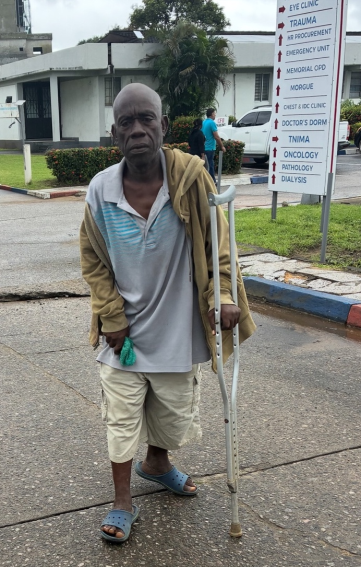
By Anthony Stephens, senior justice correspondent with New Narratives JOHN F. KENNEDY HOSPITAL, Monrovia— For 36 years, Rufus Kartee has lived with a bullet wound he says he suffered at the hands of troops of the Armed Forces of Liberia at St. Peters Lutheran Church in 1990, where one of Liberias deadliest wartime massacres took place. Now 65, he walks with a crutch, struggles to find shelter and sometimes begs for food. He lives with chronic pain and poverty long after the countrys civil wars ended. On a recent afternoon here at the country’s largest hospital, Kartee holds his medical records and appointment card. A bullet struck his left hip during the massacre, he says, damaging the bone and leaving him unable to walk without assistance. After decades of unsuccessful appeals for medical care, he is finally receiving treatment. “I am very happy,” Kartee says. “I am in serious pain. From the wound and the damaged bone, it has me breathing fast, fast.” Kartee is among five civil war survivors receiving medical care through an initiative by the Liberia Massacre Survivors Association, the Independent National Commission on Human Rights and the Women’s NGOs Secretariat. Organizers call it Liberia’s first effort to provide medical treatment as reparations, more than 23 years after the wars ended. Two beneficiaries are in Montserrado County, two in Nimba and one in Bomi. The Commission contributed US$55 and LRD 22,000 toward treatment for two survivors at JFK, covering half the cost of a woman’s X-ray and treatment for neck wounds, as well as four pints of blood for Kartee. The Ministry of Health paid the remaining JFK costs and treatment for the three survivors elsewhere. The Commission also covered transportation, says Commissioner Partmellia Doe Paivey. Kartee was the only patient to undergo surgery. The survivors were treated for injuries to their arms, ribs, backs and other body parts. A woman from Bomi said forces loyal to former President Charles Taylor threw her into the Mayeh River in 2003, leaving her wounded. The other four beneficiaries remain unidentified. Paivey said the Commission could not “disclose their names for other purposes,” without elaborating. The new initiative grew from a proposal by human rights lawyer Tiawan Gongloe for a National War Victims Relief Fund supported by public contributions and government matching funds. In an opinion piece in August, Gongloe proposed annual contributions of at least US$1 from employed Liberians and those abroad, L$100 from unemployed Liberians who could afford it, and US$5 in government matching funds for every US$1 raised. At the survivors association’s 17th anniversary gathering in August, Jallah Barbu, head of the office establishing Liberia’s war and economic crimes court, made a public display of his support for the idea by donating the first dollar during his keynote address. Paivey accepted it and pledged to launch the fund within days. The effort follows a longstanding recommendation of Liberia’s Truth and Reconciliation Commission, which proposed a US$500 million reparations program over 30 years in its 2009 final report , covering medical care, counseling, education and financial assistance. More than 17 years later, the recommendations remain largely unfulfilled. In August 2024, then-Justice Minister Oswald Tweh pledged at the United Nations that the Boakai administration was “committed to establishing a reparation trust fund to support conflict victims.” No comprehensive program has emerged. Kartee’s hardship has deepened with the loss of his wife and two daughters. His wife died of a stroke in July. His eldest daughter, Brenda, the family’s breadwinner, died in 2019 at 35. Another daughter, Kathy, died of tuberculosis that year at 27. His surviving children also struggle financially. Enes, 40, is a farmer, while Rufus Kartee Jr., 36, is unemployed but helps his father with errands and medical visits. Kartee describes his circumstances simply: “Very, very poor
How does this affect you?
Get an AI analysis of this article grounded in your jurisdictions, practice areas, and any policy documents you've uploaded to Wansom.
Finish Reading the Full Story and the Expert Analysis.
Get the latest legal & regulatory intelligence in Liberia
Wansom is AI and can make mistakes.