
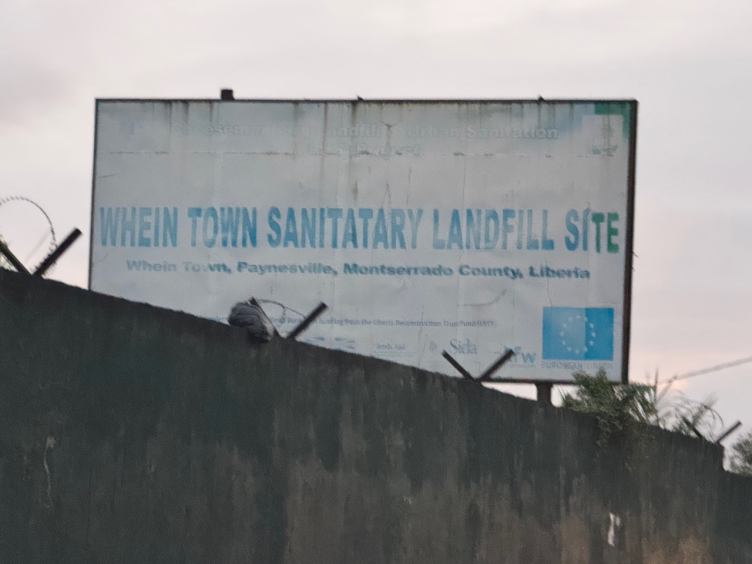
Liberia: Whein Town Landfill Closure Demand Escalates Over Health Risks
Summary
- Residents of Whein Town, Liberia, are demanding the closure of the Whein Town Landfill due to escalating health and environmental risks.
- The landfill, established in 2011 under the EMUS Project, was intended as a temporary five-year site but remains operational fifteen years later.
- Community members report increased mosquito and fly infestations, foul-smelling water, and the presence of rodents and snakes, alongside concerns about water contamination and common malaria.
- A community monitoring team was established after past protests, but it has faced financial constraints and inconsistent stipend payments.
- Residents believe authorities have failed to uphold commitments and have not received regular aid or data collection from government or humanitarian organizations for a long time.
Community Outcry Over Landfill Operations
Residents are now demanding the immediate closure of the Whein Town Landfill, asserting that its continued operation far beyond its designated lifespan poses severe health and environmental hazards to nearby communities.
Residents in Whein Town, Liberia, are calling for the permanent closure of the local landfill, alleging that authorities are continuing to utilize a site that has long surpassed its intended operational period. This prolonged use, they contend, is exposing surrounding communities to escalating health and environmental dangers. Reports from interviewed residents highlight a significant increase in mosquito and fly infestations, concerns over foul-smelling water believed to be contaminated, and the noticeable presence of rodents and snakes in residential areas. Furthermore, sections of the landfill's perimeter wall have reportedly collapsed, creating additional entry points for these pests into homes.
Samuel Kofi Jones III, who serves as the Secretary General for the Whein Town Community Leadership, informed FrontPage Africa that residents have voiced their concerns regarding the landfill for several years. He noted previous instances where the community protested activities deemed detrimental. Jones recounted an event around 2012 or 2013 when seized drugs were allegedly burned near the landfill by authorities, causing fumes to spread throughout the community. This incident, he explained, prompted residents to protest and advocate for increased community oversight of the facility's operations.
Following these protests, a community monitoring team was established, initially comprising eight residents who worked in shifts, including overnight, to oversee activities at the landfill. However, due to financial constraints, the team was later reduced to four members, and stipends for their work have not been paid consistently. Jones indicated that two groups of community monitors have completed their assignments, with the most recent cohort having worked for approximately two months without receiving payment.
He unequivocally stated his desire for the dumpsite's closure, emphasizing that residents no longer wish for the landfill to operate within their community. While residents remain open to discussions with the government, Jones expressed a belief that authorities have not honored previous commitments made to the community regarding the facility.
Regulatory Context and Exceeded Lifespan
The Whein Town Landfill, managed by the Monrovia City Corporation, was originally established in 2011. Its initial purpose was to serve as a temporary, five-year emergency waste disposal site under the Emergency Monrovia Urban Sanitation (EMUS) Project. The facility was conceived as an interim sanitary landfill, designed to enhance solid-waste collection and disposal services for both Monrovia and Paynesville.
Despite its designation as a temporary, five-year solution, the landfill remains operational fifteen years after its establishment. This extended operation means the facility has significantly exceeded its intended lifespan, a point frequently raised by local residents. They describe the site as currently operating in a heavily degraded condition, far from its original design and purpose as a sanitary waste disposal area.
Public Health and Environmental Impacts
The prolonged operation of the Whein Town Landfill has led to significant public health and environmental challenges for the surrounding population. Leon Miaway, a local resident, highlighted the severe problem of mosquitoes, particularly in the evenings, making it difficult for residents to remain outdoors after 5 or 6 p.m. and necessitating the use of mosquito nets at night. He also noted a rise in fly populations, especially during the rainy season, which interferes with outdoor eating as flies frequently contaminate food.
Miaway expressed deep concern regarding the quality of local water sources, attributing this issue to recent changes in the waste dumping area. He explained that the new dumping location lacks adequate measures to contain liquid waste, which he believes has contributed to the pollution of the community's water supply. Consequently, some residents are now compelled to purchase water for drinking and cooking, adding an unforeseen financial burden to their household expenses.
The health implications extend further, with Miaway reporting that malaria is a common ailment within the community. Children, he added, face additional risks when walking barefoot in areas affected by stagnant water. Residents also report a lack of consistent support from government agencies or humanitarian organizations, noting that it has been a considerable period since they last saw efforts to collect household data or distribute essential supplies such as mosquito nets.
Practical Implications
This situation highlights significant environmental and public health compliance risks for the Monrovia City Corporation and other waste management entities in Liberia. Lawyers should monitor for potential environmental litigation, public health lawsuits, or regulatory actions stemming from the landfill's extended operation and its impact on surrounding communities, advising clients on potential liabilities and regulatory adherence.
Source
How does this affect you?
Get an AI analysis of this article grounded in your jurisdictions, practice areas, and any policy documents you've uploaded to Wansom.
Finish Reading the Full Story and the Expert Analysis.
Get the latest legal & regulatory intelligence in Liberia
Wansom is AI and can make mistakes.