
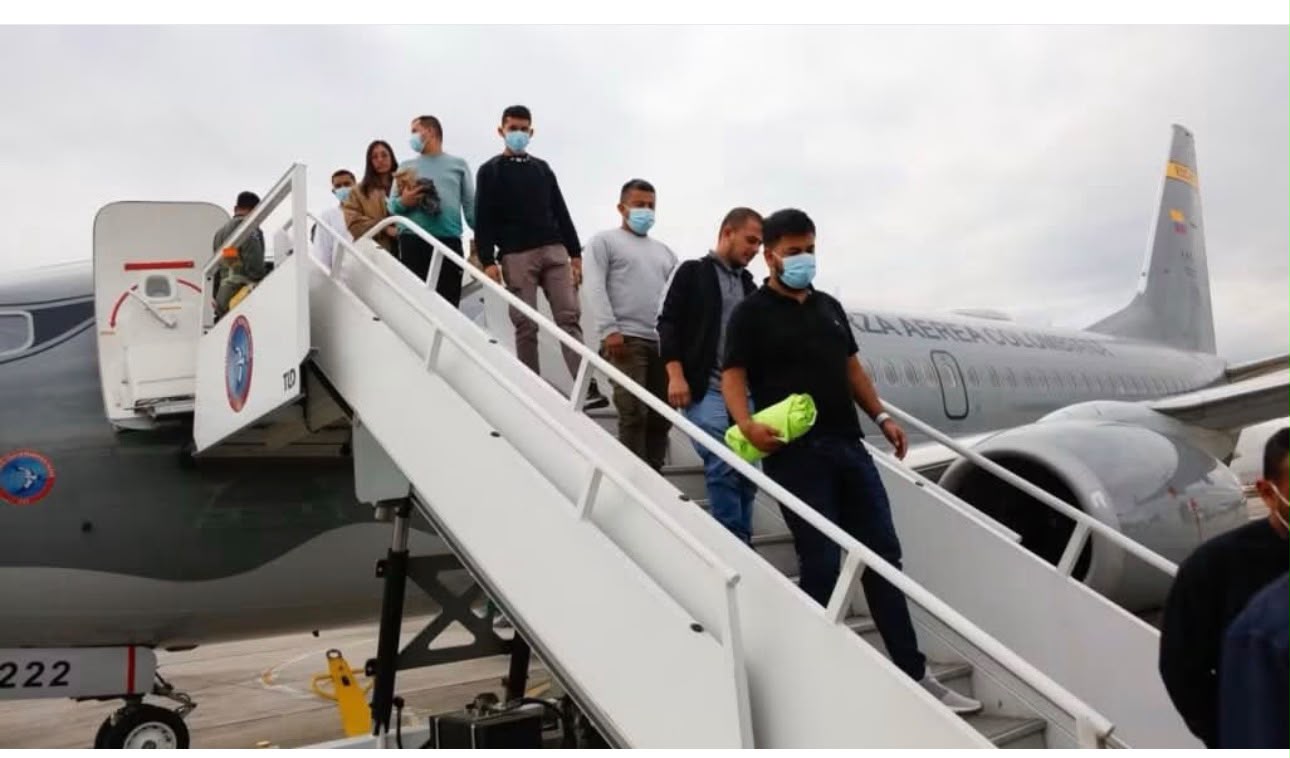
Liberia's Roberts International Airport: First 20 Third-Country Deportees Arrive from US
Summary
- 20 third-country deportees arrived at Roberts International Airport (RIA) from the United States on Thursday.
- Five deportees reportedly refused to leave the plane, leading to a tense standoff with U.S. federal agents.
- The incident has sparked debate about the treatment of deportees and the effectiveness of the deportation arrangement.
- Critics argue that third-country transfers can lead to human rights abuses and exploitation of vulnerable individuals.
First Group of Third-Country Deportees Arrives in Liberia
The incident at RIA highlights the need for clear guidelines, training, and protocols to prevent such situations from arising in the future.
Liberia's Roberts International Airport (RIA) witnessed a significant event on Thursday as the first group of 20 third-country deportees arrived from the United States. This marks the beginning of the country's controversial deportation arrangement with its American counterpart. The transfer, however, was marred by controversy when five of the deportees refused to disembark from the plane, leading to a tense standoff between them and U.S. federal agents who had to restrain them.
The incident has raised questions about the treatment of deportees and the effectiveness of the deportation arrangement. While some have hailed it as a significant step towards addressing Liberia's immigration challenges, others have expressed concerns about the potential risks and consequences for those involved.
Legal Context: Understanding Third-Country Transfers
The concept of third-country transfers is not new to international law. It refers to the practice where a country sends an individual to a third country, often as a result of deportation or extradition proceedings. In this case, Liberia and the United States have agreed to facilitate such transfers under their bilateral arrangement. However, critics argue that this approach can lead to human rights abuses and exploitation of vulnerable individuals. The incident at RIA has sparked renewed debate about the need for stricter regulations and safeguards to protect deportees' rights.
The U.S.-Liberia deportation arrangement is a complex issue that involves multiple stakeholders, including government agencies, law enforcement officials, and immigration lawyers. As the situation unfolds, it is essential to examine the legal framework governing third-country transfers and identify areas where improvements can be made.
Why It Matters: Implications for Immigration Law and Policy
The arrival of the first group of third-country deportees in Liberia has significant implications for immigration law and policy. Lawyers advising clients on immigration matters should be aware of the potential for similar deportee standoffs and ensure compliance with applicable laws and regulations regarding third-country transfers. The incident at RIA highlights the need for clear guidelines, training, and protocols to prevent such situations from arising in the future.
The controversy surrounding the deportation arrangement also raises questions about the role of international cooperation in addressing immigration challenges. As countries continue to grapple with the complexities of migration, it is essential to strike a balance between national security concerns and human rights obligations.
Practical Implications
Lawyers advising clients on immigration matters should be aware of the potential for similar deportee standoffs and ensure compliance with applicable laws and regulations regarding third-country transfers.
Source
How does this affect you?
Get an AI analysis of this article grounded in your jurisdictions, practice areas, and any policy documents you've uploaded to Wansom.
Wansom is AI and can make mistakes.