
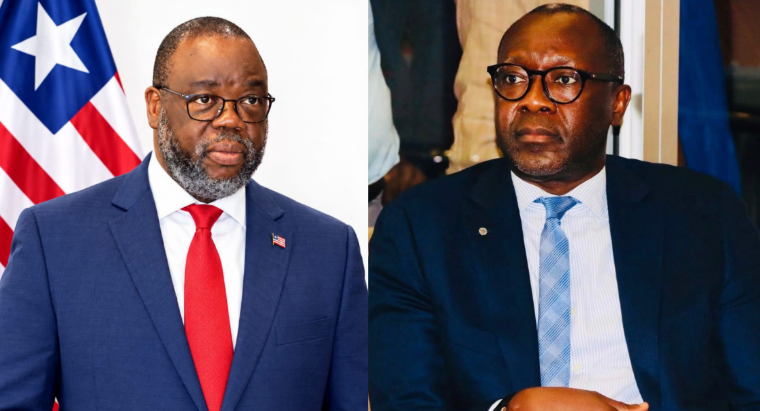
Liberia Senators Snowe, Konneh: Reject Gbeisay Jury Trial Abolition
Summary
- Senators Snowe and Konneh have rejected Chief Justice Gbeisay's proposal to abolish jury trials in Liberia.
- Chief Justice Gbeisay cited concerns about jurors being bribed or compromised in criminal cases.
- The senators argue that jury trials are a constitutionally protected right under Articles 20(a) and 21(h) of the 1986 Constitution.
- Abolishing jury trials would require a complex constitutional amendment process involving legislative approval and a national referendum.
- Senators contend that removing juries would not solve corruption but merely shift its target, advocating for broader criminal justice system reforms.
Legislative Pushback on Jury Abolition
Corruption inherently follows power, implying that wherever decisions on verdicts are made, corrupt actors will inevitably attempt to exert influence.
In a significant development concerning Liberia's judicial system, two prominent members of the Liberian Senate, Senator Snowe and Senator Konneh, have publicly opposed a proposal by Chief Justice Gbeisay to eliminate jury trials. The Chief Justice, speaking at the commencement of the October Term of Court, expressed serious reservations about the integrity of the jury process, citing instances where jurors were allegedly compromised through bribery or other undue influence in criminal proceedings.
Senators Snowe, a seasoned legislator and former Speaker of the House of Representatives, and Konneh, who chairs the Senate Committee on Public Accounts, each issued statements refuting the Chief Justice's call for abolition. While both acknowledged the legitimate threats posed by bribery, intimidation, and interference within the justice system, they firmly contended that such issues necessitate a more robust and secure jury framework, rather than the complete removal of jury trials. They argued that discontinuing jury trials would unfairly penalize the general public for the misdeeds of a select few individuals.
Constitutional Safeguards for Due Process
The senators underscored that the debate over jury trials is fundamentally a constitutional matter, preceding any policy considerations. Both legislators referred to the 1986 Liberian Constitution, which explicitly guarantees due process and the right to a trial by jury. Senator Snowe specifically highlighted Article 20(a), which secures due process and the right to a jury trial, subject only to constitutionally defined exceptions. He also pointed to Article 21(h), which outlines the right to a speedy, public, and impartial jury trial in relevant cases, while also permitting an accused individual to waive this right under specified conditions.
Senator Konneh further elaborated that a constitutionally protected right cannot be abrogated by an ordinary statute or a directive from the judiciary. He asserted that the sole legitimate pathway for altering this fundamental right is through the rigorous constitutional amendment process, as stipulated in Articles 91 and 92 of the Constitution. Article 91 mandates that any amendment must first secure the approval of two-thirds of the membership in both houses of the Legislature, followed by ratification by two-thirds of registered voters in a national referendum, which must occur at least one year after the legislative vote. Article 92 outlines additional requirements for the publication and voting procedures of proposed amendments. The senators also drew a clear distinction between an accused person voluntarily relinquishing their right to a jury and the state unilaterally removing this option for all citizens.
Addressing Systemic Corruption, Not Just Juries
A central point of contention raised by the senators was their belief that abolishing juries would not eradicate the underlying issue of corruption within the justice system. Senator Konneh articulated that simply removing juries from the courtroom would not eliminate corruption from judicial proceedings. He cautioned that judicial officers themselves are susceptible to bribery, intimidation, and political pressures, suggesting that entrusting a verdict solely to a single judge could inadvertently create a more concentrated target for those seeking to manipulate outcomes. Konneh famously remarked that corruption inherently follows power, implying that wherever decisions on verdicts are made, corrupt actors will inevitably attempt to exert influence.
Senator Snowe expanded on this perspective, noting that improper influence is not confined to the jury box or the judge's bench. He highlighted that prosecutors, investigators, court staff, and witnesses are all potential points of vulnerability, and any weakness at any stage of a legal case can compromise its final result. Consequently, he advocated for a holistic examination of the entire criminal justice pipeline in Liberia, encompassing everything from the methods of crime investigation and evidence management to the protection of witnesses and the prosecution of cases. Senator Snowe emphasized that while corruption necessitates thorough investigation, accountability, and institutional repair, its presence alone does not justify stripping the Liberian populace of a fundamental constitutional right. He also noted his non-legal background, asserting that his legislative experience and constitutional duties compel him to assess such matters with independence.
Integrity of Verdicts and Proper Investigation
Furthermore, Senator Snowe issued a cautionary statement against automatically interpreting every not-guilty verdict as evidence of a compromised jury. He specifically referenced the legal proceedings involving former Finance Minister Samuel Tweah and Abdullah Kamara, stressing that each verdict, alongside any allegations of misconduct, subsequent court rulings, and the specific evidence presented, must be evaluated on its individual merits. An acquittal, he explained, could legitimately stem from insufficient evidence, unreliable testimony, or a prosecution that simply failed to establish guilt beyond a reasonable doubt. He concluded that any credible allegations of interference within the judicial process should be subjected to lawful investigative procedures, rather than being presumed based on public dissatisfaction with a particular outcome.
Practical Implications
Lawyers and compliance officers in Liberia should note that the constitutional right to a jury trial remains robustly defended by key legislative figures, making any immediate abolition highly unlikely without a complex constitutional amendment process. This debate underscores ongoing concerns about judicial integrity and the broader criminal justice system, which may lead to future reforms in investigation, evidence handling, and witness protection that practitioners should monitor.
Source
How does this affect you?
Get an AI analysis of this article grounded in your jurisdictions, practice areas, and any policy documents you've uploaded to Wansom.
Finish Reading the Full Story and the Expert Analysis.
Get the latest legal & regulatory intelligence in Liberia
Wansom is AI and can make mistakes.