
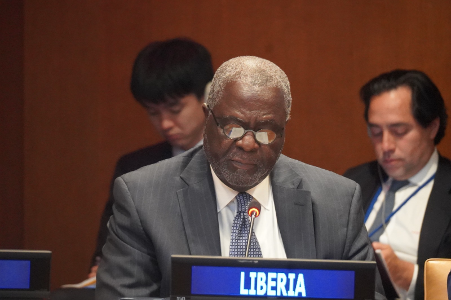
Liberia's UN Ambassador: Outlines 3 Priorities to Combat Transnational Crime
Liberia's Ambassador to the United Nations, Lewis G. Brown II, on Monday, November 23, 2026, at a high-level event at the UN Headquarters in New York, outlined three key priorities for combating transnational organized crime: enhanced cross-border cooperation, improved financial intelligence sharing, and increased investment in prevention programs.
Ambassador Brown's address, delivered during the International Day for the Prevention and Fight against All Forms of Transnational Organized Crime, highlighted the escalating threat posed by organized crime to international peace, security, sustainable development, and human rights. His first priority emphasized the critical need for effective cross-border cooperation, specifically advocating for mechanisms that facilitate the sharing of evidence to bolster criminal investigations and prosecutions across jurisdictions. The second priority focused on strengthening collaboration among financial intelligence units and investigators to effectively trace illicit financial flows, share pertinent information, and legally recover proceeds derived from criminal activities. Finally, Ambassador Brown underscored the importance of prevention, urging greater investment in programs that support young people, particularly through expanding access to drug-dependence treatment services within communities, acknowledging Liberia's own challenges in rebuilding public trust in state institutions.
For legal practitioners and businesses, this statement carries significant weight, signaling a continued and intensified global focus on combating transnational organized crime, with direct implications for compliance, risk management, and international legal cooperation. The emphasis on financial intelligence sharing and asset recovery means that businesses, especially those operating across borders or in sectors prone to illicit financial flows, will face increased scrutiny and a heightened need for robust anti-money laundering (AML) and counter-terrorist financing (CTF) frameworks. The call for enhanced cross-border cooperation suggests a future where mutual legal assistance requests and extradition processes may become more streamlined and frequent, impacting how international investigations are conducted and how evidence is gathered and presented in various jurisdictions.
Legally, Ambassador Brown's priorities align with and reinforce existing international instruments such as the United Nations Convention against Transnational Organized Crime (Palermo Convention) and its protocols, as well as various UN Security Council resolutions and Financial Action Task Force (FATF) recommendations. These frameworks provide the legal basis for mutual legal assistance, extradition, asset forfeiture, and the establishment of financial intelligence units. Liberia, as a signatory to many of these international agreements, is signaling its commitment to upholding these obligations and potentially strengthening its domestic legal and institutional capacity to implement them. The mention of rebuilding public trust also points to the importance of a strong, independent judiciary and effective law enforcement agencies within Liberia's own legal system to ensure the rule of law and deter criminal activities.
Attorneys advising clients with international operations, particularly those in finance, trade, or any sector susceptible to illicit financial activities, should closely monitor developments in international cooperation agreements and financial intelligence sharing protocols. Businesses should review and, if necessary, enhance their internal compliance programs to align with evolving international standards for AML/CTF, due diligence, and sanctions screening. Furthermore, practitioners should be prepared for increased demands for cross-border evidence sharing and asset recovery, understanding the intricacies of mutual legal assistance treaties and the processes involved in international investigations. The focus on prevention also highlights the broader societal impact of organized crime and the potential for corporate social responsibility initiatives to align with these global efforts.
How does this affect you?
Get an AI analysis of this article grounded in your jurisdictions, practice areas, and any policy documents you've uploaded to Wansom.
Finish Reading the Full Story and the Expert Analysis.
Get the latest legal & regulatory intelligence in Liberia
Wansom is AI and can make mistakes.