
Liberia Advocates: War Crimes Court Bill Progress Demanded Amid Protests
Summary
- Hundreds of Liberian civil war victims and justice advocates protested in Monrovia, demanding accountability for past atrocities.
- The demonstrations targeted government offices and the Capitol Building, highlighting frustration over delays in establishing a war crimes court.
- A senior lawmaker pledged to bring the war crimes court bill before the House of Representatives plenary on Tuesday.
- Debate continues regarding whether the proposed court should prosecute only war crimes or also include economic crimes.
- This legislative development is crucial for addressing long-standing demands for justice and ending impunity in Liberia.
Mounting Pressure for Accountability
The commitment from a senior lawmaker to present the bill to the House plenary on Tuesday marks a critical juncture in the Liberia war crimes court bill progress, offering a glimmer of hope to victims and survivors who have tirelessly campaigned for an end to impunity.
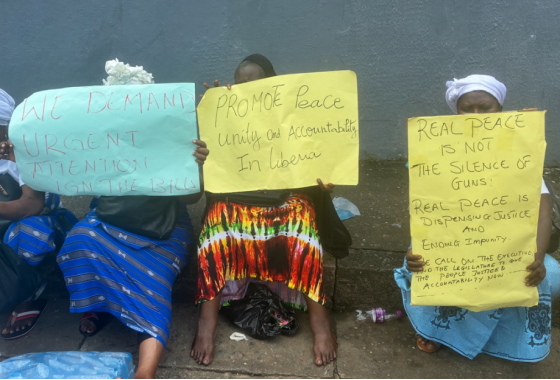
Hundreds of Liberian civil war victims, survivors, and dedicated justice advocates converged on government offices in Monrovia on Thursday, demanding immediate action on long-promised accountability. The peaceful demonstrations commenced outside the Office for the Establishment of the War and Economic Crimes Court, briefly interrupting its operations, before proceeding to the Capitol Building to directly address lawmakers. Participants represented diverse groups, including individuals with disabilities, rural women, elderly citizens, young people, and respected traditional and religious leaders, all united by a common call for justice.
Protesters displayed placards articulating their frustration, with one notable sign declaring that "REAL PEACE IS NOT THE SILENCE OF GUNS. REAL PEACE IS DISPENSING JUSTICE AND ENDING IMPUNITY." Korpo Dennis, who leads the Women in Peacebuilding Network, voiced deep emotional distress, questioning why President Joseph Boakai had not addressed the issue at the United Nations General Assembly, contrary to what she believed was his commitment. Her poignant appeal underscored the profound disappointment among those who have campaigned for accountability for years, witnessing successive administrations struggle to translate pledges into concrete legislation.
Legislative Hurdles and Scope Debate
The demonstrations highlighted the persistent frustration surrounding Liberia's failure to establish a court capable of prosecuting atrocities committed during its civil wars, which concluded more than two decades ago. Despite numerous governmental assurances and extensive public consultations, various competing legislative proposals remain before lawmakers, creating uncertainty about when the nation will finally begin prosecuting individuals accused of severe wartime crimes. This ongoing delay has fueled the Liberia justice advocates protest and intensified calls for the Liberia war crimes court bill progress.
Jallah Barbu, Executive Director of the Office for the Establishment of the War and Economic Crimes Court, attempted to reassure the protesters, expressing confidence in President Boakai's commitment to the court's establishment. In an effort to provide immediate answers, Barbu unsuccessfully tried to contact House Speaker Richard Koon by telephone. Subsequently, he reached James Verdier, the Speaker's chief of staff, who assured the demonstrators that the necessary legislation would receive approval. However, these assurances did not satisfy the protesters, who then moved to Capitol Hill to directly confront members of the Liberia House of Representatives war crimes court. Kula Fofana, President Boakai's press secretary, did not respond to inquiries regarding the protesters' concerns.
At the Capitol, Jeremiah D. Cooper, representing the Group of 77, an organization for people with disabilities, challenged lawmakers on the prolonged delays. He questioned their mandate, reminding them that the Liberian people who elected them were the same ones now demanding the passage of crucial legislation in the national interest. A key point of contention that emerged during the gathering was the precise scope of the proposed court: whether it should exclusively prosecute war crimes or also include economic crimes. Prescilla A. Cooper, a Montserrado County representative and member of the House Committee on Claims and Petitions, informed protesters that a joint legislative committee, tasked with harmonizing the differing bills, had agreed to advance legislation focused on a war crimes court, with economic crimes to be addressed separately. Conversely, Prince Toles, chairman of the committee, sought to calm the crowd by assuring them that the legislation would indeed establish a War and Economic Crimes Court, indicating a potential ongoing debate or differing interpretations of the committee's consensus. A senior lawmaker ultimately pledged to bring the court bill before the House of Representatives plenary on Tuesday, signaling a potential breakthrough in the Liberia civil war accountability legislation.
The Path Forward for Justice
The recent protests underscore the enduring demand for justice and accountability in Liberia, more than two decades after the cessation of its brutal civil wars. The commitment from a senior lawmaker to present the bill to the House plenary on Tuesday marks a critical juncture in the Liberia war crimes court bill progress, offering a glimmer of hope to victims and survivors who have tirelessly campaigned for an end to impunity. The establishment of such a court would represent a significant step towards addressing past atrocities and reinforcing the rule of law within the nation.
For legal professionals and compliance officers, this development signals a potential shift in Liberia's legal landscape regarding international criminal justice. The ongoing legislative process, particularly the debate over the inclusion of economic crimes alongside war crimes, warrants close monitoring. The eventual passage of this bill could lead to substantial legal proceedings, impacting individuals and entities implicated in the civil wars or related financial misconduct, thereby shaping future compliance requirements and legal precedents in the region. President Joseph Boakai war crimes court commitment, as reiterated by his executive director, remains a central factor in the push for this long-awaited judicial mechanism.
Practical Implications
Lawyers and compliance officers should closely monitor the legislative progress of the War Crimes Court bill in Liberia, as its potential passage could lead to significant legal proceedings and accountability for past atrocities, impacting individuals and entities involved in the civil wars or related economic crimes. This development signals a potential shift in Liberia's legal landscape regarding international criminal justice.
Source
How does this affect you?
Get an AI analysis of this article grounded in your jurisdictions, practice areas, and any policy documents you've uploaded to Wansom.
Finish Reading the Full Story and the Expert Analysis.
Get the latest legal & regulatory intelligence in Liberia
Wansom is AI and can make mistakes.