
Liberia Justice Minister Blamo: Pledges Merit-Based Prosecutions
Summary
- Justice Minister-designate Betty Lamin Blamo pledged to end selective prosecution, vowing to pursue cases only with strong evidence, regardless of political affiliation or status.
- Blamo committed to an aggressive new Liberia drug trafficking policy, aiming to dismantle cartels and measure success by convictions, not just arrests.
- Her pledges are immediately tested by the inherited US$317 million cocaine case, the largest in Liberia's history.
- Former Vice President Jewel Howard-Taylor is among 20 indicted individuals in the major drug case, facing charges including drug trafficking and money laundering.
- The high-profile indictment has sparked accusations of political targeting from the opposition, while the government insists its actions are evidence-based.
Blamo's Commitment to Impartial Justice
Her primary allegiance would be to the Constitution and laws of Liberia, even while supporting President Joseph Nyuma Boakai’s policy agenda and remaining accountable to both the President and the National Legislature.
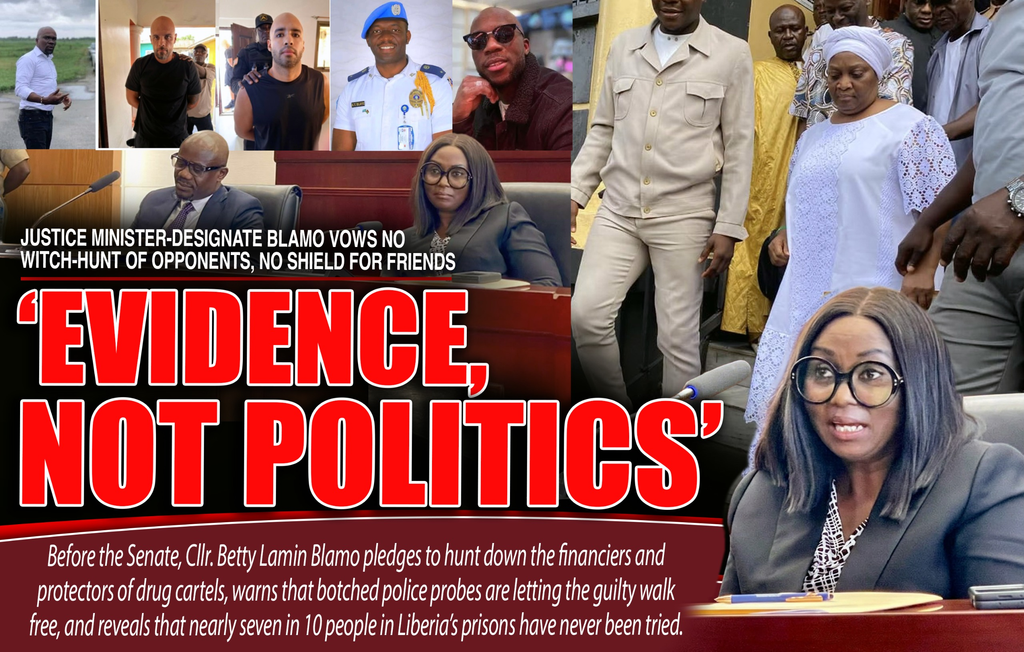
During her confirmation hearing before the Liberian Senate on Monday, October 26, Justice Minister-designate Cllr. Betty Lamin Blamo articulated a clear vision for the state's prosecutorial powers, pledging that they would not be weaponized against political adversaries nor serve as a shield for allies, whether in public or private sectors. Blamo acknowledged widespread public apprehension regarding selective prosecution, assuring senators that all cases would be pursued strictly based on legal merit. She emphasized that her primary allegiance would be to the Constitution and laws of Liberia, even while supporting President Joseph Nyuma Boakai’s policy agenda and remaining accountable to both the President and the National Legislature.
Blamo firmly stated that no case would advance without sufficient evidence, irrespective of public clamor or the political affiliations, social standing, county of origin, or wealth of those involved. Her declaration aimed to instill confidence that legal disputes would be resolved in courtrooms through equitable application of the law, rather than escalating into public unrest. She underscored that the decision to prosecute would be grounded in facts, legal principles, and established standards of truth and proof. Furthermore, she committed to recusing herself from any case presenting a conflict of interest, ensuring the integrity of the process. These Liberia Justice Minister Blamo prosecutorial pledges signal a potential shift towards a more principled approach to justice.
Tackling Liberia's Drug Crisis
A significant component of Blamo's agenda involves an aggressive stance against illicit drug trafficking, which she identified as a destructive force undermining the future of Liberia's youth. She vowed to target and dismantle drug cartels, pursuing importers, traders, financiers, and protectors involved in the illicit trade. Her vision for Liberia's drug trafficking policy is unequivocal: the nation will not be a transit point, a money laundering hub, or a permissive environment for illegal activities.
Blamo articulated that the success of her administration in combating drug-related offenses would be measured by the number of convictions secured, rather than merely by arrests. This focus on successful prosecution reflects a commitment to systemic change. Alongside this robust enforcement, she also pledged to ensure rehabilitation services are available for individuals struggling with drug addiction, indicating a comprehensive approach to the crisis under the Boakai administration justice policy.
The High-Profile Cocaine Indictment
The immediate test of Blamo's prosecutorial pledges comes in the form of Liberia's largest-ever narcotics case, which she inherits. This complex investigation began with two substantial cocaine seizures: approximately 237.6 kilograms discovered at Roberts International Airport in June, followed by an estimated four tons, valued at US$317 million, found in a Duazon warehouse in July. These incidents highlight West Africa's persistent role as a transit corridor for South American cocaine destined for European markets.
On October 7, a Montserrado County grand jury issued indictments against 20 individuals in connection with the US$317 million case. Among those indicted is former Vice President Jewel Howard-Taylor, who served under President George Weah from 2018 to 2024 and is a prominent figure in the opposition National Patriotic Party, though its leadership has been legally contested. Howard-Taylor faces eight charges, including drug trafficking, criminal conspiracy, and money laundering, all of which she denies, maintaining her presumption of innocence. Her arrest on August 19 at Roberts International Airport led to her initial detention at Monrovia Central Prison—a facility Blamo herself noted for its overcrowding with pre-trial detainees—before she was placed under house arrest due to medical reasons. The Jewel Howard-Taylor drug charges Liberia has become a focal point of public and political debate.
Political Scrutiny and Justice Concerns
The indictment of a prominent opposition figure like Jewel Howard-Taylor has intensified public concerns about political targeting, precisely the issue Blamo addressed during her confirmation hearing. Former President Weah has publicly labeled the prosecution as "bogus" and accused the Boakai administration of undue interference in the justice system. Similarly, members of Howard-Taylor's party have voiced alarm over "growing public perceptions" that the case is politically motivated, challenging the impartiality of the legal process.
Despite these accusations, the government consistently maintains that its cases are founded solely on evidence, not political considerations. Conversely, some observers, including FrontPageAfrica, have raised an opposing concern: that the state has shown greater alacrity in pursuing charges against an opposition figure compared to others implicated in similar or related matters. This complex interplay of legal action and political dynamics places Blamo's commitment to fair and evidence-based prosecution under immediate and intense scrutiny, particularly regarding Liberia prosecutorial discretion.
Practical Implications
Lawyers and compliance officers in Liberia should closely monitor Justice Minister-designate Blamo's actions, particularly her commitment to evidence-based prosecution and aggressive stance against drug trafficking, as this signals a potential shift in enforcement priorities and standards that could impact legal risk assessments and defense strategies for clients, especially in high-profile or politically sensitive cases.
Source
How does this affect you?
Get an AI analysis of this article grounded in your jurisdictions, practice areas, and any policy documents you've uploaded to Wansom.
Finish Reading the Full Story and the Expert Analysis.
Wansom is AI and can make mistakes.