
Liberia: Jos Leijdekkers Cocaine Probe Unearths 4-Tonne Seizure
Summary
- Liberia experienced two major cocaine seizures in June and July, with the latter involving nearly four tonnes valued at over US$317 million.
- Two foreign nationals, Johann David Garces Grajales and Srdan Seles, were arrested in connection with the July raid, which also uncovered sophisticated trafficking equipment.
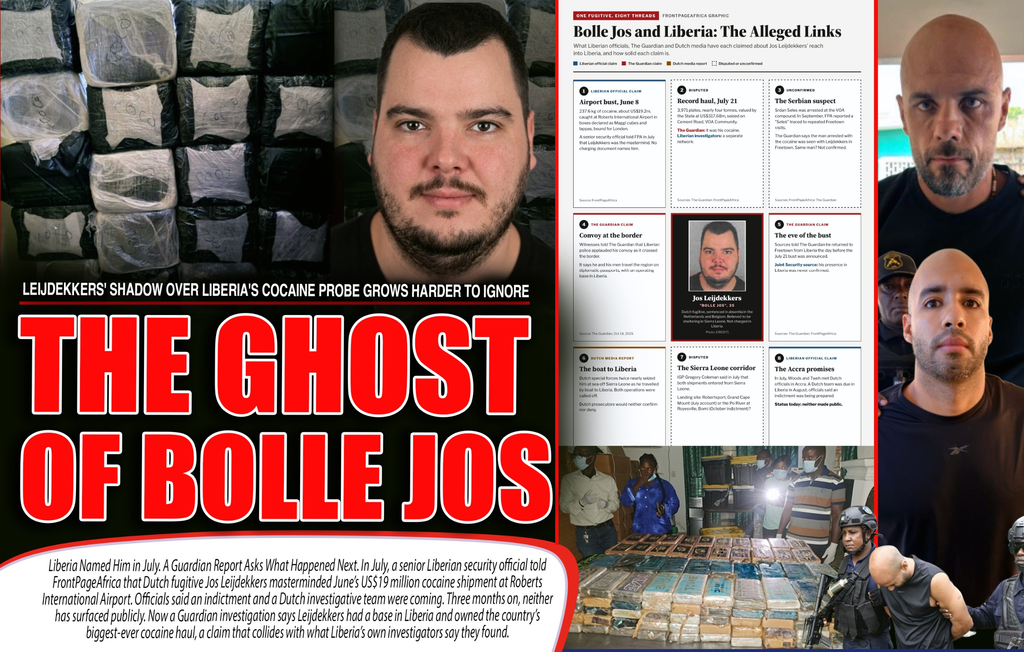
- Dutch fugitive Jos Leijdekkers has been linked to the trafficking attempts, with a Liberian official naming him as the mastermind of the June airport seizure, while a foreign newspaper attributed the larger July haul to him.
- Conflicting reports exist regarding Leijdekkers' confirmed presence in Liberia and his specific involvement in the different seizures.
- The investigations have revealed a sophisticated, long-standing network, led to the detention of senior Liberian security officers, and prompted international cooperation with Dutch officials.
Escalating Drug Seizures in Liberia
The resolution of these conflicting narratives will critically shape the outcome of what is poised to be Liberia's most significant drug prosecution in its history.
Liberia has recently become the focal point of significant international drug trafficking investigations, marked by two major cocaine seizures. The initial incident occurred on June 8 at Roberts International Airport (RIA), where screeners intercepted six cargo boxes. These boxes, falsely declared as Maggi cubes and lappas, contained 198 compressed plates of cocaine, totaling 237.6 kilograms. This shipment, valued at approximately US$19.2 million, was destined for London via Brussels Airlines.
Six weeks later, on July 21, a Joint National Security Investigative Task Force conducted a raid on a compound situated on Cement Road within the VOA Community, adjacent to the RIA Highway. This operation led to the recovery of an astonishing 3,971 plates of cocaine, amounting to nearly four tonnes, with an estimated street value of US$317.68 million. Investigators also discovered various pieces of equipment at the scene, including diving suits, a firearm, GPS trackers, a drone, and Starlink satellite communication gear. Two foreign nationals, Johann David Garces Grajales, who possessed both Colombian and Spanish passports, and Srdan Seles, a Serbian citizen, were apprehended during the raid.
Former Justice Minister Oswald Tweh indicated that the evidence uncovered pointed to a sophisticated and well-funded trafficking network that had been operational in Liberia for over six years. Inspector General of Police Gregory Coleman further stated that both the June and July shipments originated from Sierra Leone. The gravity of the situation was underscored by the detention of at least two senior officers from the National Security Agency and the Liberia National Police for questioning within 48 hours of the July raid, signaling potential internal complicity in the Liberia drug trafficking probe.
The Enigmatic Figure of Jos Leijdekkers
For much of the current year, the presence of Dutch fugitive Jos Leijdekkers in Liberia has been a subject of unconfirmed rumors and speculation among security officials. Reports of sightings, such as a convoy on the Bo Waterside road or a boat along the coast from Freetown, could not be substantiated by Liberia's Joint Security investigative team. Members of the team stated that they lacked concrete confirmation, believing that Leijdekkers, aware of being sought by European and US authorities, would consider Liberia a high-risk location.
However, this narrative shifted in July when a senior Liberian security official publicly identified Leijdekkers as the mastermind behind the June 8 attempt to traffic US$19 million worth of cocaine through Roberts International Airport. This marked the first instance of a Liberian official directly linking the country's burgeoning cocaine crisis to the notorious Dutch fugitive. It is important to note that this specific claim has not been independently verified, and no public charging documents naming Leijdekkers have been released.
Adding another layer of complexity to the Jos Leijdekkers Liberia cocaine investigation, The Guardian newspaper in London published an investigation on October 14. Based on numerous interviews with intelligence and police officers across two continents, the report asserted that Leijdekkers had established operational bases throughout the West African region, including Liberia, and had effectively transformed Sierra Leone into a "narco state." Crucially, The Guardian's investigation attributed the much larger, record-setting July four-tonne seizure to Leijdekkers, rather than the smaller June airport shipment. These three distinct accounts—the July official's accusation, the investigator's denial of confirmed presence, and The Guardian's broader claims—present conflicting narratives that require resolution.
Unanswered Questions and International Scrutiny
Despite the significant arrests and seizures, the ongoing Liberia anti-narcotics enforcement efforts are grappling with several unresolved issues. For instance, Colombia's Honorary Consulate in Monrovia reported having no record of Johann David Garces Grajales as a Colombian national and could not authenticate his passport. Furthermore, the Liberia Immigration Service was unable to provide any record of his entry into the country. Investigators also observed that the packaging of the June and July shipments differed, an early indicator that more than one drug trafficking network might be operating within the country.
The international dimension of this Liberia drug trafficking probe is evident through diplomatic engagements. In the same week that the senior official named Leijdekkers, National Security Advisor Samuel Kofi Woods and former Justice Minister Tweh met with Dutch government officials in Accra, Ghana. This meeting aimed to establish cooperation between the two nations, highlighting the global reach of these illicit activities and the need for concerted international efforts to combat them. The concerns about West Africa narco state dynamics are growing, with Liberia now firmly in the spotlight.
The resolution of these conflicting narratives will critically shape the outcome of what is poised to be Liberia's most significant drug prosecution in its history. The ongoing investigations underscore the escalating international drug trafficking investigations in Liberia, signaling increased scrutiny on financial flows and the potential for enhanced anti-money laundering (AML) enforcement. This development necessitates heightened due diligence and risk assessments for businesses operating in or through Liberia, particularly those in logistics, trade, or finance, to mitigate exposure to illicit activities and reputational damage.
Practical Implications
Lawyers and compliance officers should note the escalating international drug trafficking investigations in Liberia, which signal increased scrutiny on financial flows and potential for enhanced anti-money laundering (AML) enforcement. This development necessitates heightened due diligence and risk assessments for businesses operating in or through Liberia, particularly those in logistics, trade, or finance, to mitigate exposure to illicit activities and reputational damage.
Source
How does this affect you?
Get an AI analysis of this article grounded in your jurisdictions, practice areas, and any policy documents you've uploaded to Wansom.
Finish Reading the Full Story and the Expert Analysis.
Get the latest legal & regulatory intelligence in Liberia
Wansom is AI and can make mistakes.