
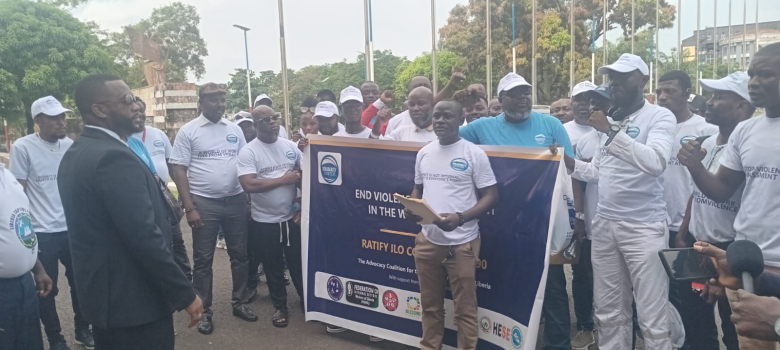
Liberia: C190 Coalition Petitions for ILO Convention 190 Ratification
Summary
- A coalition of nine organizations has urged the Liberian House of Representatives to ratify ILO Convention 190.
- The convention aims to eliminate violence and harassment in workplaces, recognizing a universal right to a safe work environment.
- Evidence cited by the coalition includes thousands of reported gender-based violence cases and widespread workplace abuse in Liberia.
- Underreporting of incidents remains a significant challenge due to fear of reprisal and lack of awareness.
- Ratifying C190 would enhance Liberia's legal protections for workers and establish accountability for workplace violence.
Call for International Labor Standards
The coalition contends that the adoption of Convention 190 would significantly bolster Liberia's legal and institutional frameworks, thereby enhancing worker protection and ensuring accountability for acts of violence and harassment.
A coalition representing nine distinct entities, including trade unions, civil society organizations, and government institutions, recently urged the Liberian government to adopt and implement the International Labor Organization's Convention 190 (C190). This collective, known as the C190 Coalition Liberia, formally presented a petition to the House of Representatives on November 26, advocating for legislative action towards Liberia ILO Convention 190 ratification. The core objective of C190 is to eradicate violence and harassment within all work environments, affirming the fundamental right of every individual to a professional life free from such abuses.
The coalition highlighted that various segments of Liberia's workforce, particularly women, marginalized communities, and those engaged in precarious employment, continue to endure significant forms of workplace abuse. These include sexual harassment, intimidation, threats, bullying, exploitation, and other detrimental behaviors. The C190 Coalition emphasized that the adoption of this convention is crucial for addressing these pervasive issues and aligning Liberia with international standards for worker protection.
Pervasive Workplace Harassment in Liberia
To underscore the urgent need for the Liberia ILO Convention 190 ratification, the coalition presented compelling evidence of widespread violence and harassment at work in Liberia. National and international reports consistently document persistent gender-based violence and harassment across the country. For instance, a January 2026 legal analysis by the Office of the United Nations High Commissioner for Human Rights (OHCHR) specifically detailed the discrimination, harassment, sexual abuse, and exploitation faced by women in the informal sector, such as market vendors and domestic workers, who often lack adequate legal protection.
Further supporting their claims, the coalition referenced an August 2025 OHCHR compilation prepared for Liberia's Universal Periodic Review, which recorded 3,204 reported cases of gender-based violence in 2023. This report also called for more robust measures against gender discrimination, sexual harassment, and gender-based violence in workplaces. An Afrobarometer survey from 2025 revealed that 36 percent of Liberians surveyed believe women frequently or always experience sexual harassment in public spaces, including markets, streets, and public transportation. Additionally, figures from the Ministry of Gender, Children and Social Protection, reported by the United Nations Population Fund (UNFPA), indicated 3,381 cases of gender-based violence in Liberia in 2024, with women and girls constituting approximately 85 percent of survivors. While these national figures are not exclusively workplace-related, the coalition's consultations with workers across various sectors confirmed concerns about sexual harassment, unwanted physical contact, and sexual demands linked to employment.
Strengthening Liberia's Legal Framework
The International Labor Organization's Convention 190, adopted in 2019 alongside Recommendation 206, establishes a comprehensive international framework designed to prevent and address violence and harassment in all work-related environments. The C190 Coalition Liberia highlighted that a significant barrier to tackling workplace harassment in Liberia is the widespread underreporting of incidents. Many survivors remain silent due to a profound fear of dismissal, retaliation, social stigma, and discrimination. This issue is compounded by limited public awareness regarding what constitutes gender-based violence and harassment (GBVH), coupled with an absence of safe and confidential reporting mechanisms. Consequently, numerous forms of harassment are either normalized or simply overlooked within workplaces and the broader society.
The coalition's petition explicitly stated that these challenges necessitate the implementation of stronger laws and policies, the establishment of secure reporting channels, robust protection against retaliation, improved access to support services, and effective accountability measures. The coalition contends that the adoption of Convention 190 would significantly bolster Liberia's legal and institutional frameworks, thereby enhancing worker protection and ensuring accountability for acts of violence and harassment. To advance this critical agenda, the coalition recommended that the House of Representatives refer their communication to the appropriate legislative committees, particularly those responsible for labor and human rights, to initiate the necessary Liberia labor law changes.
Practical Implications
Lawyers and compliance officers in Liberia should closely monitor the legislative progress of ILO Convention 190 ratification, as its adoption will necessitate a review and potential overhaul of existing workplace policies, training, and grievance mechanisms to ensure compliance with new international standards on preventing and addressing violence and harassment.
Source
How does this affect you?
Get an AI analysis of this article grounded in your jurisdictions, practice areas, and any policy documents you've uploaded to Wansom.
Finish Reading the Full Story and the Expert Analysis.
Get the latest legal & regulatory intelligence in Liberia
Wansom is AI and can make mistakes.