
Liberia: Civil War Medical Reparations Initiative Launches for Survivors
Summary
- A civil society initiative is providing medical reparations to five Liberian civil war survivors, marking the country's first such effort over two decades after the conflict.
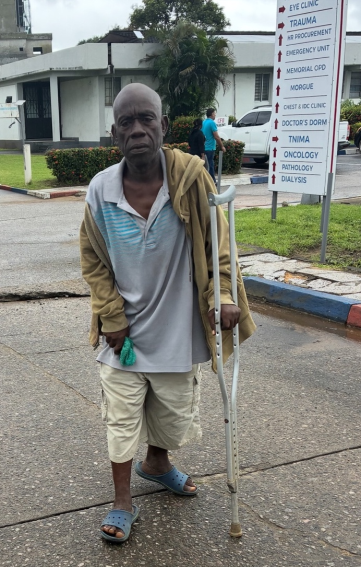
- Rufus Kartee, 65, is receiving treatment at JFK Hospital for a bullet wound sustained in a 1990 massacre, having lived with chronic pain and poverty for decades.
- The initiative is a collaboration between the Liberia Massacre Survivors Association, the Independent National Commission on Human Rights, and the Women’s NGOs Secretariat.
- This effort addresses needs that the Liberian government has largely failed to meet, despite the 2009 Truth and Reconciliation Commission recommendations for a US$500 million reparations program.
- The initiative draws inspiration from human rights lawyer Tiawan Gongloe's proposal for a National War Victims Relief Fund, advocating for public and government matching contributions.
A Lifeline for Survivors
This civil society-led Liberia civil war medical reparations initiative represents a crucial step forward, offering a practical model for human rights lawyers and advocates seeking to implement reparations for war victims in jurisdictions where government action has been delayed or absent.
Rufus Kartee, a 65-year-old survivor of Liberia's civil wars, is finally receiving medical attention for a bullet wound sustained in 1990 at St. Peters Lutheran Church, a site of one of the conflict's deadliest massacres. He attributes the injury to troops from the Armed Forces of Liberia. For 36 years, the wound in his left hip has caused bone damage, rendering him unable to walk without a crutch and leading to chronic pain. His life has been marked by poverty, difficulty finding shelter, and sometimes resorting to begging for food, even decades after the wars concluded. He is currently undergoing treatment at JFK Hospital, the largest medical facility in Liberia, a critical step after years of unheeded pleas for care.
Kartee is one of five individuals benefiting from a groundbreaking Liberia civil war medical reparations initiative, spearheaded by the Liberia Massacre Survivors Association, the Independent National Commission on Human Rights, and the Women’s NGOs Secretariat. This collaborative effort marks Liberia's first organized provision of medical treatment specifically as reparations for war victims, more than 23 years after the cessation of hostilities. The beneficiaries include two individuals in Montserrado County, two in Nimba, and one in Bomi, with injuries ranging from arm and rib wounds to back trauma. One woman from Bomi, for instance, was wounded in 2003 when forces loyal to former President Charles Taylor threw her into the Mayeh River. Kartee was the sole patient among the group to undergo surgery.
Financial support for this vital initiative has been a joint effort. The Independent National Commission on Human Rights contributed US$55 and LRD 22,000, covering half the cost for two survivors at JFK Hospital Liberia. This included an X-ray and neck wound treatment for one woman, and four pints of blood for Kartee. The Ministry of Health covered the remaining costs at JFK, as well as the treatment expenses for the three other survivors receiving care elsewhere. Commissioner Partmellia Doe Paivey confirmed that the Commission also facilitated transportation for all beneficiaries, though the identities of four of the five recipients remain undisclosed for privacy reasons.
Unfulfilled Promises and New Proposals
The current Liberia civil war medical reparations initiative emerges against a backdrop of long-standing, largely unfulfilled recommendations for comprehensive victim support. Liberia's Truth and Reconciliation Commission (TRC), in its 2009 final report, proposed an ambitious US$500 million reparations program to be implemented over 30 years. This comprehensive plan was designed to address various needs, including medical care, psychological counseling, educational support, and direct financial assistance for those affected by the conflict. However, more than 17 years since these recommendations were made public, the vast majority remain unimplemented by the state.
Despite the lack of a comprehensive government program, there have been recent pledges. In August 2024, then-Justice Minister Oswald Tweh, who is now the Acting Minister of National Defense, publicly committed at the United Nations that the Boakai administration intended to establish a reparation trust fund specifically to support conflict victims. Yet, as of now, no concrete, comprehensive state-backed program has materialized to fulfill this promise or the broader Liberia Truth and Reconciliation Commission recommendations. This persistent gap highlights the critical need for alternative mechanisms to address the urgent needs of survivors.
In response to this void, human rights lawyer Tiawan Gongloe put forth a significant proposal for a National War Victims Relief Fund Liberia. This fund, envisioned to be supported by a combination of public contributions and government matching funds, aims to create a sustainable mechanism for reparations. Gongloe's August opinion piece detailed a structure where employed Liberians, both domestically and abroad, would contribute at least US$1 annually, while unemployed Liberians who could afford it would donate L$100. Crucially, his proposal included a provision for the government to match every US$1 raised with an additional US$5, thereby leveraging public goodwill with state commitment. The concept gained public traction when Jallah Barbu, who heads the office responsible for establishing Liberia’s war and economic crimes court, publicly endorsed the idea by making the inaugural donation at the Liberia Massacre Survivors Association’s 17th-anniversary gathering in August, with Commissioner Paivey accepting the pledge to launch the fund promptly.
A Model for Human Rights Reparations
This civil society-led Liberia civil war medical reparations initiative represents a crucial step forward, offering a practical model for human rights lawyers and advocates seeking to implement reparations for war victims in jurisdictions where government action has been delayed or absent. By directly addressing the immediate medical needs of survivors like Rufus Kartee, who has endured decades of suffering and profound personal loss—including the deaths of his wife and two daughters, Brenda and Kathy, in recent years—the initiative underscores the enduring human cost of unaddressed conflict legacies. Kartee's description of his circumstances as "very, very poor" encapsulates the dire reality faced by many survivors, whose struggles are compounded by the loss of family breadwinners and ongoing financial hardship for their surviving children, Enes and Rufus Kartee Jr.
The pioneering effort by the Liberia Massacre Survivors Association, the Independent National Commission on Human Rights, and the Women’s NGOs Secretariat demonstrates that reparations, even in a limited form, can be delivered through collaborative non-governmental and quasi-governmental channels. This approach is particularly vital in contexts where the state has failed to implement the comprehensive recommendations of bodies like the Liberia Truth and Reconciliation Commission. The provision of medical care, even for a small group of five survivors, serves as a tangible acknowledgment of their suffering and a practical step towards healing, contrasting sharply with the government's unfulfilled pledges regarding a reparation trust fund.
Ultimately, this Liberia civil war medical reparations initiative highlights the ongoing need for legal and advocacy efforts to push for the establishment of comprehensive, state-backed reparations programs, particularly in line with unfulfilled Truth and Reconciliation Commission recommendations. While the current effort provides immediate relief and a blueprint for action, it also serves as a powerful reminder to the Liberian government of its moral and legal obligations to its war-affected population. The initiative, by providing care at JFK Hospital Liberia and other locations, sets a precedent for how civil society can bridge critical gaps in justice and support for Liberia human rights reparations, even as the larger goal of a National War Victims Relief Fund Liberia and broader state action remains paramount.
Practical Implications
This civil society-led initiative provides a practical model for human rights lawyers and advocates seeking to implement reparations for war victims in jurisdictions where government action has been delayed or absent. It highlights the ongoing need for legal and advocacy efforts to push for the establishment of comprehensive, state-backed reparations programs, particularly in line with unfulfilled Truth and Reconciliation Commission recommendations.
Source
How does this affect you?
Get an AI analysis of this article grounded in your jurisdictions, practice areas, and any policy documents you've uploaded to Wansom.
Finish Reading the Full Story and the Expert Analysis.
Get the latest legal & regulatory intelligence in Liberia
Wansom is AI and can make mistakes.