
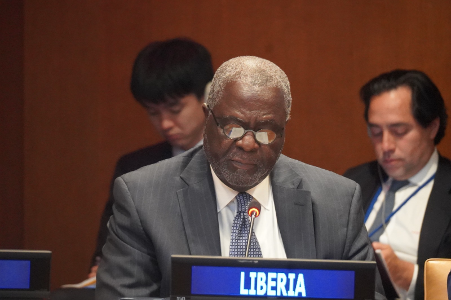
Liberia: Ambassador Brown Outlines 3 Priorities to Combat Transnational Crime
Summary
- Liberia's UN Ambassador Lewis G. Brown II outlined three key priorities to combat transnational organized crime on November 23, 2026.
- These priorities include enhancing cross-border cooperation and improving financial intelligence sharing to trace illicit funds.
- A crucial focus is also placed on increasing investment in prevention programs, particularly those supporting young people and expanding access to drug-dependence treatment.
- Ambassador Brown emphasized that organized crime poses a serious threat to international peace, sustainable development, and human rights.
- Liberia believes reclaiming criminal proceeds and early youth intervention are vital for preventing recurrence of crime and fostering lasting peace.
A Global Threat and Liberia's Response
He asserted that reclaiming these stolen assets from organized crime networks and intervening early to assist at-risk young individuals are indispensable steps for preventing the recurrence of criminal behavior and fostering lasting peace.
Liberia's Ambassador to the United Nations, Lewis G. Brown II, recently articulated a three-pronged strategy to confront the escalating challenge of transnational organized crime. Speaking at a high-level United Nations event in New York on Monday, November 23, 2026, Ambassador Brown underscored the profound danger posed by such criminal networks to global peace, sustainable development, and fundamental human rights in the 21st century. The occasion marked the International Day for the Prevention and Fight against All Forms of Transnational Organized Crime, providing a crucial platform for discussing concerted international action.
Strengthening International Cooperation and Financial Intelligence
Central to Ambassador Brown's recommendations was the imperative for more robust cross-border cooperation among nations. He stressed that effective collaboration is vital for countries to efficiently request and exchange critical evidence, thereby fortifying criminal investigations and ensuring successful prosecutions against organized crime syndicates. This foundational element is designed to dismantle the operational capabilities of these networks by making it harder for them to evade justice through jurisdictional loopholes.
Furthermore, the Liberian envoy called for intensified collaboration among financial intelligence units and investigators worldwide. This enhanced partnership is crucial for meticulously tracing illicit financial flows, sharing pertinent information, and legally recovering the substantial proceeds generated through criminal activities. By disrupting the financial lifelines of organized crime, nations can significantly impede their ability to operate and expand, ultimately weakening their influence and impact.
Prioritizing Prevention and Rebuilding Trust
Ambassador Brown's third key priority centered on the critical importance of prevention, advocating for increased investment in programs specifically designed to support young people. A significant aspect of this preventative approach involves expanding access to drug-dependence treatment services within communities, addressing a core vulnerability that criminal organizations often exploit. This proactive measure aims to steer youth away from criminal involvement by providing essential support and opportunities.
Liberia, having faced its own challenges, possesses a deep understanding of the complexities involved in restoring public confidence in state institutions. Ambassador Brown highlighted the injustice of communities bearing the brunt of criminal activities while the illicit gains are discreetly moved and hidden across international boundaries. He asserted that reclaiming these stolen assets from organized crime networks and intervening early to assist at-risk young individuals are indispensable steps for preventing the recurrence of criminal behavior and fostering lasting peace.
Why It Matters
The strategies outlined by Ambassador Brown are not merely about law enforcement; they represent a holistic vision for global stability. By recovering the wealth accumulated by criminal enterprises, the international community directly curtails their capacity to perpetuate further illicit acts. Similarly, by proactively engaging with young people before they fall prey to criminal recruitment, societies cultivate a more resilient foundation for peace.
The Ambassador's message underscored a fundamental truth: every instance of asset recovery from these networks diminishes their resources for future operations. Moreover, every successful intervention with a young person before they are drawn into criminal activities significantly enhances the prospects for enduring peace. These combined efforts are essential for safeguarding human rights, promoting sustainable development, and ensuring international security against the persistent threat of transnational organized crime.
Source
How does this affect you?
Get an AI analysis of this article grounded in your jurisdictions, practice areas, and any policy documents you've uploaded to Wansom.
Finish Reading the Full Story and the Expert Analysis.
Get the latest legal & regulatory intelligence in Liberia
Wansom is AI and can make mistakes.