
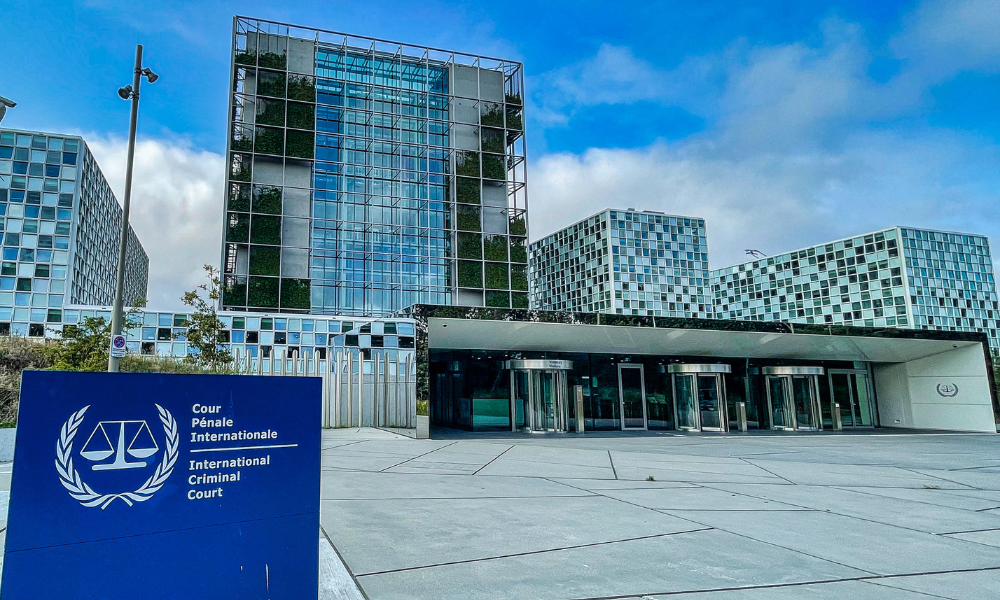
LRWC Canada: Urges Government to Protect ICC From US Sanctions
Summary
- Lawyers' Rights Watch Canada (LRWC) urged the Canadian government to protect the International Criminal Court (ICC) from US sanctions.
- The US sanctions, based on Executive Order 14203 from February 7, 2025, aim to cut off the ICC's access to US financial and technical services.
- LRWC specifically called for Canada to apply its blocking statute to counteract the "severe harmful impacts" on the ICC and its personnel.
- Canadian ICC Judge Kimberly Prost is among those sanctioned by the US without due process, according to LRWC.
- While Canada and other nations expressed support for the ICC, LRWC criticized their joint statement for lacking concrete protective actions.
What Happened
LRWC highlighted that Canadian ICC Judge Kimberly Prost is among those who have been sanctioned without due process, simply for performing her mandated duties.
Lawyers' Rights Watch Canada (LRWC) formally urged the Canadian federal government to implement immediate and decisive measures to protect the International Criminal Court (ICC). This appeal, conveyed in an October 14 letter, came in response to escalating US sanctions against the international tribunal, which were initially imposed on October 9. The sanctions stem from US President Donald Trump's Executive Order 14203, issued on February 7, 2025, and aim to sever the ICC's access to US-based financial, technical, and other essential services.
The LRWC letter, co-authored by Joey Doyle, Heather Neun, and Catherine Morris, was directed to key Canadian officials: Mark Carney, identified as Canada's prime minister; Sean Fraser, the federal attorney general and justice minister; and Anita Anand, Canada's foreign affairs minister. The human rights organization specifically condemned the US actions for mandating a six-month period for US entities and individuals to terminate their contracts and operations with the ICC. LRWC emphasized that these measures are designed to dismantle the court's operational capacity.
Legal and Regulatory Context
At the core of LRWC's plea is the urgent call for Canada to activate its blocking statute. The organization argued that any further delay in applying this statute would be "unconscionable," given the severe and existing detrimental effects on the ICC. LRWC characterized the impact of the US sanctions as "tantamount to 'civil death'" for judges, court officials, human rights lawyers, and defenders who are being "unlawfully punished without due process merely for their work fulfilling their lawful mandates and upholding international law."
The US sanctions have specifically targeted individuals associated with the ICC. LRWC highlighted that Canadian ICC Judge Kimberly Prost is among those who have been sanctioned without due process, simply for performing her mandated duties. The US administration had previously sanctioned 14 ICC judges, prosecutors, and senior staff, as well as a UN Human Rights Council-appointed independent expert and several non-governmental organizations collaborating with the ICC. These actions, according to LRWC, constitute a direct assault on international human rights law and the rule of law, and undermine the sovereign right of any state to become a party to the Rome Statute.
Why It Matters
While a joint statement issued on October 9 by the foreign ministers of Canada, Denmark, Germany, France, Italy, Japan, the Netherlands, and the UK expressed "continued and unwavering support for the independence, impartiality, and integrity of the ICC" and committed to "constructive and inclusive dialogue with non-States Parties," LRWC found this response insufficient. The Canadian lawyers' group welcomed the ministers' opposition to the US sanctions but criticized the statement for failing to propose any concrete actions beyond diplomatic engagement.
LRWC underscored that although diplomacy is crucial for persuading the US to retract its attacks against the Court, immediate implementation of tangible measures to protect the ICC and its sanctioned personnel is imperative. The organization asserted that the US campaign against the ICC is fundamentally aimed at shielding US nationals and allies from potential ICC investigations and prosecutions, based on the "false claim" that the ICC overrides US laws. This broader context frames the significance of Canada's potential response, particularly concerning the protection of its own citizens like Judge Prost and upholding the principles of international justice.
Practical Implications
Lawyers and compliance officers should monitor the Canadian government's response to calls for a blocking statute, as its implementation would impact the ability of Canadian entities and individuals to comply with US sanctions targeting the International Criminal Court and its personnel, including Canadian ICC Judge Kimberly Prost.
Source
How does this affect you?
Get an AI analysis of this article grounded in your jurisdictions, practice areas, and any policy documents you've uploaded to Wansom.
Finish Reading the Full Story and the Expert Analysis.
Get the latest legal & regulatory intelligence in Canada
Wansom is AI and can make mistakes.