
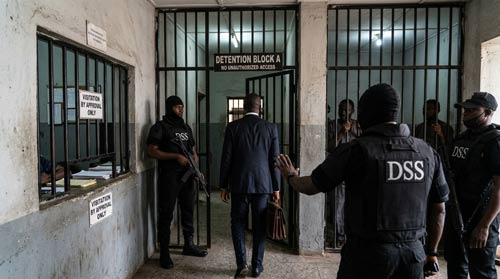
Lawyer Sues SSS, AGF Over DG Approval for Detained Client Access
An Abuja-based legal practitioner, Godspower Eroga, Esq., has initiated legal proceedings against the State Security Service (SSS) and the Attorney-General of the Federation (AGF) before the Federal High Court in Abuja, challenging the alleged practice of requiring lawyers to obtain the Director-General of the SSS's approval before consulting detained clients.
This legal challenge carries significant implications for the fundamental right to legal representation, the rights of individuals held in detention, and the professional autonomy of legal practitioners across Nigeria. By questioning the legality of administrative barriers imposed by a security agency, the suit directly addresses potential impediments to access to justice and the constitutional guarantee of a fair trial. The outcome of this case could redefine the boundaries of executive power in relation to judicial processes and legal professional duties, ensuring that administrative convenience does not override constitutional safeguards.
The action likely invokes several constitutional provisions, primarily Section 36 of the 1999 Constitution of the Federal Republic of Nigeria (as amended), which guarantees the right to a fair hearing, including the right to legal representation. It also touches upon Section 35, which protects personal liberty, and the broader principles enshrined in the Administration of Criminal Justice Act (ACJA), which generally promotes access to legal counsel for suspects and detainees. The Federal High Court, as a court of superior record, possesses the requisite jurisdiction to adjudicate matters concerning fundamental rights enforcement and disputes involving federal government agencies, making it the appropriate forum for this challenge. The specific powers and limitations of the SSS, as outlined in statutes like the National Security Agencies Act, will also be under judicial scrutiny.
The key parties involved are Godspower Eroga, Esq., as the plaintiff, and the State Security Service (SSS) and the Attorney-General of the Federation (AGF) as the defendants. The Federal High Court in Abuja is the judicial body presiding over this matter. The outcome of this matter is not yet reported, as the case has just been filed.
Legal practitioners, particularly those involved in criminal defence, human rights advocacy, and constitutional law, should closely monitor the progress and eventual judgment in this case. A favourable ruling could establish a crucial precedent, clarifying the scope of lawyers' access to detained clients and potentially leading to judicial pronouncements that limit the discretionary powers of security agencies in this regard. It may also provide a robust legal framework for challenging similar administrative hurdles encountered in other detention facilities or by other law enforcement bodies, thereby strengthening the rule of law and protecting fundamental rights.
How does this affect you?
Get an AI analysis of this article grounded in your jurisdictions, practice areas, and any policy documents you've uploaded to Wansom.
Finish Reading the Full Story and the Expert Analysis.
Get the latest legal & regulatory intelligence in Nigeria
Wansom is AI and can make mistakes.