
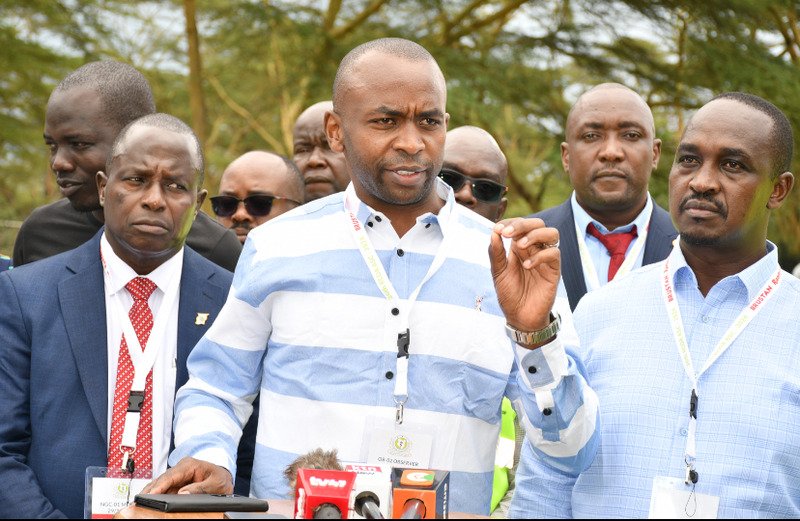
KUCO: Lamu Clinical Officers Strike Continuation Confirmed Indefinitely
Summary
- Clinical officers in Lamu County will continue their strike.
- The decision was announced by George Kibore, Secretary General of the Kenya Union of Clinical Officers.
- The strike will persist until an agreement is reached with the Lamu County government on issues affecting health workers.
- This announcement followed a negotiation meeting between the union and the county in Mokowe.
Ongoing Industrial Action in Lamu's Health Sector
The core of the ongoing dispute revolves around unresolved issues that directly affect the clinical officers working under the Lamu County government.
Clinical officers operating within Lamu County are set to continue their industrial action, with union leadership confirming that the work stoppage will persist indefinitely. This firm stance was communicated by George Kibore, the Secretary General of the Kenya Union of Clinical Officers, following a recent negotiation meeting held in Mokowe.
The declaration underscores a significant impasse in discussions between the clinical officers' union and the Lamu County government. Despite engagement, the parties have yet to reach a consensus on critical matters impacting the welfare and working conditions of health workers in the region. Mr. Kibore's statement effectively signals a continuation of the disruption to healthcare services, emphasizing the union's resolve until a satisfactory resolution is achieved.
The decision to prolong the strike, announced directly after a face-to-face meeting, indicates that the recent round of talks failed to bridge the divide between the demands of the clinical officers and the proposals from the county administration. This development leaves the future of healthcare provision in Lamu County in a precarious position, as essential medical personnel remain off duty.
Underlying Grievances and Stalled Negotiations
The core of the ongoing dispute revolves around unresolved issues that directly affect the clinical officers working under the Lamu County government. While the specific details of these grievances were not enumerated, their significance is such that the Kenya Union of Clinical Officers (KUCO) has deemed continued industrial action necessary to compel a resolution. The union, represented by its Secretary General, George Kibore, is acting on behalf of its members to advocate for improved conditions or redress for their concerns.
Negotiations are typically the primary mechanism for resolving such labor disputes, yet the meeting between the clinical officers' union and Lamu County officials in Mokowe concluded without an agreement. This failure to find common ground suggests a substantial divergence in positions, preventing the cessation of the strike. The persistence of the industrial action highlights the depth of the issues at stake for the health workers and their determination to see their demands met.
The county government, as the employer, is tasked with addressing these concerns to restore full healthcare services. The current stalemate indicates that the proposals or concessions offered thus far have not been sufficient to satisfy the union's requirements, leading to the prolonged work stoppage. This situation places considerable pressure on both parties to re-evaluate their positions and seek alternative pathways to agreement.
Wider Ramifications for Public Health and Labor Relations
The continuation of the clinical officers' strike in Lamu County carries significant implications for public health service delivery across the region. With essential medical personnel withholding their services, the capacity of local healthcare facilities to attend to patients is severely compromised, potentially impacting emergency services, routine consultations, and ongoing treatment programs. This prolonged industrial action underscores the critical role clinical officers play in the healthcare ecosystem.
From a legal and regulatory standpoint, such sustained industrial action often brings into focus the provisions governing labor disputes in the public sector. While workers have the right to strike, there are typically established procedures for negotiations, conciliation, and arbitration that parties are expected to follow. The ongoing nature of the Lamu health workers' industrial action suggests that these processes have either been exhausted without success or are still in a contentious phase, highlighting potential challenges in labor relations between public sector unions and county administrations.
The situation in Lamu serves as a stark reminder of the delicate balance between workers' rights and the imperative to maintain essential public services. The inability to resolve the dispute through negotiation not only affects the immediate provision of healthcare but also sets a precedent for future labor relations, emphasizing the need for robust and effective dispute resolution mechanisms to prevent prolonged disruptions to critical services.
Practical Implications
This ongoing strike highlights potential labor law disputes and service disruptions in the healthcare sector, requiring legal counsel for affected healthcare providers or employers to navigate industrial action regulations and potential contractual breaches.
Source
How does this affect you?
Get an AI analysis of this article grounded in your jurisdictions, practice areas, and any policy documents you've uploaded to Wansom.
Finish Reading the Full Story and the Expert Analysis.
Get the latest legal & regulatory intelligence in Kenya
Wansom is AI and can make mistakes.