
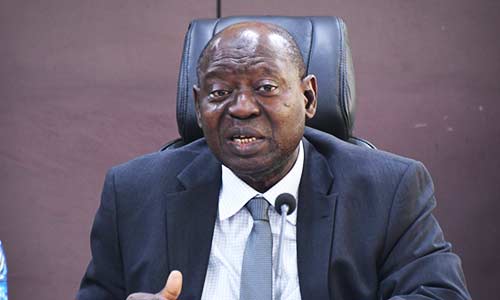
Lagos CJ Alogba: Emphasizes Judicial Officer Complaints Procedure
Summary
- The 2026/2027 Legal Year commenced in Lagos State on Monday.
- Lagos State Government and justice sector stakeholders called for faster, fairer, and more accessible justice.
- These calls were made during separate New Legal Year services held at the Lagos Central Mosque and the Cathedral Church, Lagos.
- Lagos Chief Judge Alogba instructed lawyers and the public to use appropriate procedures for complaints against judicial officers.
Lagos State Commences 2026/2027 Legal Year
Chief Judge Alogba underscored the critical importance of adhering to established protocols when submitting grievances against judicial officers, a directive aimed at ensuring the integrity and efficacy of the Lagos State judicial complaints process.
The Lagos State Judiciary officially inaugurated its 2026/2027 Legal Year on Monday, marked by significant calls for enhanced justice delivery across the state. This annual event saw the Lagos State Government, alongside various stakeholders within the justice sector, advocate for a system characterized by increased speed, fairness, and accessibility for all citizens.
The commencement was observed through separate New Legal Year services. These solemn gatherings took place concurrently at two prominent locations in Lagos: the Lagos Central Mosque and the Cathedral Church, Lagos. Judicial officers were in attendance at these services, signifying the collective commitment to the year's judicial agenda.
Amidst these broader appeals for systemic improvement, a specific directive emerged from the Lagos Chief Judge (CJ) Alogba. Addressing both legal practitioners and the general public, Justice Alogba emphasized the imperative of utilizing appropriate procedures when lodging complaints against judicial officers, a key aspect of the Nigerian judicial accountability process.
Chief Judge Alogba's Directive on Judicial Officer Complaints
In his address marking the Justice Alogba New Legal Year, the Chief Judge underscored the critical importance of adhering to established protocols when submitting grievances against judicial officers, a directive aimed at ensuring the integrity and efficacy of the Lagos State judicial complaints process. This instruction highlights a commitment to maintaining order and due process within the judiciary, even when addressing allegations of misconduct.
The Chief Judge's statement serves as a clear signal to all parties involved in the justice system that while accountability is paramount, the channels through which it is sought must be respected. It implies that complaints not following the prescribed Lagos State Judiciary complaint channels may face procedural hurdles, potentially hindering their consideration or resolution.
This emphasis on procedural correctness is vital for the proper functioning of the judicial system. It ensures that complaints are handled systematically, providing a fair hearing for both complainants and the judicial officers involved, and ultimately reinforcing public confidence in the mechanisms designed for oversight and redress.
Navigating Lagos State Judicial Complaint Channels
The directive from Lagos CJ Alogba regarding judicial officer complaints procedure carries significant implications for lawyers, litigants, and the public. It necessitates a thorough understanding and strict adherence to the established frameworks for reporting judicial misconduct or grievances within the Lagos State Judiciary. This is not merely a bureaucratic formality but a foundational element for a credible and effective accountability system.
For those seeking to address issues concerning judicial officers, the Chief Judge's pronouncement underscores that the validity of a complaint is inextricably linked to its proper submission through designated Lagos State judicial complaints channels. Failure to follow these appropriate procedures could lead to complaints being dismissed on technical grounds, irrespective of their substantive merit, thereby frustrating efforts to achieve justice or accountability.
Therefore, navigating the Nigerian judicial accountability process in Lagos State requires diligence in identifying and utilizing the correct avenues. This ensures that concerns are formally registered, investigated, and addressed in a manner consistent with judicial protocols, contributing to the overall goal of a more transparent and responsive justice system.
Broader Vision for Justice Sector Improvement
The Chief Judge's specific guidance on the Lagos CJ Alogba judicial officer complaints procedure is situated within a broader context of calls for comprehensive justice sector reform. The Lagos State Government and justice sector stakeholders collectively articulated a vision for a justice system that is not only faster and fairer but also more accessible to all residents. This overarching objective frames the importance of every component of judicial administration, including the handling of complaints.
Ensuring that the Lagos State Judiciary complaint channels are utilized correctly directly contributes to the efficiency and perceived fairness of the entire system. When complaints are processed through appropriate procedures, it streamlines investigations, reduces potential for frivolous or improperly lodged grievances, and ultimately supports the judiciary's capacity to deliver justice expeditiously and equitably.
Thus, Justice Alogba's New Legal Year address, while focusing on a critical procedural aspect, aligns with the wider aspirations for a robust and trustworthy justice system in Lagos State. It reinforces the idea that accountability, when pursued through proper channels, is an indispensable pillar for achieving the desired improvements in justice delivery.
Practical Implications
Lawyers and compliance officers in Lagos should take note of the Chief Judge's emphasis on using appropriate procedures for complaints against judicial officers. This signals a need to be thoroughly familiar with and adhere strictly to the established channels for reporting judicial misconduct or grievances, ensuring submissions are not rejected on procedural grounds.
Source
How does this affect you?
Get an AI analysis of this article grounded in your jurisdictions, practice areas, and any policy documents you've uploaded to Wansom.
Finish Reading the Full Story and the Expert Analysis.
Get the latest legal & regulatory intelligence in Nigeria
Wansom is AI and can make mistakes.