
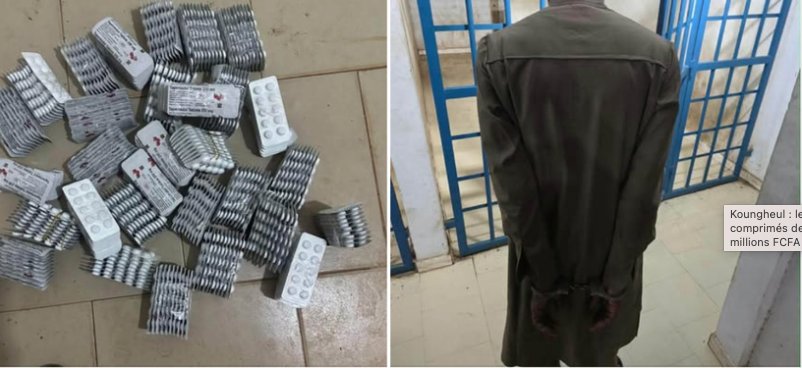
Koungheul: Owner Arrested After Seizure of 3,000 Tapentadol Pills
In Koungheul, Senegal, on Saturday, October 10, 2026, the individual identified as the owner of a bag containing 3,000 Tapentadol tablets was arrested following the seizure of the illicit drugs during a bus inspection. This operation, conducted by the mobile brigade based in Koungheul, which falls under the Kaffrine Subdivision and the Regional Customs of the Centre, intercepted a bus originating from Tambacounda. The seized consignment comprised 300 blister packs, each containing ten tablets, with an estimated street value of 15 million FCFA, according to a statement from Senegalese Customs. Tapentadol, an opioid analgesic, is increasingly being diverted by criminal groups for illicit purposes, posing significant public health risks due to its potency, addictiveness, and danger when used without medical supervision.
This incident carries significant legal weight for practitioners, businesses, and the public, as it underscores the Senegalese government's proactive stance against the trafficking of controlled substances and illicit pharmaceuticals. The high estimated value of the seizure and the nature of Tapentadol as a potent opioid highlight the severity of the crime and the potential for severe penalties. It also brings to light the ongoing efforts to combat drug abuse, particularly among young people, and the critical role of border and internal controls in preventing the circulation of such dangerous substances.
Legally, this case falls under Senegal's robust drug control framework, which includes provisions in the Penal Code and specific legislation targeting the production, trafficking, and consumption of narcotics and psychotropic substances. The involvement of Senegalese Customs (Douanes sénégalaises) signifies the application of customs laws related to the import, export, and transit of goods, alongside criminal statutes. The classification of Tapentadol as an opioid means it is subject to strict regulatory controls, and its illicit possession and distribution constitute serious offenses. The mobile brigade's action demonstrates the coordinated efforts between various law enforcement agencies in enforcing these laws.
The key parties involved include the arrested individual, the mobile brigade of Koungheul, the Kaffrine Subdivision, the Regional Customs of the Centre, and Senegalese Customs. While the specific court or judicial process is not detailed in the excerpt, the arrest indicates the initiation of criminal proceedings. The outcome of this specific matter, including charges and potential sentencing, is not yet reported.
Practitioners, particularly those in criminal defense or advising pharmaceutical companies, should closely monitor developments in drug trafficking cases in Senegal. Attorneys must be acutely aware of the stringent penalties for illicit drug offenses, which can include lengthy prison sentences and substantial fines. Businesses involved in the legitimate pharmaceutical supply chain must ensure rigorous compliance with all regulatory requirements for controlled substances to avoid any implication in diversion schemes, as enforcement agencies are clearly vigilant in interdicting such activities.
How does this affect you?
Get an AI analysis of this article grounded in your jurisdictions, practice areas, and any policy documents you've uploaded to Wansom.
Finish Reading the Full Story and the Expert Analysis.
Get the latest legal & regulatory intelligence in Senegal
Wansom is AI and can make mistakes.