
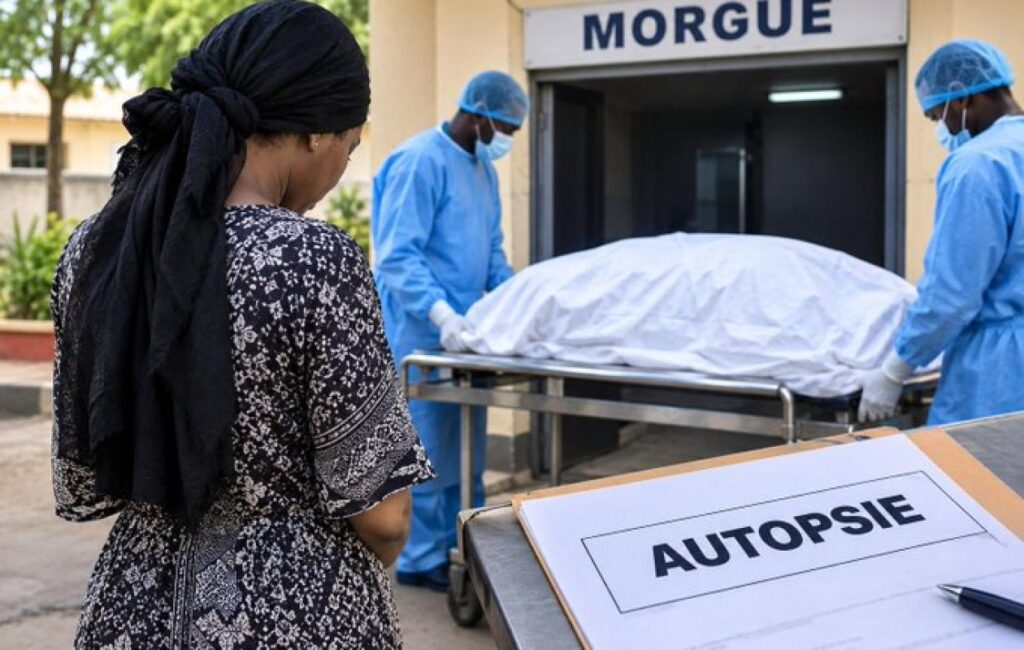
Kolda: Autopsie Mamadou Diogo Diallo Contredit Concubine, Révèle Mort Violente
Summary
- A woman in Kolda is under investigation for the death of her partner, Mamadou Diogo Diallo.
- She initially claimed he died from an accidental fall after an argument.
- An autopsy revealed a parietal-occipital hematoma and cranial trauma, indicating a violent death.
- The forensic findings directly contradicted her account, shifting the investigation.
- The concubine remains in custody, facing charges related to voluntary violence leading to death.
Initial Investigation in Kolda
The medical experts concluded that Mr. Diallo's death was violent in nature, a finding that unequivocally ruled out the scenario of an accidental tumble as described by the suspect.
In Kolda, authorities are currently holding the concubine of Mamadou Diogo Diallo, a 42-year-old butcher, in connection with his death. The woman had initially presented an account suggesting that Mr. Diallo's demise was the result of an accidental fall. She claimed that her partner had tumbled in their courtyard following a dispute concerning his late returns home. This initial statement led to her detention at the central police station in Kolda as part of the preliminary inquiry into the incident.
The police investigation, however, took a significant turn with the introduction of forensic evidence. While the concubine maintained her narrative of an unfortunate accident, the official process required a thorough examination of the deceased. This crucial step ultimately challenged the foundational premise of her defense, redirecting the focus of the inquiry towards a potentially more serious offense.
Autopsy Findings Contradict Initial Claims
A pivotal development in the Kolda investigation emerged from the autopsy performed on Mamadou Diogo Diallo. The forensic examination, as reported by Libération, uncovered critical evidence that directly contradicted the concubine's assertion of an accidental fall. Specifically, the autopsy revealed the presence of a parietal-occipital hematoma, which was definitively linked to a significant cranial trauma suffered by the deceased.
The medical experts concluded that Mr. Diallo's death was violent in nature, a finding that unequivocally ruled out the scenario of an accidental tumble as described by the suspect. This detailed analysis of the décès Mamadou Diogo Diallo autopsie provided irrefutable physical evidence, fundamentally altering the trajectory of the police inquiry. The presence of such severe injuries strongly suggested external force rather than an unintentional mishap.
Legal Implications and Ongoing Proceedings
Following the conclusive autopsy results, the legal focus of the case shifted dramatically. The concubine is now being investigated for violences volontaires ayant entraîné le décès, or voluntary violence leading to death. This reclassification of the incident underscores the gravity of the forensic findings and their direct impact on the legal proceedings in Kolda. The initial inquiry into a suspicious death has now escalated into an enquête meurtre Kolda concubine.
The suspect remains in the custody of the justice Kolda system, awaiting further legal action based on the compelling evidence presented by the autopsy. Her continued detention at the central police station signifies the ongoing nature of the investigation and the seriousness with which the authorities are treating the case. The legal framework now considers the possibility of intentional harm rather than a mere accident, a direct consequence of the scientific examination.
The Role of Forensic Evidence
This case in Kolda powerfully illustrates the indispensable role of forensic science, particularly autopsy results, in criminal investigations. The initial narrative provided by the concubine, suggesting an accidental death, was entirely dismantled by objective medical evidence. Without the detailed findings of the autopsy, which identified the traumatisme crânien Mamadou Diogo Diallo and the associated hematoma, the investigation might have proceeded under a false premise.
The ability of forensic evidence to swiftly contradict initial claims and redirect an inquiry from an accidental death to a potential homicide highlights its critical importance. For legal professionals, this case serves as a stark reminder of how scientific findings can fundamentally reshape defense strategies and prosecutorial approaches, ensuring that justice is pursued based on concrete evidence rather than unsubstantiated accounts. The Kolda autopsie Mamadou Diogo Diallo concubine case underscores the power of objective medical examination in uncovering the truth behind suspicious deaths.
Practical Implications
This case highlights the critical role of forensic evidence, specifically autopsy results, in contradicting initial claims in criminal investigations. Lawyers should note how such evidence can swiftly shift the focus of an inquiry, moving from an accidental death scenario to a homicide investigation, thereby impacting defense strategies and prosecutorial approaches in cases involving suspicious deaths.
Source
How does this affect you?
Get an AI analysis of this article grounded in your jurisdictions, practice areas, and any policy documents you've uploaded to Wansom.
Finish Reading the Full Story and the Expert Analysis.
Get the latest legal & regulatory intelligence in Senegal
Wansom is AI and can make mistakes.