
Kindiki Warns against Divisive Kenya 2027 Election Rhetoric
Summary
- Deputy President Kithure Kindiki warned politicians against divisive rhetoric and incitement ahead of Kenya's 2027 General Election.
- Kindiki stated that ethnic mobilization threatens national unity and stability for the country's 55 million people.
- He urged politicians to focus on policies and track records, not exploiting ethnic, religious, or political differences.
- Kindiki also advised UDA party aspirants to conduct peaceful campaigns and avoid insults or using supporters to settle scores.
- The government has invested nearly Sh100 billion in Nakuru County for infrastructure, including roads and affordable housing.
Warning Against Divisive Politics
The Deputy President underscored that political competition ought to remain constructive and should not devolve into animosity, advocating for a democratic process where the most qualified candidates emerge victorious.
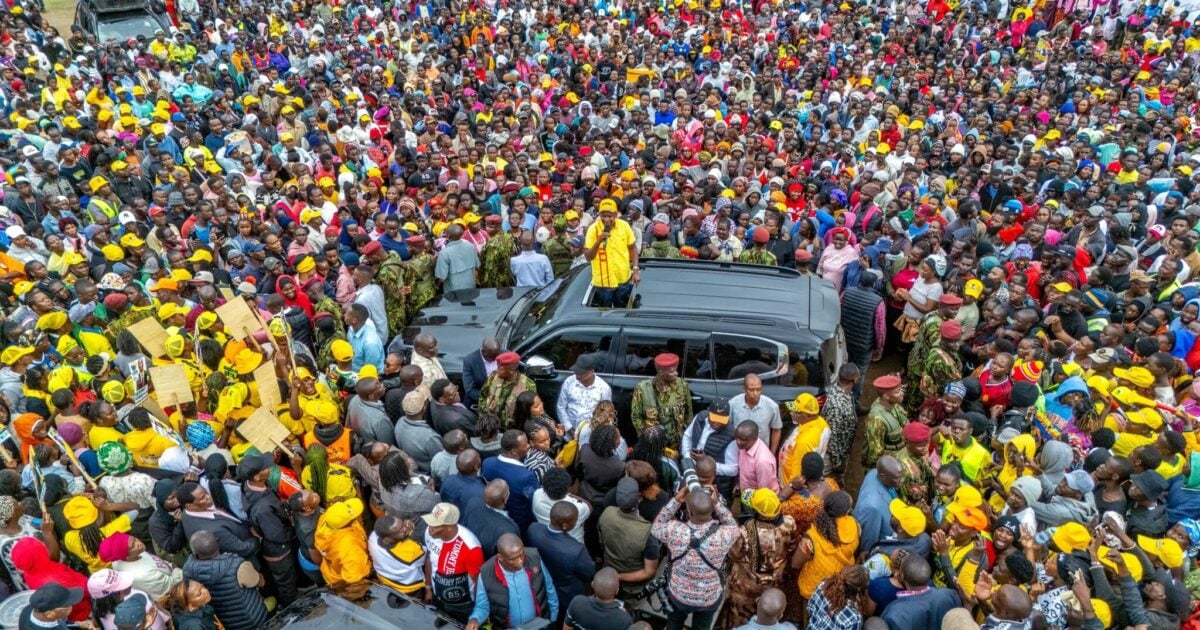
Deputy President Kithure Kindiki has issued a stern caution to politicians, urging them to refrain from employing divisive language and inciting violence as the 2027 General Election approaches. Speaking from the Kiratina area of Nakuru Town East during an official development tour, Kindiki emphasized that the mobilization of ethnic sentiments poses a significant threat to national unity and could potentially ignite conflict across the nation. He specifically admonished political figures who exploit ethnic differences and propagate negative narratives solely for their own political advantage, highlighting that such actions jeopardize the stability of a country home to more than 55 million citizens.
Kindiki, who was accompanied by Nakuru Governor Susan Kihika, Nakuru Town East MP David Gikaria, and Nakuru Woman Representative Lisa Chelule, implored the Kenyan populace not to permit a small cohort of individuals seeking public office to plunge the entire country into turmoil. He pointed out that while these politicians are competing for a limited number of approximately 2,000 elective positions, the peace and well-being of 55 million Kenyans should not be compromised. The Deputy President underscored that political competition ought to remain constructive and should not devolve into animosity, advocating for a democratic process where the most qualified candidates emerge victorious.
Upholding National Stability
The Deputy President further challenged political aspirants to prioritize the articulation of their policy proposals, development blueprints, and established track records, rather than resorting to the exploitation of ethnic, religious, or political schisms. He asserted that political contests should be founded on substantive ideas and engaging, constructive debate. Kindiki reminded his audience that the electioneering period is inherently brief, and the enduring welfare of the nation far surpasses the ambitions of any single individual or political entity. His remarks underscore a clear governmental stance against rhetoric that could destabilize the country.
Beyond external political rivalries, Kindiki also called upon politicians to moderate their internal party disputes and disagreements, both within their own factions and with other parties. He firmly stated that Kenya's peace and safety must be preserved for all its inhabitants. This comprehensive appeal for responsible conduct signals a heightened awareness of the potential for political discourse to either unite or fragment the nation, particularly in the lead-up to a major electoral cycle.
Internal Party Conduct and Development Focus
Addressing the competitive landscape within the ruling United Democratic Alliance (UDA) party, Kindiki specifically advised aspirants to conduct their campaigns peacefully. He urged them to avoid engaging in insults or manipulating their supporters to settle political scores. He reassured UDA members that the most suitable candidate would secure the party ticket, and the party leadership would devise mechanisms to integrate other aspirants. This guidance reflects an effort to manage internal competition constructively, preventing it from spilling over into broader divisive rhetoric.
Kindiki also revealed that the UDA party is actively engaging various stakeholders to consolidate support in preparation for the 2027 General Election, indicating a strategic approach to electoral success rooted in its core ideology. Shifting focus to governmental achievements, Kindiki highlighted significant investments in Nakuru County, totaling nearly Sh100 billion, directed towards infrastructure projects. These initiatives encompass roads, affordable housing, student hostels, and modern markets, aiming to demonstrate tangible progress and improve citizens' lives.
Economic Transformation Through Infrastructure
Detailing the government's commitment to development, Kindiki specified that over Sh38 billion is being allocated for the construction of 830 kilometers of tarmac roads within Nakuru County. Furthermore, an additional Sh47 billion has been earmarked for the development of affordable housing units, student accommodation facilities, and contemporary market infrastructure. These substantial investments are intended to bolster the region's economic vitality and enhance the overall aesthetic and functionality of Nakuru City.
In a related announcement, the Deputy President confirmed that a significant segment of the Lironi-Mau Summit dual carriageway, which spans from Limuru through Kimende all the way to Naivasha, is projected to reach completion within the next two months. These infrastructure projects, he noted, are crucial for transforming the county's economy and significantly improving the general outlook of Nakuru City, presenting a vision of progress alongside the call for political restraint.
Practical Implications
Lawyers advising political clients, organizations, or media outlets in Kenya should be aware of the government's explicit stance against divisive rhetoric ahead of the 2027 elections. This signals a potential for increased scrutiny and enforcement actions related to incitement or hate speech, requiring proactive compliance with electoral laws and public discourse guidelines.
Source
How does this affect you?
Get an AI analysis of this article grounded in your jurisdictions, practice areas, and any policy documents you've uploaded to Wansom.
Finish Reading the Full Story and the Expert Analysis.
Get the latest legal & regulatory intelligence in Kenya
Wansom is AI and can make mistakes.