
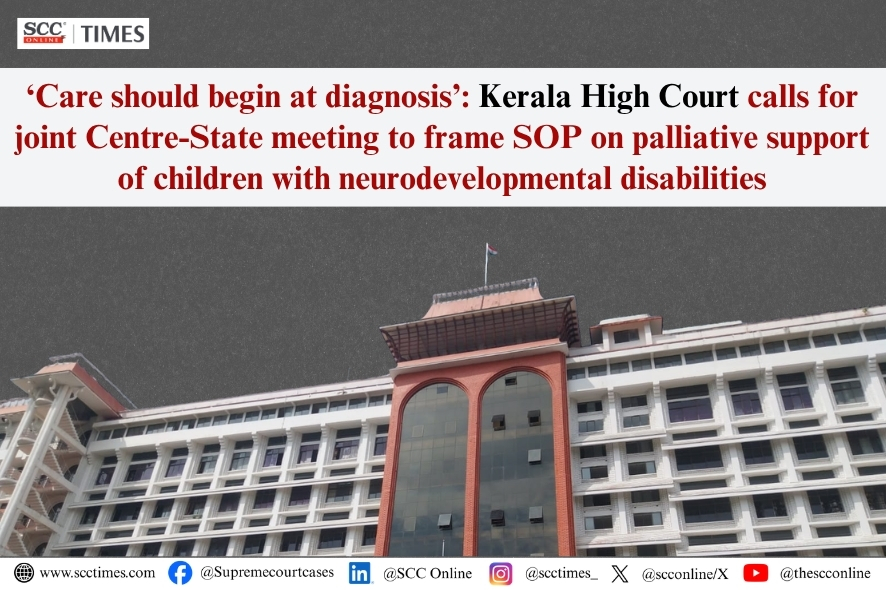
Kerala High Court: Centre-State Meeting on Neurodevelopmental Disability Palliative Care
Summary
- The Kerala High Court has called for a joint Centre-State meeting to discuss palliative care for children with neurodevelopmental disabilities.
- The court noted inadequate implementation of the Kerala State Palliative Care Policy, resulting in inconsistent community-level support.
- A standard operating procedure (SOP) is being developed to ensure effective and consistent palliative care from diagnosis.
- The decision has significant implications for lawyers advising clients on disability-related matters, impacting compliance and liability.
What Happened
The court emphasized the importance of providing palliative care from the time of diagnosis, highlighting the need for a standard operating procedure (SOP) to ensure effective and consistent support.
The Kerala High Court has called for a joint meeting between the Centre and State to discuss the implementation of palliative care for children with neurodevelopmental disabilities. The court's decision comes after it noted that the existing Kerala State Palliative Care Policy has been inadequately implemented, resulting in inconsistent community-level support for affected families.
The court emphasized the importance of providing palliative care from the time of diagnosis, highlighting the need for a standard operating procedure (SOP) to ensure effective and consistent support. This move is significant, as it underscores the court's commitment to addressing the challenges faced by children with neurodevelopmental disabilities and their families.
Legal Context
The Kerala High Court's decision is part of a broader effort to strengthen disability rights in India. The court has previously ruled on several cases related to disability support, emphasizing the need for effective community-level care. In this context, the call for a joint Centre-State meeting is seen as an attempt to bridge the gap between policy and implementation.
The existing Kerala State Palliative Care Policy was introduced in 2018 with the aim of providing comprehensive palliative care services to children with chronic disabilities. However, its implementation has been marred by inconsistencies and inadequate support at the community level. The court's decision highlights the need for a more robust policy framework that addresses the specific needs of children with neurodevelopmental disabilities.
Why It Matters
The Kerala High Court's call for a joint Centre-State meeting has significant implications for lawyers advising clients on disability-related matters. The development of a standard operating procedure (SOP) for palliative care may impact compliance and liability in cases involving children with neurodevelopmental disabilities.
As the court emphasized, providing palliative care from the time of diagnosis is crucial to ensuring effective support for affected families. This approach recognizes that palliative care is not just a medical intervention but also a social and emotional support system. The development of an SOP will help ensure that this comprehensive approach is implemented consistently across the country.
Practical Implications
Lawyers advising clients on disability-related matters should monitor the development of a standard operating procedure (SOP) for palliative care, which may impact compliance and liability in cases involving children with neurodevelopmental disabilities.
Source
Source: Original reporting via SCC Times
How does this affect you?
Get an AI analysis of this article grounded in your jurisdictions, practice areas, and any policy documents you've uploaded to Wansom.
Wansom is AI and can make mistakes.