
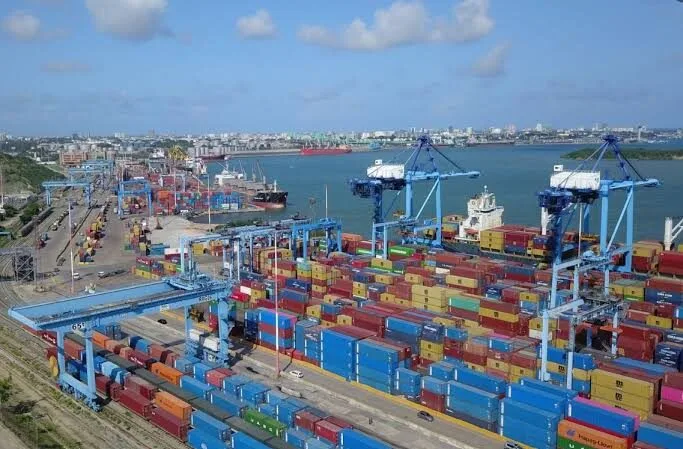
National Assembly: KPA Sh8.3bn Mombasa Port Road Probe Launched
Summary
- The National Assembly Transport and Infrastructure Committee is probing the Kenya Ports Authority over the Sh8.3 billion cost of a 1.8-kilometer road project at Mombasa Port.
- Committee Chairman George Kariuki has called for a special audit to assess the project's value for money, citing concerns over unusually high expenditure.
- MP TJ Kajwang' questioned KPA's legal authority to use internal revenues for the project without consulting the National Treasury and National Assembly.
- KPA officials defend the cost, explaining the project is a complex port transport infrastructure involving an elevated viaduct and specialized engineering, not a simple road.
- The contract was awarded to Stecol Corporation and Miliki Development Company Joint Venture following an international competitive tender, with the project currently around 50% complete.
Parliamentary Scrutiny Intensifies
The ongoing KPA Sh8.3bn Mombasa Port road probe underscores heightened parliamentary scrutiny over public procurement Mombasa Port Kenya and the financial management practices of state corporations.
The National Assembly Transport and Infrastructure Committee has launched a rigorous inquiry into the Kenya Ports Authority (KPA) regarding the substantial Sh8.3 billion cost associated with a 1.8-kilometer road project at the Port of Mombasa. During a recent inspection of KPA's headquarters and port facilities in Mombasa, committee members expressed significant concerns to KPA officials, questioning the unusually high expenditure for what appears to be a relatively short stretch of road.
Ndia MP George Kariuki, who chairs the committee, highlighted public apprehension surrounding the project's budget, stating that the figure seemed "suspicious" and suggested potential "wastage of public resources." He emphasized the committee's intent to commission a special audit to ascertain whether the project delivers adequate value for taxpayer money. Kariuki specifically demanded details on the specialized materials utilized, evidence of the project's advertisement, the number of contractors who expressed interest, and the identity of the awarded contractor.
Questions of Financial Authority
Adding another layer to the KPA Sh8.3bn Mombasa Port road probe, Ruaraka MP TJ Kajwang' directed his scrutiny towards the legal framework governing KPA's financial decisions. Kajwang' specifically questioned the authority under which KPA committed its internal revenues to fund the project without prior engagement with both the National Treasury and the National Assembly. He underscored the constitutional implications, asserting that KPA officials, as administrators, must contextualize such significant financial commitments within established legal mandates.
This line of questioning highlights a critical aspect of public procurement and financial management within state corporations, focusing on the necessity for transparent and legally compliant expenditure of public funds, even those generated internally. The committee's stance suggests a broader push for accountability regarding how state entities manage and deploy their financial resources for large-scale infrastructure developments.
KPA's Justification for Project Scope
In response to the parliamentary inquiry, KPA officials, including Managing Director Captain William K. Ruto and General Manager Engineering Services Eng. Julius K. Tai, presented their rationale for the project's considerable Kenya Ports Authority Mombasa road cost. They clarified that the development should not be perceived as a standard road construction but rather as a complex port transport infrastructure project. Its primary objectives are to alleviate traffic conflicts and enhance the efficiency of cargo movement within the port area.
KPA documents confirm the contract value at Sh8.344 billion. The project encompasses a 1.8-kilometer dual carriageway, a significant portion of which—approximately 704 meters—will be an elevated viaduct. This viaduct, designed to rise up to 15 meters above ground level in certain sections, is supported by bored piles and reinforced concrete structures. KPA explained that the design was informed by recommendations from a 2018 TradeMark Africa traffic management study, which identified the Back of Port Road corridor as a major bottleneck requiring a grade-separated transport solution.
The authority further detailed that the scope extends beyond mere tarmacking, including bridge structures, drainage, retaining walls, utility relocations, electrical and ICT infrastructure, and security installations. The proximity to critical petroleum infrastructure also renders a conventional ground-level road impractical in some areas. The contract was awarded through an international competitive tender to Stecol Corporation and Miliki Development Company Joint Venture, which was identified as the lowest evaluated responsive bidder among four contenders whose offers ranged from approximately Sh8.3 billion to Sh9.6 billion. KPA maintains that the project offers value for money, given the specialized engineering works involved.
Implications for Public Finance
The ongoing KPA Sh8.3bn Mombasa Port road probe underscores heightened parliamentary scrutiny over public procurement Mombasa Port Kenya and the financial management practices of state corporations. The committee's insistence on a special audit signals a firm commitment to ensuring transparency and accountability in large infrastructure projects, particularly those funded by public resources. This development highlights the growing demand for state entities to demonstrate clear value for money and adherence to public finance laws when undertaking significant capital expenditures.
The project, which commenced in March 2025 and is slated for completion in March 2027, had achieved a physical progress of 49.3 percent by June 2026, with subsequent reports indicating approximately 50 percent completion. The National Assembly Transport Committee KPA's investigation into the project's financing and execution serves as a crucial oversight mechanism, aiming to prevent wastage and ensure that public funds are utilized effectively for national development.
Practical Implications
This development signals heightened parliamentary scrutiny over public procurement and financial management within Kenyan state corporations, particularly regarding large infrastructure projects. Lawyers advising state entities or involved in public procurement should review compliance with public finance laws and ensure robust internal controls for project financing and expenditure to mitigate accountability risks.
Source
How does this affect you?
Get an AI analysis of this article grounded in your jurisdictions, practice areas, and any policy documents you've uploaded to Wansom.
Finish Reading the Full Story and the Expert Analysis.
Get the latest legal & regulatory intelligence in Kenya
Wansom is AI and can make mistakes.