
Kenya: Ruto Orders Crackdown on Unregistered Foreign Traders
Summary
- Kenya's President William Ruto has set a deadline for foreign nationals operating small-scale businesses without proper documentation to cease operations.
- Hundreds of Burundian nationals are rushing to leave Kenya, with many unable to afford travel costs, following the directive.
- The Kenyan government justifies the crackdown by citing the misuse of visa rules by some foreigners who engage in business activities beyond their declared status.
- Burundi's Foreign Affairs Minister has expressed concerns, warning of potential changes in relations if perceived hate speech continues and urging Kenya to ensure the safety of Burundian residents.
- Regional leaders warn the crackdown could have wider East African Community trade implications, as Kenyans also operate small businesses in neighboring countries.
Enforcement and Immediate Impact
He emphasized that foreign investors should contribute to job creation and expand production, rather than competing directly with Kenyan citizens in small-scale enterprises.
Kenya has initiated a significant enforcement action targeting unregistered foreign traders, with President William Ruto setting a firm deadline for those operating small-scale businesses without proper documentation to cease their activities. This directive, aimed at addressing the perceived exploitation of visa regulations, has prompted a swift and anxious response from foreign nationals across the country.
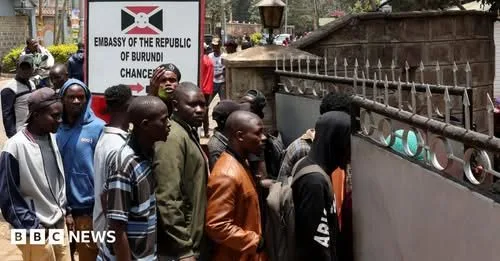
Hundreds of Burundian nationals in Kenya are reportedly rushing to secure travel documents to depart, facing the imminent crackdown on unlicensed small businesses. The Burundian embassy in Nairobi has observed long queues as it offers free emergency travel documents to citizens wishing to return home, while others are urgently purchasing bus tickets. This exodus highlights the immediate human impact of the "Kenya unregistered foreign traders crackdown," with some individuals seen carrying all their personal belongings, from suitcases to mattresses, as they prepare to leave.
Many of those affected express distress, citing an inability to afford travel costs and appealing to the Kenyan government for an extension of the deadline. Kenya is home to hundreds of thousands of migrants from across the East African region, many of whom seek work and business opportunities. While the United Nations refugee agency estimates approximately 16,000 Burundian refugees and asylum seekers reside in Kenya, the exact number involved in small-scale trading or directly impacted by this enforcement remains unclear.
Policy Rationale and Legal Context
The impetus behind the "President Ruto foreign trader directive" stems from concerns raised by Kenya's trade ministry regarding the deliberate misuse of visa applications. Officials assert that some visitors have entered the country under the guise of investors or tourists, subsequently engaging in business activities that contravene their declared immigration status. President Ruto himself articulated that while Kenya welcomes foreign investment, it is not intended for individuals from other nations to operate as hawkers or small shop owners. He emphasized that foreign investors should contribute to job creation and expand production, rather than competing directly with Kenyan citizens in small-scale enterprises.
This move by the Kenyan government aligns with similar enforcement actions observed in the region, including a crackdown in Tanzania last year and a broader rise in anti-migrant sentiment in South Africa. Despite critics describing the directive as a populist measure that risks fueling xenophobia, Kenyan government officials have vehemently denied such allegations. The focus, they maintain, is on ensuring compliance with "Kenya migrant business permit requirements" and strengthening "Kenya immigration enforcement foreign workers" regulations.
On Sunday, Permanent Secretary Korir Singoei from Kenya's foreign affairs ministry provided a clarifying statement, affirming that foreign nationals possessing the requisite documentation, including valid work permits and business licenses, are permitted to continue their operations. He underscored that Burundian nationals, along with all East Africans and other Africans, are welcome to reside in Kenya provided their business activities and employment adhere strictly to national laws.
Regional and Diplomatic Repercussions
The "Kenya unregistered foreign traders crackdown" has not only caused internal upheaval but has also triggered significant diplomatic and regional discussions. Burundian Foreign Affairs Minister Edouard Bizimana publicly expressed his concerns, noting that while Kenyans in Burundi enjoy peaceful residency, a continuation of perceived hate speech against Burundians could alter the situation. Minister Bizimana further asserted Kenya's responsibility for the welfare of Burundian citizens residing within its borders.
These comments followed an urgent meeting convened by Minister Bizimana with representatives of the East African Community (EAC), an eight-member bloc dedicated to fostering economic integration across the region, of which both Kenya and Burundi are members. Kenyan representatives were present at this meeting, held in Burundi, where Minister Bizimana formally requested the Kenyan ambassador to convey Burundi's apprehensions to his government and to ensure that no Burundian national faces abuse.
The potential for wider "East African Community trade implications Kenya" has also been highlighted by regional stakeholders. Alexis Ntinanirwa, who heads the Association of Burundians living in Kenya, voiced his dissatisfaction with President Ruto's decision but urged patience among Burundians. He cautioned that the issue could have broader consequences, given that Kenyans themselves are involved in small-scale businesses in other EAC member states, including Burundi, Tanzania, and Uganda.
Compliance Imperatives and Safety Concerns
Despite the Kenyan government's clarification regarding the legality of properly documented foreign businesses, concerns among some foreign traders have not been fully alleviated. Many foreign nationals have voiced fears for their personal safety amidst the heightened enforcement environment, prompting Kenyan police to issue warnings against any targeting of these individuals.
The situation underscores the critical importance of "Burundian nationals Kenya business compliance" and adherence to all immigration and business regulations for all foreign workers. While the head of the Association of Burundians living in Kenya, Alexis Ntinanirwa, advised Burundians involved in hawking and other small businesses, the overarching message remains one of urgent compliance to avoid penalties or forced departure. Legal professionals are advising clients to verify and obtain all necessary work permits and business licenses to navigate this challenging regulatory landscape.
Practical Implications
This directive creates an urgent compliance risk for foreign nationals operating businesses in Kenya without proper documentation. Legal professionals must advise clients on verifying and obtaining necessary work permits and business licenses to avoid penalties or forced departure, and monitor potential regional trade and diplomatic fallout.
Source
Source: Original reporting via Reuters
How does this affect you?
Get an AI analysis of this article grounded in your jurisdictions, practice areas, and any policy documents you've uploaded to Wansom.
Finish Reading the Full Story and the Expert Analysis.
Wansom is AI and can make mistakes.