
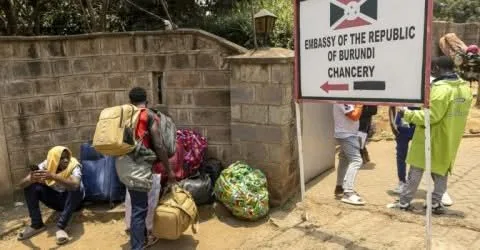
Kenya: Undocumented Burundian Registration Confirmed For Regularization
Summary
- Kenya has launched a registration program for undocumented Burundians and other East African nationals following President Ruto's directive targeting foreign small-scale traders.
- Individuals without proper documents are instructed to register through their respective embassies or high commissions, and will be considered legally present during the process.
- The initiative aims to regularise the immigration status of East Africans, acknowledging historical reasons for undocumented residency.
- A senior Kenyan official apologized for harassment faced by some Burundians, attributing it to a misunderstanding of the presidential order.
- The directive aligns with a regional trend of crackdowns on foreign traders and has prompted a warning from Burundi's Foreign Affairs Minister.
Government Initiates Registration Amidst Trader Tensions
This registration window offers a critical opportunity for compliance with Kenyan immigration laws, allowing undocumented individuals to formalize their presence.
The Kenyan government has announced a new initiative to register undocumented Burundian nationals and other East Africans residing within its borders. This development follows a period of heightened anxiety among foreign traders, particularly after President William Ruto issued a directive targeting non-citizens engaged in small-scale businesses. The President had set a Monday deadline for foreigners operating such enterprises to cease their activities, citing concerns from the trade ministry that some individuals exploit visa regulations to work without the necessary permits.
The directive led to immediate and visible distress among the affected communities. Hundreds of Burundians were observed seeking to secure travel documents, while others rushed to purchase bus tickets, indicating a widespread fear of potential enforcement actions. Reports also emerged of some Burundian individuals experiencing hostility in the wake of President Ruto's order, which emphasized protecting certain jobs for Kenyan citizens by targeting foreign street vendors and small shop operators.
Pathway to Regularisation for East African Nationals
In response to the unfolding situation, Kenyan government spokesperson Charles Owino confirmed the establishment of a formal documentation and registration window. This initiative aims to regularise the immigration status of undocumented East African Community nationals, with a specific call to Burundian citizens. Individuals without proper documents are instructed to register through their respective embassies or high commissions, with authorities actively collaborating with diplomatic missions to facilitate this process.
Crucially, Owino stated that those undergoing registration would be considered legally present in Kenya for the duration of the process. He acknowledged that historical circumstances and regional dynamics have contributed to a number of East African nationals, including many Burundians, residing and operating in Kenya without complete documentation. The Ministry of Foreign and Diaspora Affairs is slated to work closely with the Embassy of Burundi and other regional partners to address and regularise these cases. Furthermore, Korir Singoei, Principal Secretary for Foreign Affairs in the Ministry of Foreign and Diaspora Affairs, offered an apology to Burundians for any harassment they experienced, attributing it to a misunderstanding of the presidential directive, and pledged to enhance security in areas where Burundian communities reside.
This registration window offers a critical opportunity for compliance with Kenyan immigration laws, allowing undocumented individuals to formalize their presence. Lawyers advising East African nationals or businesses employing them in Kenya should inform clients about this government registration window to regularise undocumented status and avoid potential enforcement actions.
Broader Context and Regional Implications
Kenya serves as a significant host country for hundreds of thousands of migrants from across East Africa, who typically seek employment and business opportunities. The United Nations High Commissioner for Refugees (UNHCR) estimates that approximately 16,000 Burundian refugees and asylum seekers are currently in Kenya, though the exact number involved in small-scale trading remains unclear. Some Burundians, attempting to leave Kenya, were seen carrying their belongings but faced financial barriers, prompting calls for an extension of the deadline from the Kenyan government.
President Ruto's directive is not an isolated incident, echoing similar crackdowns observed in Tanzania last year and reflecting a broader rise in anti-migrant sentiment across Southern Africa. While affirming Kenya's openness to foreign investment, President Ruto has articulated a stance that foreign investors should focus on creating jobs and expanding production rather than competing with Kenyans in small-scale commerce. This position has drawn attention from neighboring countries, with Burundi's Foreign Affairs Minister Edouard Bizimana issuing a statement via X, cautioning that continued 'hate speech' against Burundians could alter the peaceful coexistence of Kenyans in Burundi, emphasizing Kenya's responsibility for the welfare of Burundians within its borders.
Practical Implications
Lawyers advising East African nationals or businesses employing them in Kenya should inform clients about the new government registration window to regularise undocumented status and avoid potential enforcement actions. This initiative offers a critical opportunity for compliance with Kenyan immigration laws.
Source
Source: Original reporting via {source}
How does this affect you?
Get an AI analysis of this article grounded in your jurisdictions, practice areas, and any policy documents you've uploaded to Wansom.
Finish Reading the Full Story and the Expert Analysis.
Wansom is AI and can make mistakes.