
Kenya Tobacco Control Bill: Nicotine Flavour Ban Risks Smoking Relapse
Summary
- Kenya's Parliament is considering a Tobacco Control (Amendment) Bill that proposes a ban on most nicotine product flavours.
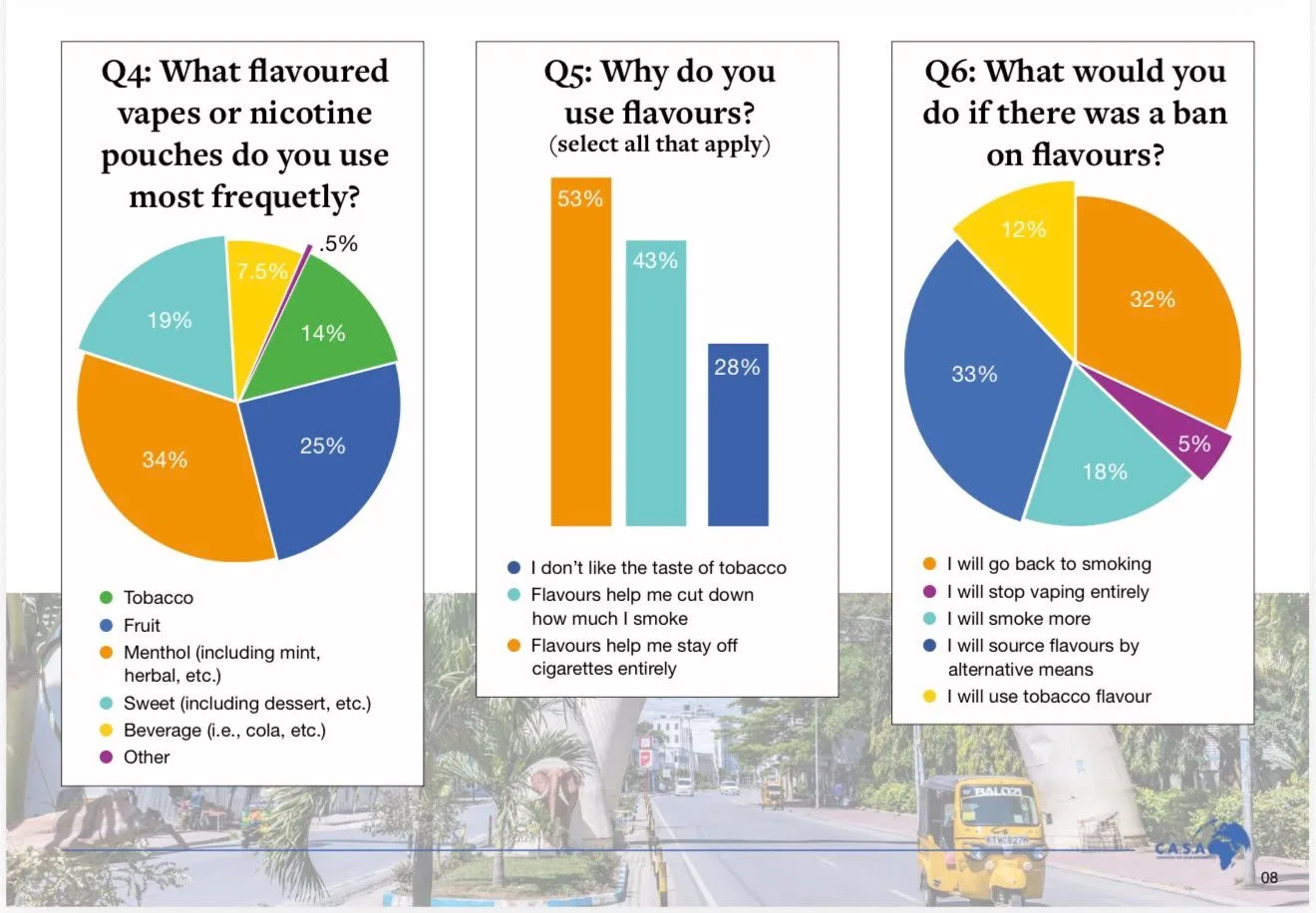
- A recent survey by the Campaign for Safer Alternatives (CASA) found that 32% of current nicotine product users would return to smoking if flavours were banned.
- Half of Kenyan consumers use nicotine pouches and vapes to help them quit smoking, with flavours being crucial for 50% to stay off cigarettes entirely.
- The survey indicated that 88% of respondents want public consultations on the Bill, and 89% believe policymakers should prioritize helping smokers quit over banning flavours.
- CASA Chairman Joseph Magero warns that the flavour ban could undermine efforts by smokers to transition away from more harmful combustible cigarettes.
Proposed Flavour Ban Sparks Concern
The Campaign for Safer Alternatives (CASA) chairman, Joseph Magero, warned that the proposed legislation could inadvertently make it more difficult for smokers to transition away from combustible cigarettes.
Kenya's Parliament is currently considering the Tobacco Control (Amendment) Bill, a piece of legislation that proposes significant new restrictions on smoke-free nicotine products. The Bill, which was passed by the Senate, is now before the National Assembly's Departmental Committee on Health. Among its key provisions is a ban on most flavours, a measure that a recent survey suggests could have unintended consequences for public health and consumer behavior.
The findings, released by the Campaign for Safer Alternatives (CASA), indicate that a substantial portion of current nicotine product users would revert to traditional smoking if flavoured options were removed from the market. Specifically, 32 percent of respondents stated they would return to smoking, while an additional 18 percent anticipated an increase in their smoking habits. Furthermore, 33 percent indicated they would seek out flavoured products through unregulated alternative sources.
These statistics highlight a critical concern: the proposed flavour ban, intended to regulate nicotine products, might inadvertently push consumers back towards more harmful combustible cigarettes or into illicit markets. The survey underscores the potential for the legislation to disrupt the harm reduction efforts of many Kenyans who have transitioned away from traditional tobacco.
Consumer Habits and Motivations
The CASA survey delved into the motivations behind Kenyan consumers' use of nicotine pouches and vapes, revealing that these products play a significant role in smoking cessation efforts. Half of the respondents reported using these alternatives specifically to help them quit smoking, while 47 percent cited their belief that these products are a less harmful option compared to conventional cigarettes.
Flavours emerged as a crucial factor in these transitions. Fifty percent of users credited flavours with helping them stay off cigarettes entirely, and 43 percent found that flavours assisted them in reducing their overall cigarette consumption. Interestingly, only 14 percent of respondents preferred tobacco flavour, with the vast majority opting for menthol, fruit, or other non-tobacco varieties, suggesting that flavour diversity is key to their continued use of these alternatives.
Public Calls for Engagement
A strong desire for public participation in the legislative process was also evident in the survey results. Approximately 88 percent of respondents expressed that the government should conduct public consultations on the Tobacco Control Bill before its finalization. A similar proportion felt that the concerns of smokers and users of nicotine products were being overlooked in the current debate.
The Campaign for Safer Alternatives (CASA) chairman, Joseph Magero, emphasized the importance of these findings, urging lawmakers to consider the experiences of consumers. He highlighted that 89 percent of respondents believe policymakers should focus on strategies to help smokers quit rather than imposing bans on flavoured nicotine pouches, underscoring a perceived misalignment between public desire and legislative direction.
Implications for Public Health and Policy
The Campaign for Safer Alternatives (CASA) chairman, Joseph Magero, warned that the proposed legislation could inadvertently make it more difficult for smokers to transition away from combustible cigarettes. He stressed that thousands of Kenyans are utilizing alternative nicotine products as a means to move away from smoking, with half of respondents indicating these products are aiding their cessation efforts, and many others using them to reduce their cigarette intake.
Magero argued that removing flavours could diminish the attractiveness of these alternative nicotine products for individuals seeking to quit smoking. He pointed to the fact that half of respondents rely on flavours to remain smoke-free as a critical piece of information for policymakers. The survey's findings, particularly the high percentage of users who would return to smoking or seek illicit sources if a ban were implemented, serve as a stark warning to Parliament, reinforcing the call for comprehensive consumer consultation before the Bill is enacted.
Practical Implications
Lawyers and compliance officers in Kenya should monitor the progress of the Tobacco Control (Amendment) Bill, as its proposed flavour ban for nicotine products will significantly impact businesses in the vape and nicotine pouch sectors, requiring new compliance strategies and potentially affecting product offerings. Clients in this industry may need advice on legislative engagement and future market adjustments.
Source
How does this affect you?
Get an AI analysis of this article grounded in your jurisdictions, practice areas, and any policy documents you've uploaded to Wansom.
Wansom is AI and can make mistakes.